
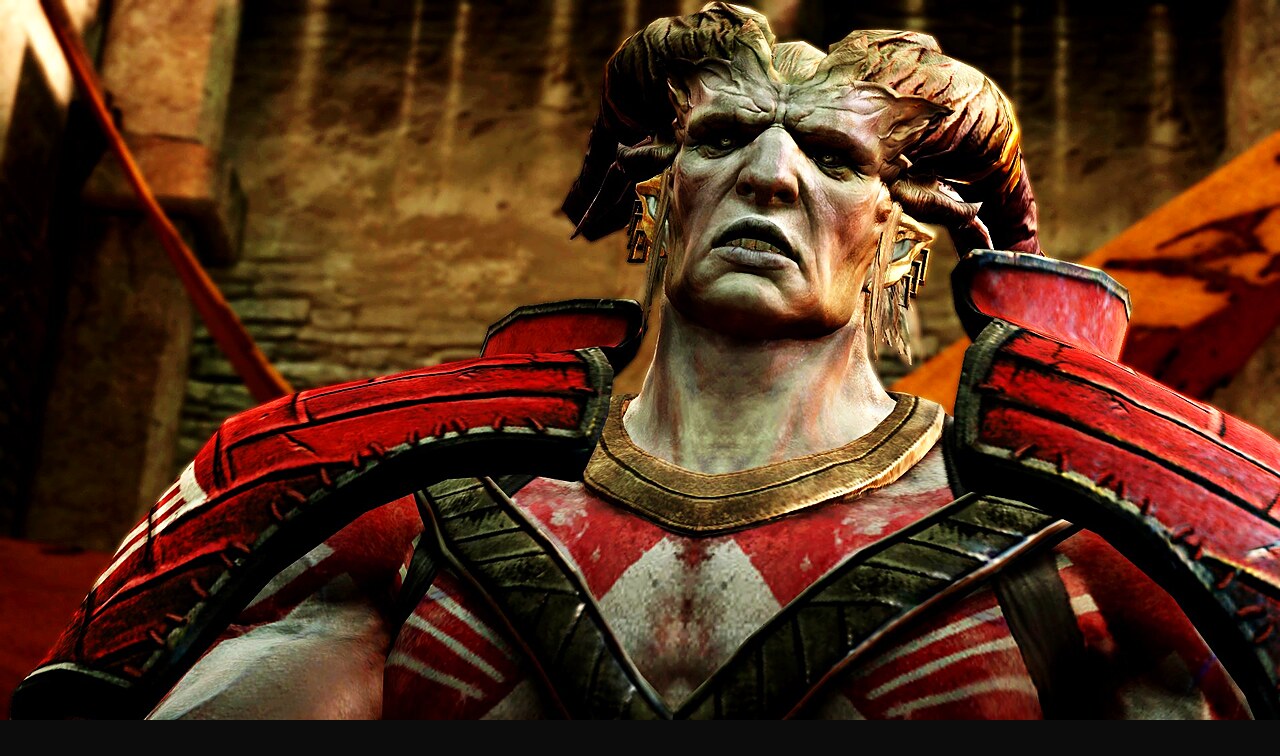
When BioWare released Mass Effect Legendary Edition in 2021, it gave an entire generation a clean, current-gen way to experience the Shepard trilogy. Dragon Age fans looked on and wondered: when do we get ours? The answer, as it turns out, was quietly forming inside BioWare — before quietly dying there too.
Mark Darrah, Dragon Age’s franchise creator and former executive producer at BioWare for 23 years, revealed in an interview with FRVR on 28 July 2026 that developers had once envisioned a “Champions Edition” — a repackaged trilogy of Dragon Age Origins, Dragon Age 2, and Dragon Age: Inquisition. He also explained, with considerable precision, why it is probably never going to happen.

What Was the Champions Edition?
The concept was straightforward: combine the three mainline Dragon Age games into a single package, remaster them for modern hardware, and present them retroactively as a unified trilogy — the same logic that made Mass Effect Legendary Edition a commercial and critical success. BioWare had the template. It had the IP. It had decades of fan demand. What it did not have was a viable technical path.
“There are basically no companies that could help you,” Darrah told FRVR, describing the situation facing anyone who might attempt the project today. That is not a throwaway comment — it reflects a specific and serious problem at the engine level.
The Engine Problem That Blocks Everything
Mass Effect’s trilogy worked as a remaster candidate because all three games were built on Unreal Engine — a widely used, well-documented piece of technology with a large pool of engineers who understand it. Bringing those games up to current standards was technically ambitious, but not impossible.
Dragon Age is the opposite. Each entry in the series was built on a different engine:
Dragon Age Origins used BioWare’s Eclipse Engine (an upgrade of the Aurora Engine, which was also used by CD Projekt for the original Witcher). Dragon Age 2 ran on the further enhanced Lycium Engine. Dragon Age: Inquisition moved to DICE’s Frostbite technology.
That fragmentation creates a problem that money alone cannot solve. “There’s basically no one at BioWare anymore that understands the Aurora Engine,” Darrah said. “There’s basically no one outside of BioWare anymore that understands the Aurora Engine. So, unlike Mass Effect, which is Unreal, there are basically no companies that could help you.”
EA’s Role — and Why Staffing Makes It Worse
The engine problem alone would be solvable with the right team and sufficient time. But Darrah argues that EA’s approach to headcount makes assembling that team effectively impossible. A Champions Edition would require a dedicated group of engineers with knowledge of all three legacy codebases — people who do not currently exist inside or outside BioWare.
“EA doesn’t like having employees,” Darrah said, “so, if you’re going to do that, you’re going to do that within the umbrella of BioWare, which means those people are not working on something else.” That trade-off — between honouring the Dragon Age back catalogue and continuing to develop new games — is one EA has apparently been unwilling to make.
Context: Darrah acknowledged the Champions Edition never went beyond a “soft pitch” internally. It was a concept, not a greenlit project — one that was quietly shelved rather than formally cancelled.
Is Dragon Age Really Done?
This interview is part of a broader set of remarks in which Darrah described Dragon Age as “probably dead” as a series — a statement that attracted significant attention from fans who had already seen Dragon Age: The Veilguard receive a troubled reception and production history. Darrah left BioWare in 2020 and has been vocal about the studio’s direction since.
For players who grew up with Dragon Age Origins and have been hoping for a Legendary Edition-style revival, the picture Darrah paints is bleak but honest. The engine fragmentation is real, the institutional knowledge is largely gone, and the corporate appetite is not there. The Champions Edition remains what it always was: a good idea that ran into the reality of game development economics. Dragon Age Origins still runs on PC — if you want it, it is there. A polished trilogy remaster, however, looks further away than ever.