Aberdeen’s city centre packs almost everything a first-time visitor wants into a walkable grid of granite. Start on Union Street, follow the side lanes to street-art murals and free museums, then finish by the harbour and the beach. This is the busiest, most compact part of the city and the natural place to begin a day in the Granite City.
Union Street and the Granite Mile
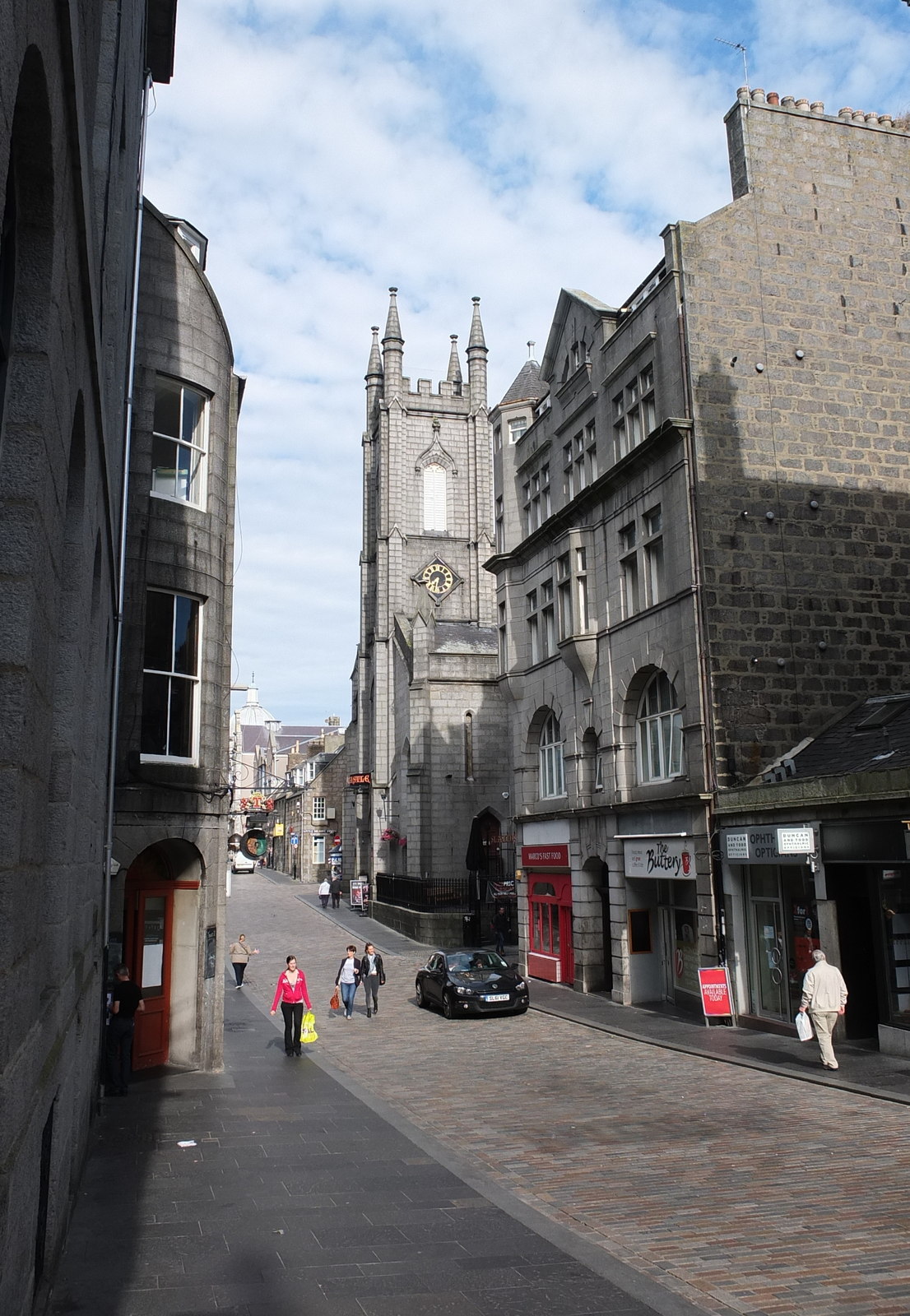
Union Street, nicknamed the “Granite Mile”, is the main shopping drag in the city. Here you can expect high-street shops, cafes and bars, with many smaller streets branching off it, which makes it a solid starting point for exploring on foot. Its granite frontages sparkle in sunlight thanks to the mica in the local stone, which is how Aberdeen earned its “Silver City” nickname.
Street Art and the Nuart Murals
Walk along Union Row and, past the offices, you’ll discover huge murals from the annual street-art festival, Nuart. One of the most striking is the Big Trash Animals piece by Lisbon artist Bordalo II — take a closer look at the material it’s built from. Another, of a boy climbing the building, is by Lithuanian-born artist Ernest Zacharevic, who also created the famous Little Children on a Bicycle in Penang. A third is by Argentinean artist Milu Correch, and a favourite among locals is the girl in the green dress holding Crathes Castle, by Norwegian duo Nimi and RH74.
Marischal College and Historic Landmarks
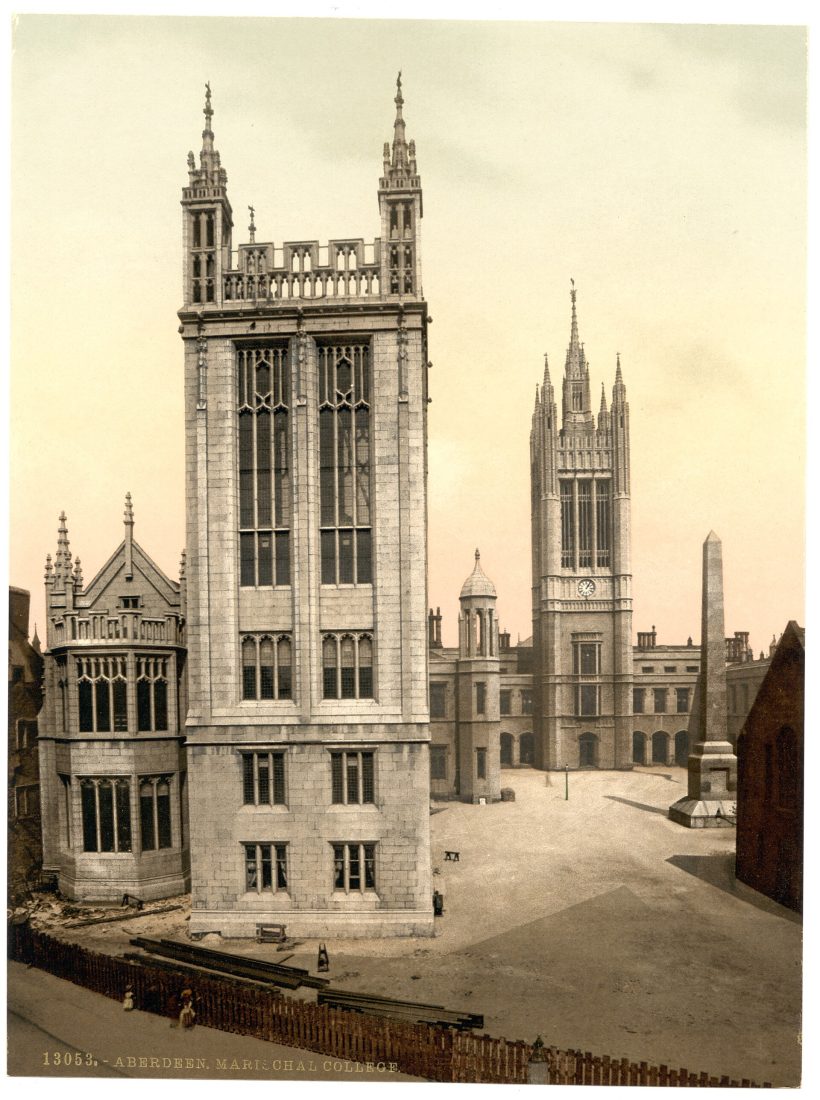
Marischal College is the showpiece of the centre — one of the largest granite buildings in the world and now home to Aberdeen City Council. Outside stands the statue of Robert the Bruce on horseback, charter in hand. Nearby, Provost Skene’s House is the oldest surviving townhouse in the city, and beside it a modern “poised” leopard statue nods to the leopards on Aberdeen’s civic crest. Look up on Provost Skene’s House for the Russell Head, an angry stone face with a local revenge story attached to it. The Mercat Cross on Castlegate and Union Terrace Gardens round out the historic core.
Free Museums and Culture
The Aberdeen Maritime Museum tells the story of the city’s relationship with the North Sea, from fishing and shipbuilding to the oil industry, and entry is free. The Tolbooth Museum, one of Scotland’s oldest jails, covers crime and punishment inside a 17th-century building. Both are compact, indoor options that work well on a rainy afternoon, and both sit within a few minutes’ walk of Union Street.
Food, Drink and the Beach
For a break, Mackies of Scotland runs a busy parlour on Marischal Square for milkshakes, waffles and ice cream, while The Green and Belmont Street cluster cafes, craft-beer bars such as Six Degrees North, and evening comedy. From the centre it’s a short walk or bus to Aberdeen Beach, its esplanade and fairground, and to the historic fishing village of Footdee (“Fittie”) with its tightly packed cottages. For food ideas across the city, see our Aberdeen food and drink guide.
Frequently Asked Questions
What is Union Street known for?
Union Street is Aberdeen’s main shopping street, nicknamed the “Granite Mile” for its long run of silver-grey granite buildings. It’s the best starting point for exploring the centre on foot.
Are the city-centre museums free?
Yes. Both the Aberdeen Maritime Museum and the Tolbooth Museum are free to enter, making them ideal rainy-day stops a short walk from Union Street.
Where can I see the Aberdeen street art?
The Nuart festival murals are concentrated around Union Row and nearby lanes, including works by Bordalo II, Ernest Zacharevic and Milu Correch.