
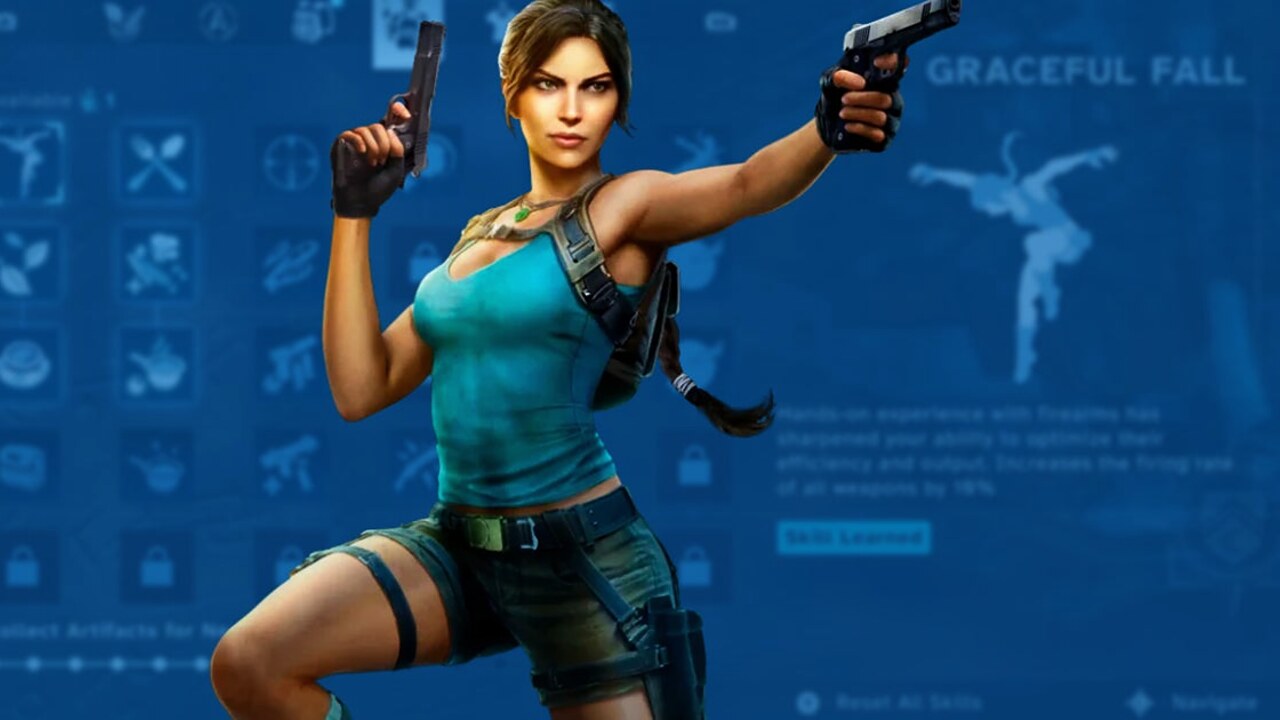
The moment Crystal Dynamics confirmed that Tomb Raider: Legacy of Atlantis would include a skill tree, herb crafting, and a chargeable ability meter, sections of the fanbase treated it like a funeral. “I hate it,” went one reaction. “No sir, I don’t like it,” went another. The concern is understandable — three decades of Lara Croft history exist precisely because the original 1996 game did not need RPG scaffolding to be compelling.
But here’s what the developers actually revealed, and why the reaction may be running ahead of the reality.

The Three New Systems
Game director Raul Siqueira and design director Jason Epps outlined three additions during a recent preview event. First, the Focus meter. As Lara deals damage, takes hits, and dodges attacks in combat, a meter fills. Activating Focus slows time and enables the acrobatic manoeuvres — the flips, rolls, and nimble repositioning — that defined the 1996 original.
“The acrobatic component of Lara Croft is really important for the character, so we wanted to make sure there was a way on the sticks for this to be celebrated.” — Raul Siqueira, game director
Second, a skill tree. Unlike the Survivor Trilogy — the Crystal Dynamics reboots from 2013 onwards — Legacy of Atlantis doesn’t award skill points through combat experience. Instead, players collect artifacts hidden around the game’s environments and exchange them for upgrades: weapon improvements, damage reduction, healing efficiency. It is, in effect, an exploration reward system wearing RPG clothing.
Third, herb brewing. Players can gather herbs from levels and combine them into items that restore health or reduce incoming damage — a system Epps explicitly compared to Resident Evil’s item crafting. It’s light, not mandatory, and aimed at players who want more tactical control over Lara’s survivability.
The Classic Fan Safety Net
The most reassuring detail from the preview, and the one that addresses most of the concern: the entire game can be completed using only Lara’s iconic dual pistols. The skill tree, the herbs, the Focus meter — they’re additions to the experience, not replacements for the core of it.
Design director Epps was direct about this. “If you decide that you want to play with the dual pistols the entire way and be iconic, absolutely.” The implication is that the legacy of Legacy of Atlantis comes down to how much players engage with the new systems, not how much they’re forced to.
It’s worth comparing this to what the Survivor Trilogy actually was. From 2013’s Tomb Raider reboot through to Shadow of the Tomb Raider, crafting and skill progression weren’t window dressing — they were load-bearing elements of the game design. Legacy of Atlantis appears to be placing them in the optional column while keeping the original’s movement and combat sensibilities intact.
What’s Changing and What Isn’t
The original 1996 Tomb Raider worked on grid-based movement, tank controls, and a Lara who moved through its geometry like a puzzle with momentum. Legacy of Atlantis is described as a reimagining rather than a direct remake, which means Crystal Dynamics has latitude to modernise controls and camera systems — and the Focus meter is specifically designed to bring the acrobatic character identity forward in a way that works on modern hardware.
The game launches on PlayStation 5, Xbox Series X/S, Nintendo Switch 2, and PC on February 12, 2027 — delayed from its original 2026 window. That extra development time is, at minimum, a sign that Crystal Dynamics isn’t rushing the balance of old and new.
The fanbase argument will continue until the game ships. Some players wanted a faithful port of 1996 with cleaned-up controls. Others are relieved to have systems that make the experience more accessible without gutting the original’s identity. Crystal Dynamics appears to have bet on both groups simultaneously — and the optional design of the skill tree and crafting is either a clever compromise or evidence of a game unsure of its own audience. Whether the RPG additions feel like they belong in the same game as the original’s tension-driven puzzle platforming remains the open question. The answer arrives in February.