
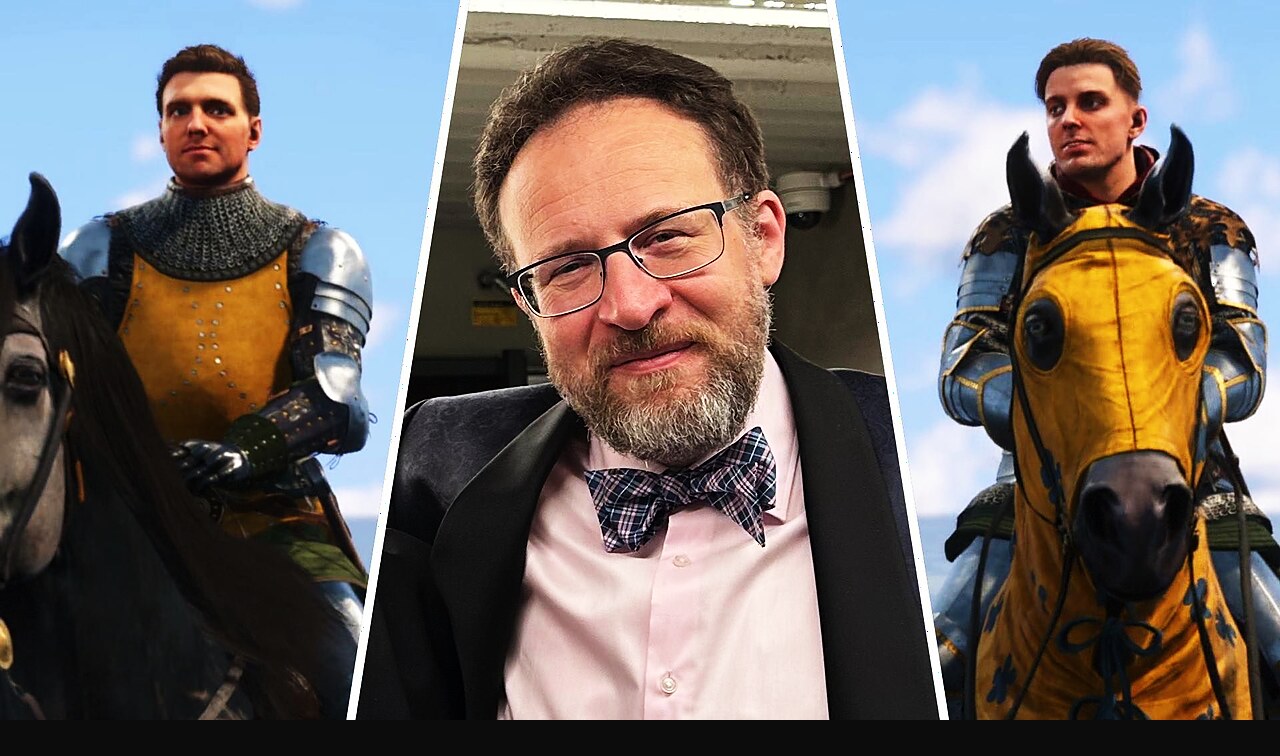
Martin Klíma was a university student in Prague in 1989 when he stepped up to speak at a public demonstration on International Students’ Day. He was not yet a game developer — that career was still decades away. But the speech he gave helped kick off what became the Velvet Revolution, the peaceful uprising that ended communist rule in Czechoslovakia. “I know it’s a very strange mix,” he told PC Gamer, with characteristic understatement.
Today, Klíma is the co-founder of Warhorse Studios, the Czech developer behind Kingdom Come: Deliverance 2. The studio just turned 15, and to mark the occasion, he spoke about the journey — from underground Dungeons & Dragons to one of the best-selling RPGs of recent years, via a moment in history that very few game developers can claim any part in.
D&D, The Lord of the Rings, and Life Under Socialism
Klíma’s path to games began in the grey conditions of communist Czechoslovakia, where Western books and games were difficult to obtain and English was taught using materials imported from Ghana — one of the few friendly English-speaking nations at the time. “I mean no disrespect to the people of Ghana,” he said, “but it’s a bit of an unusual approach to teaching kids English, and so our vocabulary was more about combine harvesters and blast furnaces than swords and dwarves.”
What he really wanted was The Lord of the Rings. He eventually obtained a copy in English and had to teach himself the language to read it — a process he credits to JRR Tolkien. A Dungeons & Dragons Basic Set followed through similar unofficial channels, and Klíma began translating it into Czech with his girlfriend — now wife — intending to distribute it via the country’s underground printing networks. “To officially translate it, officially license it… that was completely unthinkable.”
“I know it’s a very strange mix.” — Martin Klíma, on going from revolution to game development
The translation project was not finished. It was overtaken by events. The same social network Klíma had built around D&D was also part of the independent student union he was organising with — and on November 17, 1989, he spoke at the demonstration that sparked one of the most significant political moments in modern European history.
Fifteen Years of Warhorse and Kingdom Come
Warhorse Studios was founded in 2011 by Klíma and fellow co-founder Daniel Vávra, both veterans of the Czech games industry. The studio’s ambition was to make the kind of games they felt were missing: deeply researched, historically grounded RPGs aimed at players who wanted something more demanding than the mainstream.
The original Kingdom Come: Deliverance, released in 2018, was a polarising but impressive debut — an open-world RPG set in medieval Bohemia with real historical events at its core and a conspicuous absence of magic or fantasy tropes. Its sequel, Kingdom Come: Deliverance 2, went further and sold significantly better, becoming one of the most talked-about RPGs of the year.
Milestone: Warhorse Studios was founded in September 2011. Kingdom Come: Deliverance 2, its biggest title to date, launched in 2026 to strong commercial and critical reception.
“I’d swear it was just yesterday,” Klíma said of the studio’s early days. Fifteen years in, the trajectory has exceeded what most independent studios manage: a niche pitch that found a surprisingly large audience of players who wanted exactly the “grown-up RPG” that Warhorse was offering.
On RPGs, AI, and Why He Thinks Games Cost Too Little
Speaking on the occasion of the studio’s anniversary, Klíma shared opinions on where the games industry stands — and some of them cut against the grain. He is on record as believing games are priced too cheaply, a position he connects to the broader pressures on game development costs and the sustainability of studios trying to make ambitious, long-form experiences.
On AI, he has been cautious rather than dismissive — interested in its potential as a tool but wary of what it means for the craft of game development. And on the demand for “grown-up” RPGs, he is bullish: the success of Kingdom Come: Deliverance 2 suggests there is a real and underserved audience for games that take history seriously, expect something from the player, and do not soften their edges for the sake of accessibility.
After fifteen years and a revolution or two behind him, Klíma appears in no hurry to make anything other than exactly the games he wants to make.