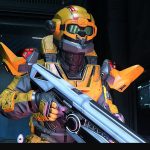

What happens when you shrink a Gunpla kit to five centimetres, hand it a unit card and drop it onto a dice-driven battlefield? You get Gundam Assemble — Bandai’s new miniatures skirmish game, and the most credible attempt yet to turn the Gundam plastic-model hobby into a gateway drug for tabletop wargaming.
IGN spent extended time with the starter set ahead of the worldwide launch, and the verdict from writer Mike Mamon is that it shapes up as “a fun bite-size brawl” against far heavier miniature games. Revealed alongside the Gundam Card Game as a visual companion, Assemble went on sale across most of the world on 31 October, with expansion packs already stacked up for early next year.
What is Gundam Assemble?
A competitive squad-based miniatures game from Bandai Spirits, built around approximately 5cm snap-together Gunpla figures. Players field squads of mobile suits — minimum three versus three — combining models with unit cards and tactical cards, using cardboard terrain on the included game map and resolving attacks with ten-sided dice.
Starter Set 01 (£30/$35 range, ¥3,850 in Japan) includes six miniatures: the RX-78-2 Gundam in a beam saber attack pose, Char’s Zaku, Wing Gundam Zero EW, Gundam Epyon, Gundam Barbatos Lupus Rex and Gundam Vidar — plus 18 tactics cards, six unit cards, the map, dice, terrain, tokens and a handbook with a painting guide.
Key point: Expansion Packs 01 and 02 — adding Unicorn Gundam (Destroy Mode), Torohachi, Delta Plus, Gundam Aerial, Gundam Phalact and Daryl Balde — launched the same day, with a Deluxe Set and two more expansions in November.
Snap-fit assembly, glue optional
The biggest barrier to miniature wargames is usually the building — and Assemble sidesteps it entirely. Like the gunpla the series is famous for, pieces cut from the sprue and snap into place, needing only a handful of parts per unit. Proper cutting tools are recommended at this scale, but there is no glue, no filing marathon, and the minis show a decent amount of detail for their size.
The trade-off is customisation. Instead of swappable loadouts, different releases offer fixed variants and poses — the Paint Pack’s RX-78-2 brandishes a beam rifle where the starter set’s swings a saber. Purists may chafe; beginners and the impatient will appreciate being at the gameplay within an evening.
Painting five-centimetre mobile suits
Painting is optional — the game plays perfectly well straight off the sprue — but Assemble makes it unusually painless. Gundam units are mostly monochrome with embellishments, there is no dreaded flesh tone to blend, and any water-based acrylic model paint works alongside Bandai’s own Paint Pack range. A primer coat saves time on units like the RX-78-2 or Wing Gundam Zero, and the starter set’s manual walks newcomers through the basics.
Mamon’s experience tracks: a dedicated paint day with friends produced a Char’s Zaku in custom colours without drama. Perfectionists will still spend longer at the brush than on the board — the head pieces and weapons are tiny — but the floor here is far lower than Warhammer’s.
The timeline is the secret weapon
On the table, matches turn on a single elegant device: the Gundam Assemble timeline. Ten rounds equal one phase, and each unit’s token slots into a starting position — Gundam Vidar at round one, the RX-78-2 at round two, and so on. Actions push tokens back down the track, so a unit that overcommits can be left waiting.
A typical scenario runs two phases — twenty rounds — with players scoring points from objectives amid a scatter of effect tokens. Being able to read who acts next adds a layer of planning that fans of turn-based tactics games will recognise instantly; IGN likened the feel to XCOM and Star Wars Zero Company. Crucially, the timeline sits off to the side of the map, away from the token chaos of the battlefield.
Only six units per side also means games actually happen. No army-building treadmill, no hunting for a friend willing to commit a weekend to Kill Team — just a squad each and an evening.
Bandai’s plan: 30 products in year one
This is not a toe-dip. Bandai launched five products simultaneously and plans more than 30 items worldwide within a year, moving to a monthly release cadence. The company has singled out Europe — with its strong board game culture and dedicated play spaces — as a priority market, and frames Assemble as a starting point for players who have never touched Gundam at all. A playtest video even features Kyle McCarley, voice of Iron-Blooded Orphans protagonist Mikazuki Augus and a self-confessed miniatures fan.
Whether Bandai becomes “the game that first comes to mind when people think about tabletop gaming” — the company’s stated ambition — is a stretch. But a snap-fit, low-commitment skirmish game wearing anime’s biggest mecha brand is a serious swing at the hobby’s front door. And the door, for once, has no painting required.