
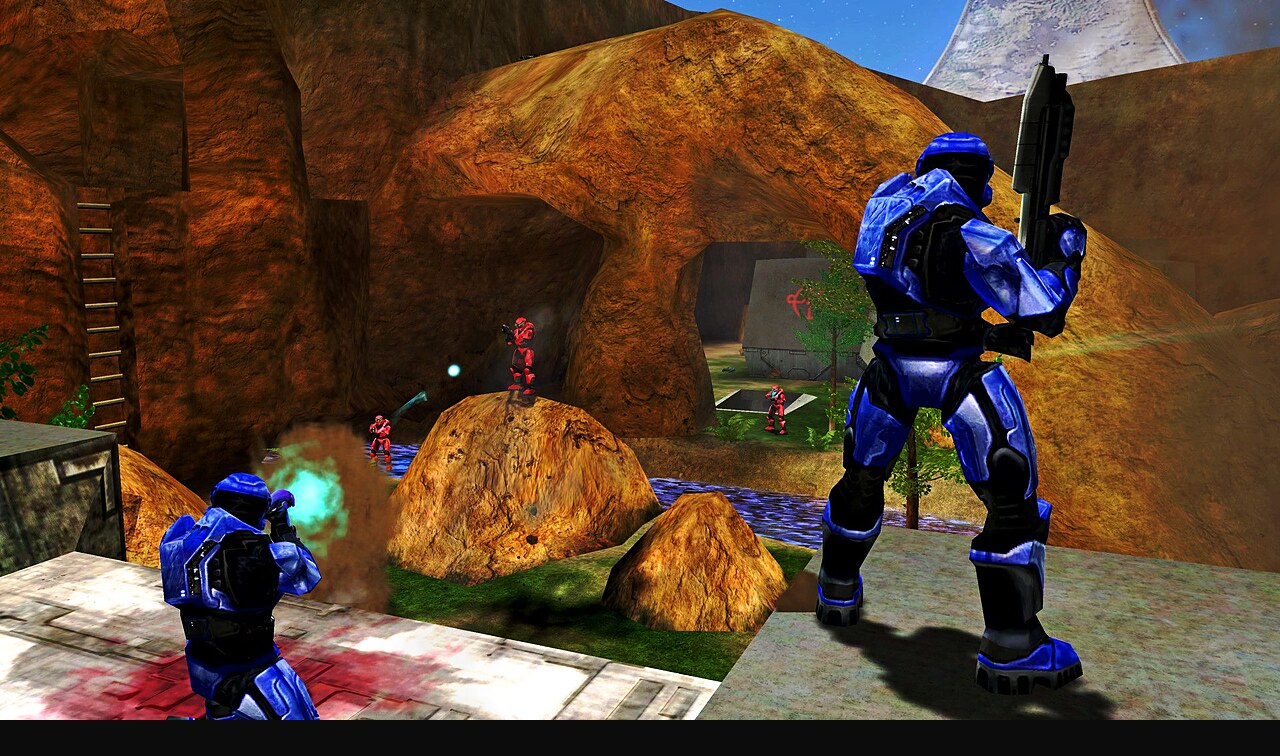
It started with a tweet. Developer Mitchell Hynes posted a short video clip to X on 29 September, showing the opening moments of Halo: Combat Evolved running inside a standard Chrome browser window. No Xbox. No Steam. No launcher. Just a tab. Within hours, tens of thousands of people had shared it, and the question Halo fans had not thought to ask — “can the original game run in a browser?” — had a very unexpected answer.
No Install, No Launcher — Just a Tab
Hynes’ port is built on the Halo: Combat Evolved decompilation project created by Bnunu, which reverse-engineered the original Xbox build of the game. Rather than packaging it as a traditional PC executable, Hynes used WebAssembly to compile the game code so that a modern desktop browser can run it locally — the game executes on your own hardware, not a remote server. Campaign missions stream in chunks from a private data bucket, but the core game logic runs directly inside Chrome.
The result works better than it has any right to. The frame rate is described as “a little janky” in early hands-on reports, but the game is clearly playable. On capable hardware, performance can reportedly reach 120fps. Mouse and keyboard support is built in, with controls mapped from the original Xbox Duke controller layout to a standard PC setup.
How to play: Head to mitchellhynes.com/halo in a current desktop version of Chrome. Hardware acceleration must be enabled. Mobile is not supported — Hynes himself warns against trying it on iOS or Android.
The 128-Player Multiplayer Question
The technical headline is the multiplayer. Hynes’ announcement listed “WORKING Multiplayer up to 128 players” alongside working split-screen co-op — though the 128-player figure came with an honest parenthetical: “untested.”
In practice, the networking layer is genuinely ambitious. The port uses WebRTC for browser-to-browser connections, with TURN infrastructure handling cases where direct peer links are not practical. Smaller online matches have already been confirmed working. The invite system is straightforward — the host creates a private lobby, copies a link, and shares it with friends. Each friend opens the link and joins automatically; the host starts the match. The 128-player ceiling is designed into the netcode, but nobody has publicly stress-tested what happens when 128 Spartans pile into a match across different browsers, GPUs and internet connections simultaneously.
The port is actively being developed rather than simply shipped as a finished product. Hynes has updated the project in response to early feedback, and the public repository continues to receive commits. For online play, everyone connecting to the same session needs a current desktop browser with WebGL 2 support, WebAssembly threads, and WebRTC enabled — requirements that cover most modern Chrome or Edge installs without any additional configuration.
Technically Impressive, Legally Murky
Microsoft has said nothing publicly about the project. No takedown notices have appeared. No official statement has been issued. That silence may or may not continue — the browser port uses the original Xbox game’s code, and while decompilation projects exist in a contested legal grey area, they have historically attracted scrutiny from rights holders when they achieve this level of visibility.
For now, the port is live and playable. Hynes has made the project’s repository publicly visible on GitHub and noted the browser version shares the same decompilation base as the Xbox build 2342 (cachebeta.exe). The full campaign, split-screen co-op, and online multiplayer for smaller groups are all functional. The 128-player mode waits for a proper stress test.
A Classic That Keeps Finding New Audiences
The timing is notable. This unofficial browser version arrives alongside the recently released Halo: Campaign Evolved — a full Unreal Engine 5 remake that launched on PC, PlayStation 5 and Xbox Series X/S but controversially launched without competitive multiplayer. For fans who want the original combat experience in a multiplayer setting, Hynes’ browser port is, for the moment, the only option that combines the classic campaign with online play.
A 25-year-old Xbox game running in a browser window, with no installation and a multiplayer lobby that can theoretically hold 128 players, is the kind of preservation story that tends to travel quickly. Whether Microsoft lets it continue to travel is, as Takeuchi might say, a question that still needs an answer.