
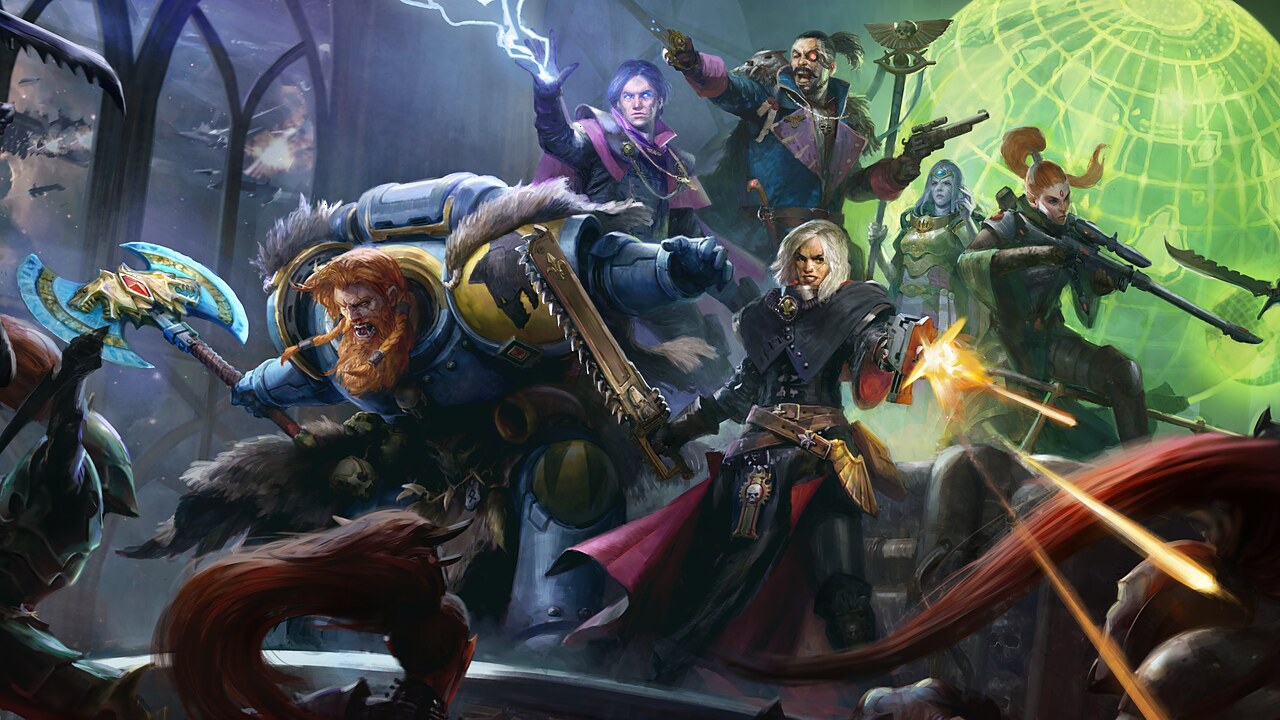
Ten years ago, Owlcat Games was fifteen people with a dream of making the kind of isometric RPGs they had grown up with. Today it is a 600-person studio running multiple simultaneous big-budget projects — and co-founder Alexander Mishulin says the ambition has not shrunk alongside the head count.
Speaking to IGN in a detailed profile published yesterday, Mishulin outlined how the studio built its reputation, where it is heading next, and why Warhammer 40,000: Rogue Trader‘s less-than-viral launch turned out to be a perfectly positioned success.

From Pathfinder to Rogue Trader: The Owlcat Story
Pathfinder: Kingmaker in 2018 was the studio’s foundation — a beloved but notably bug-prone isometric RPG that nonetheless proved Owlcat could ship ambitious cRPGs. The follow-up, Pathfinder: Wrath of the Righteous in 2021, won Best RPG of the year from outlets including Kotaku and Shacknews, and Mishulin identifies it as the real inflection point for the studio’s reputation.
“When a studio does a second game and it’s still successful, it’s proof that you can make experiences over and over again with new things, new ambition, new goals,” Mishulin says. “It helped start a lot of discussions with different parties about what we could do next.”
Those discussions led to Warhammer 40,000: Rogue Trader in 2023 — pitched to Games Workshop before Wrath of the Righteous had even released, using internal builds of the Pathfinder game to demonstrate Owlcat’s credentials. Rogue Trader performed better than average, Mishulin says, though not the viral explosion that Baldur’s Gate 3 was in the same year.
“BG3 did us a great favour — it brought RPGs into the spotlight. When so many players enjoyed it, they started to look at what the next game would be. Some went to our games and enjoyed them. So we are really grateful that Larian made such a great game.” — Alexander Mishulin, Owlcat Games
Two Games in Production: Dark Heresy and The Expanse
Owlcat currently has two announced titles in full production. Warhammer 40,000: Dark Heresy continues the studio’s cRPG tradition, but with a specific twist: it centres on an Inquisitor — one of the Warhammer 40,000 setting’s Imperial investigators — and builds an investigation system into the RPG framework. It is a natural extension of what Rogue Trader established.
The other project is more surprising. The Expanse: Osiris Reborn is a third-person action RPG built on Unreal Engine 5, developed with the blessing of rights holder Alcon Entertainment. The team worked with the same people who developed the Belter Creole language for The Expanse TV series, and consulted with physics experts on specifics like blood behaviour in zero gravity. It is not the game you would expect Owlcat to make — which is precisely why they are making it.
Expected release: The Expanse: Osiris Reborn is listed for Q2 2027 on PC, PS5, and Xbox Series X/S. Warhammer 40,000: Dark Heresy has no announced release date.
The Mass Effect Connection — and Why It Matters
Mishulin is explicit about the Mass Effect inspiration for The Expanse game: “For the next generation of game developers, Mass Effect was the formative experience. It was the game that brought them into the industry. And they really wanted to make another game like that.”
Building a cinematic action RPG on UE5, with a new camera perspective and entirely different gameplay feel from Owlcat’s previous work, required a year of prototyping. Staff were hired from CD Projekt Red specifically for their experience with cinematic games. The studio is, in practical terms, becoming two different things at once — a cRPG house and an action RPG developer — running two parallel teams on separate projects with different toolsets.
Whether that ambition translates into two successful, distinctive games remains to be seen. But for a developer that started with fifteen people in 2016, reaching 600 and still asking “what else can we try?” is, at minimum, a remarkable trajectory for the gaming industry to watch.
Owlcat also expanded beyond development to become a publisher in recent years, releasing Rue Valley in 2025 and Shadow of the Road in 2026 under its publishing label. Mishulin hints that the studio’s roadmap extends four to five years out already, with the direction firmly set. An open question remains: with Larian having stepped back from Baldur’s Gate 4, is Owlcat the studio best positioned to answer the call? Mishulin’s thoughts on that, when put to him directly, are characteristically candid — and worth reading separately.