
For thirty years, the promise of Pokémon has been simple: take your favourite creatures everywhere with you. First it was a Game Boy cartridge in your pocket. Then a Pokéwalker clipped to your belt. Then a phone glued to your hand. And now? Tsunekazu Ishihara, president and CEO of The Pokémon Company, is looking at your wrist — and your eyes, and your finger.
Speaking at the inaugural PokémonXP event in San Francisco, Ishihara outlined a vision for the franchise’s next chapter: deeper integration with wearable technology. Smartwatches, smart glasses and smart rings were all named as potential targets, though Ishihara was careful to frame this as aspiration rather than announcement. His exact words: “Maybe a challenge for us is going to be figuring out how we can integrate Pokémon more with some of the wearable technology.”
It’s an understated quote for what could be a significant shift in how the franchise extends itself beyond the screen.

From Pokéwalker to Pokémon Sleep: The Companion Device History
The Pokémon Company isn’t new to companion hardware. The Pokéwalker — bundled with Pokémon HeartGold and SoulSilver in 2009 — was essentially a pedometer that let players transfer a single Pokémon and earn experience by walking. Primitive by modern standards, but it proved the concept: Pokémon works beyond a screen.
Pokémon GO Plus extended the idea. The small Bluetooth accessory let GO players catch Pokémon and spin PokéStops without looking at their phone. It sold well among commuters and parents who wanted to play discreetly. Ishihara himself described earlier accessories as “secret weapons” players could pull from their pockets to do something cool.
But today, he says, he’s thinking bigger. Pokémon wants to integrate more deeply with devices people already wear — not accessories they carry.
Ishihara at PokémonXP: “Maybe a challenge for us is going to be figuring out how we can integrate Pokémon more with some of the wearable technology — like smart watches, smart glasses, even smart rings.”
The Fitbit Pokémon Sleep: Proof the Concept Can Work
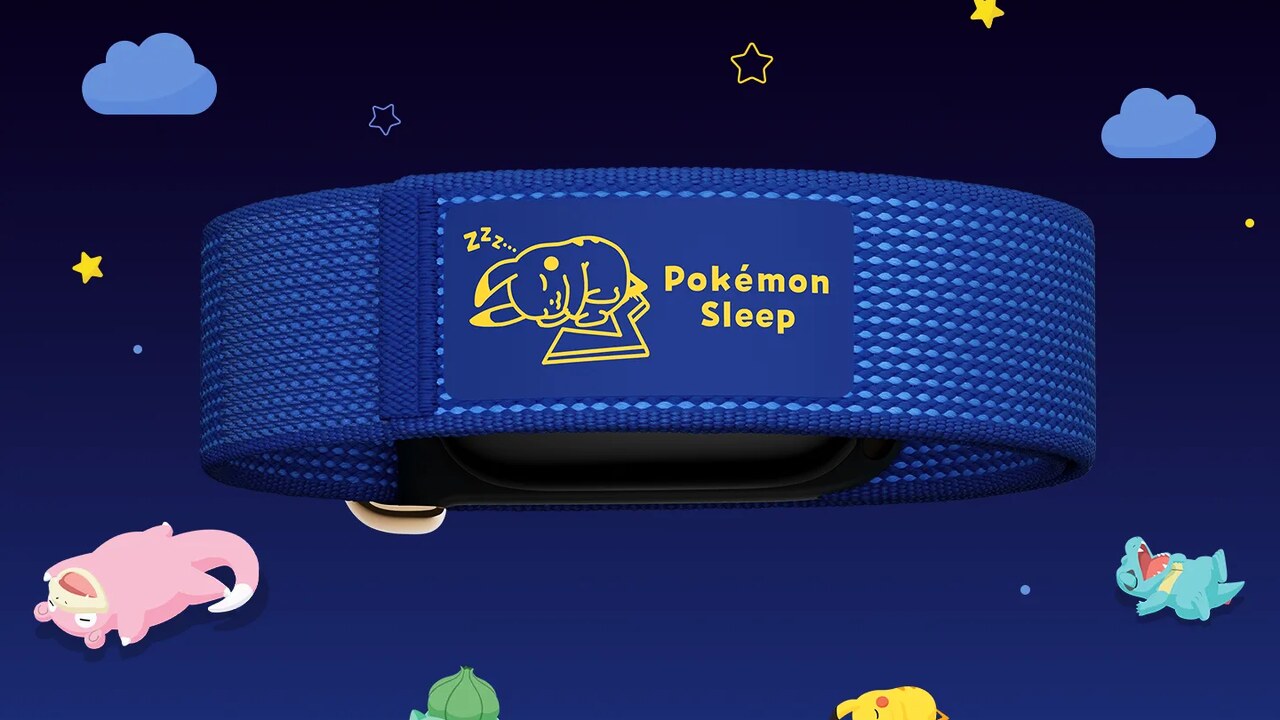
Ishihara’s comments came days after Google and The Pokémon Company announced the Fitbit Air Special Edition Pokémon Sleep — a $129.99 wearable health tracker launching 15 September that connects directly with the Pokémon Sleep app on both Android and iOS.
The integration is more than cosmetic. Pokémon Sleep gamifies rest: the app uses overnight sleep data — gathered through Google Health or Apple Health — and turns it into a game mechanic. When you wake each morning, Pokémon with sleep types matching your own gather around Snorlax. Your Sleep Score generates “Drowsy Power,” which determines how rare the Pokémon that appear around you are the next day.
The Fitbit Air Special Edition comes in a Sleepy Blue colourway with a silk-printed sleeping Pikachu on the strap. It’s the most seamless wearable-to-game integration The Pokémon Company has produced to date, and it gives Ishihara’s wider comments a credible foundation. The device is available on both iOS and Android, with pre-orders now open at Google Store and Target ahead of the 15 September ship date.
Smartwatches, Glasses, Rings — What Integration Could Actually Look Like
Each of Ishihara’s three named devices presents distinct opportunities — and challenges.
Smartwatches are the most accessible path. They have screens, continuous biometric data streams and user bases numbered in the hundreds of millions. A full-featured Pokémon GO companion watchface, or dedicated sleep-tracking baked into an official watchOS or Wear OS app, could reach players without requiring any new hardware purchase.
Smart glasses are further off. Today’s consumer glasses — Meta’s Ray-Bans among them — offer audio and a camera but minimal augmented reality. True AR overlays remain years from the mainstream. But Pokémon GO’s AR mode has always been the franchise’s most visible nod to mixed reality; if glasses technology catches up, the IP is well-positioned to take advantage.
Smart rings are the wildcard. The Samsung Galaxy Ring and Oura Ring have carved a niche as discreet health trackers — no screen, no buttons, just continuous biometric data. Pokémon integration would live entirely within the data pipeline, surfacing in a companion app rather than on the device itself.
What This Means for the Franchise’s Next Thirty Years
Pokémon turns 30 this year — and Ishihara’s public musing on smart device integration signals a franchise actively thinking about how it evolves alongside consumer technology rather than simply riding it.
There’s no product roadmap attached to his comments. This is a direction, not a launch schedule. But The Pokémon Company has a track record of following through on what its CEO discusses publicly. The Pokéwalker started from similar thinking. Pokémon GO came from a Niantic partnership that began as an experiment.
Smart rings, smartwatches and glasses may not have Pokémon integration tomorrow. But if Ishihara has his way, the franchise will eventually be on your body — not just in your pocket.