
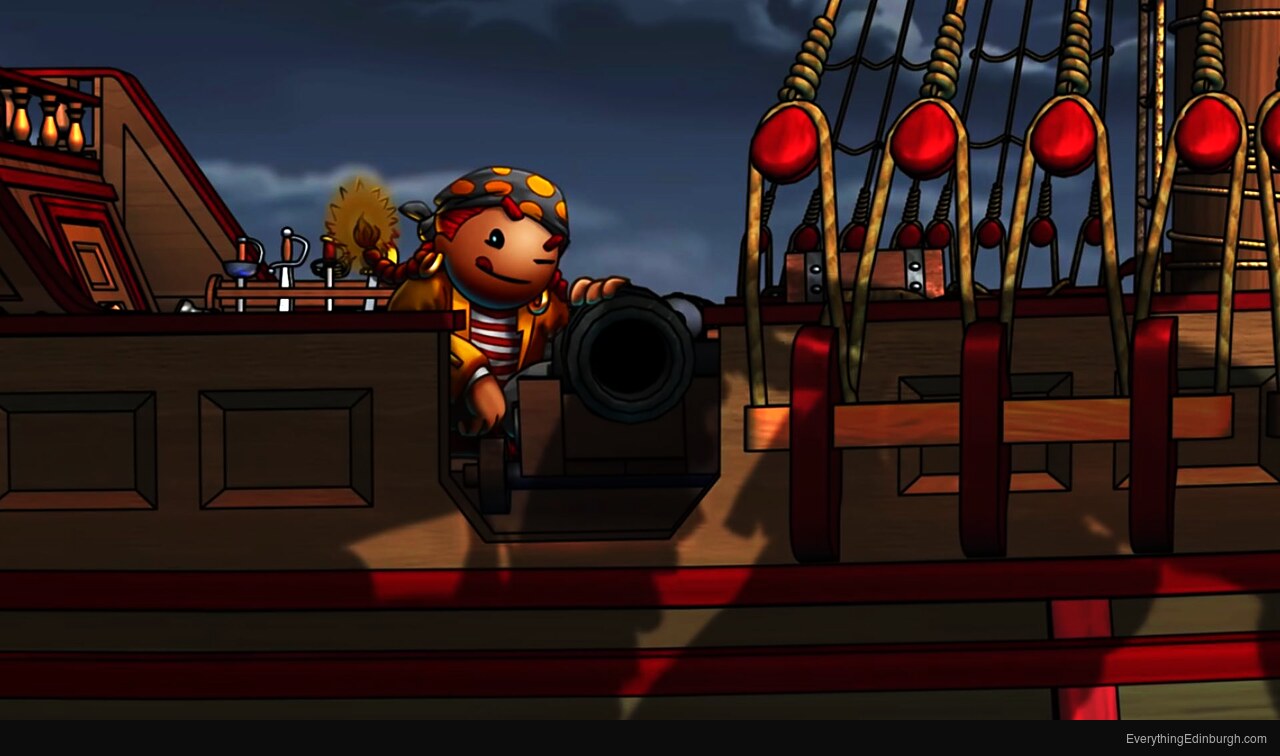
“You are a pirate. You do puzzles.” That’s essentially the entire pitch for Puzzle Pirates, an MMORPG from Three Rings Design that launched in 2003, well before half its current playerbase was born. And yet, in September 2026, it’s still there. Still official. Still on Steam. Not a private server run by nostalgic volunteers — the actual, licensed, operational game.
PC Gamer writer Lauren Morton stumbled across this discovery the way most people do: by idly searching for a game from their childhood, expecting a dead link, and finding something unexpected instead.
What Puzzle Pirates Actually Is
Puzzle Pirates is, as it sounds, an MMO built around piracy and puzzle mechanics. Players sail the seas, crew ships, attack other vessels, and participate in pirate economy — all through a series of minigames that replace the usual combat and crafting systems with actual puzzles. Swordfighting is a puzzle. Sailing is a puzzle. Even carpentry and bilge-pumping, which keep your ship afloat, are puzzles.
The concept was unusual in 2003 and remains unusual now. Most MMO combat systems reward time investment and gear; Puzzle Pirates rewards spatial reasoning and quick thinking. That core loop was distinctive enough to build a community around, and it turns out that community never entirely left.
Still free: Puzzle Pirates is available on Steam (and directly at puzzlepirates.com) as a free-to-play game with optional cosmetic purchases — the same model it has used for most of its life.
The game operates on a series of “oceans” — discrete servers with their own economies and player communities. The largest have been running continuously since the mid-2000s, making their in-game economic histories some of the longest-running player-driven markets in gaming.
Grey Havens: The Custodians of Old Games
The reason Puzzle Pirates still exists in an official capacity is Grey Havens, a company that took over stewardship of Three Rings Design’s games after the original studio wound down. Grey Havens describes itself as an operator of “games created by Three Rings Design back in the glorious first decade of the new millennium” — a framing that suggests some institutional affection for the material.
Running an older online game in 2026 is non-trivial. The technical infrastructure, customer support, payment processing, and community management all require ongoing resources, even if the player numbers are a fraction of what they once were. That Grey Havens continues to do this is a form of active curation — maintaining titles that would otherwise exist only as ROM files and forum threads.
Why Small MMOs Outlast Expectations
Puzzle Pirates isn’t the only small MMO from the early 2000s still running. Tibia launched in 1997 and remains actively maintained. RuneScape’s Old School branch — which launched as a deliberate preservation of the 2007 version — now has more players than the main game ever did. Torn, a browser-based strategy game from 2003, has been running continuously since launch.
What these games have in common is a low cost-per-player-retained. Once a game’s development costs are largely sunk, a modest subscription or free-to-play player base can sustain operations indefinitely. The communities that remain tend to be deeply invested, resistant to leaving, and often composed of people who have been playing for fifteen-plus years. Churn is low; the people who stay really stay.
Grey Havens “operates games created by Three Rings Design back in the glorious first decade of the new millennium” — a framing that suggests some genuine institutional affection for the material.
Puzzle Pirates fits this pattern precisely. It never had the cultural footprint of RuneScape or the production values of early World of Warcraft, but it found a niche: players who wanted something structurally unusual, something that rewarded a different kind of attention. Twenty-three years later, that niche is still there.
For anyone who played Puzzle Pirates in the 2000s and assumed it had quietly closed, the Steam page is still there: App ID 99910, free to download, last updated in 2026. It’s the kind of thing the internet occasionally does — keeps something alive past all reasonable expectation, just because a few hundred people still love it enough to log in.