
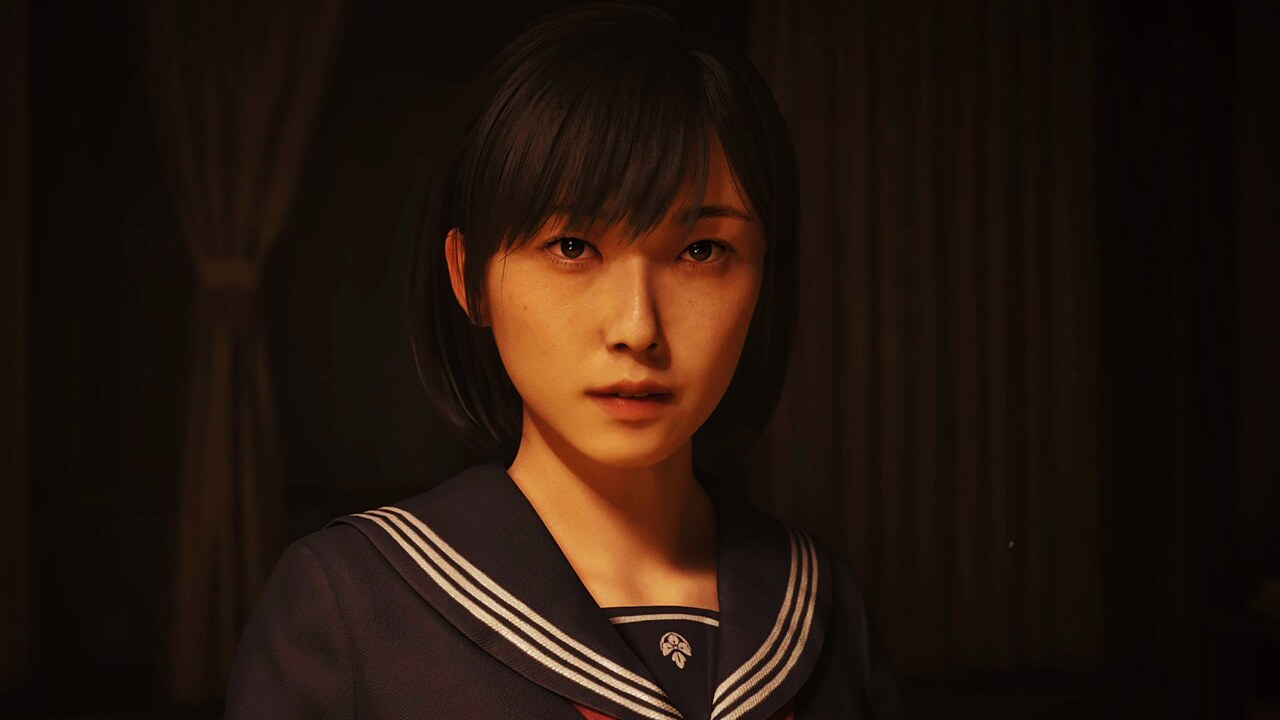
“At best, only about half of the original users will return with a remake.” That calculation, made by Motoi Okamoto, executive producer of the Silent Hill series, shaped everything that came next. Speaking at CEDEC 2026, Konami’s annual developer conference, Okamoto laid out the thinking behind one of the more ambitious IP revivals in recent gaming history — and why playing it safe would have doomed the series from the start.
Silent Hill had been dormant for years. The franchise carried the scars of cancelled projects and broken promises, and when Konami began quietly preparing for a comeback in 2019, it did so against a backdrop of deep player scepticism and a market already filled with indie horror games that owed much of their identity to the original series.

Avoiding the ‘Testing the Waters’ Trap
Okamoto’s central concern was what he called a “wait and see remake” — the industry habit of releasing a safe nostalgia product to gauge interest before committing further resources. His argument was not only that it would underdeliver, but that players would see straight through it.
“Players would immediately sense when a company is merely testing the waters. And if the company is taking a wait-and-see approach, so will the players.” — Motoi Okamoto, Silent Hill executive producer
The logic follows a simple principle: trust is reciprocal. Konami had a trust deficit with its own fanbase, accumulated through years of inaction and cancellations. Releasing one cautious remake would have reinforced, rather than repaired, that reputation. Okamoto believed the response would be equally cautious player enthusiasm — and a 50% return rate on a niche horror series is not a viable foundation for reviving a major IP.
Three Games, One Budget Decision
The answer was to commit visibly and all at once. When Okamoto’s team applied for the budget to develop the Silent Hill 2 remake, they simultaneously secured approval and funding for two additional titles: Silent Hill f and Silent Hill: Townfall. A new film was added to the slate at the same time.
Announcing all three games together — along with the film — was a deliberate signal. Players who might otherwise have greeted a single remake with a sceptical “I bet that’s all there is” would instead see a publisher that had already committed to a multi-year, multi-format revival. Okamoto described subverting those expectations in a positive way as one of the core tools for rebuilding the franchise’s relationship with its audience.
Redefining Silent Hill Itself
Commitment alone was not sufficient. Okamoto also had to solve the content problem: a series that had grown fatigued in part through repetition of the same setting and familiar formula. His team redefined Silent Hill not as a specific location, but as a psychological phenomenon — one that could unfold anywhere in the world and to anyone carrying the weight of guilt, trauma or unresolved conflict.
That shift in definition gave Konami creative permission. Silent Hill f, set in 1960s Japan, was the most visible expression of it — a game that bore almost no visual or cultural resemblance to the foggy American town of earlier entries. Okamoto was candid that the Japan setting was partly chosen to align with Konami’s identity as a Japanese company, but also because it demonstrated beyond doubt that the series had broken free of geography.
The approach mirrors what Resident Evil achieved under Capcom’s stewardship: pairing well-received remakes with genuinely new standalone titles, using each to draw in different audiences without cannibalising the other. Okamoto acknowledged that comparison directly, describing it as a cadence Konami has now discovered for itself.
What’s coming next: Silent Hill: Townfall releases on September 24, 2026. Okamoto has stated his goal is to deliver at least one new Silent Hill game every year — which suggests further titles are already in development.
The Writers Had to Read 200 Books a Year
One illuminating detail from Okamoto’s CEDEC talk: the scriptwriters working on Silent Hill f were required to read between 100 and 200 books a year, including the complete works of f’s writer Ryukishi07. Okamoto framed it as non-negotiable — commissioning a writer without deeply understanding their entire body of work was, in his words, both a lack of basic respect and a practical failure of creative oversight.
It is the kind of standard that speaks to the broader seriousness of the revival. The gamble Konami made in 2019 — three games, simultaneous budgets, a film, a full redefinition of what the series means — has, by any reasonable measure, paid off. Silent Hill 2 arrived in 2024, Silent Hill f followed in 2025, and Townfall arrives this September. The half of the fanbase who would not have returned for a simple remake got something different. It seems they showed up after all.