
Valve’s Steam Machine costs $1,049 before you add the controller. A PlayStation 5 Digital Edition costs $599. By the numbers, there is no contest — and yet, for one specific type of player, that logic collapses entirely.
An IGN editorial published this week makes a case that will resonate with a particular gaming household: the Steam Machine, despite its premium price, is a better fit than either a PS5 or an Xbox Series X for anyone already deep into Steam’s massive PC library. The argument is not that the machine beats consoles on specs or value — it does not, not cleanly — but that it serves a different purpose better than anything else available.

What the Steam Machine Gets Right
The Steam Machine is, at its core, a living-room PC running SteamOS. That distinction matters enormously for one reason: if you own a library of Steam games already, you are not repurchasing anything. Buying a PS5 to play on your sofa means rebuilding your library on PlayStation. The Steam Machine sidesteps that entirely via Proton, Valve’s compatibility layer that lets most PC games run on SteamOS without modification.
Online multiplayer on the Steam Machine is free. No PS Plus, no Xbox Game Pass subscription required just to play against friends. Given that Sony and Microsoft both charge £50–£60 per year for that privilege, the Steam Machine’s higher upfront cost starts to look different over a three-year period.
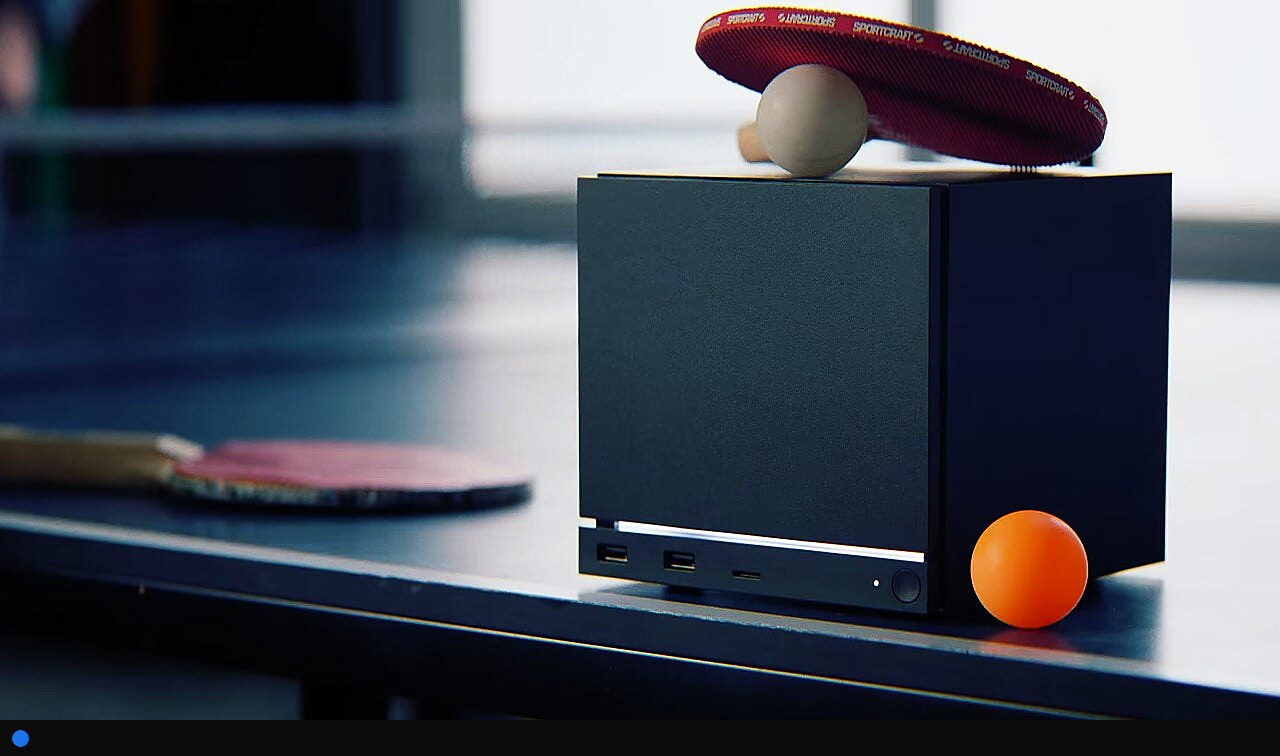
The hardware itself deserves credit too. A Zen 4 six-core processor paired with an RDNA 3 GPU gives it a more modern architecture than either console — both the PS5 and Xbox Series X run on older Zen 2 / RDNA 2 designs — even if the consoles’ tight hardware-software integration often translates to more consistent real-world performance. The form factor is compact: a small cube that sits quietly under a TV without demanding its own shelf.
Quick comparison: Steam Machine $1,049 · PS5 Digital $599 · Xbox Series X $599.99 — but Steam Machine requires no online subscription, and your entire PC library comes with you.
Where It Struggles Against Consoles
The limitations are real and worth stating plainly. Popular competitive games including Valorant, Call of Duty, and Battlefield use kernel-level anti-cheat software that does not function on SteamOS. If those titles are central to your gaming life, the Steam Machine is simply not the right machine.
Availability is another friction point. The Steam Machine launched on a reservation lottery system. Scalpers moved in quickly, and units have been appearing above retail on second-hand markets. Meanwhile, the PlayStation 5 and Xbox Series X sit on shelves at every major retailer — no lottery required.
The PS5, in particular, offers something the Steam Machine cannot replicate: first-party PlayStation exclusives. For anyone who cares about that catalogue, Valve’s box is not a substitute. The Xbox Series X wins on Game Pass value, bundling a rotating library and day-one first-party releases at a monthly rate.
The One Question That Decides It
When evaluating Steam Machine vs PS5 or Xbox Series X, most hardware comparisons focus on specs and price — and they’re right to. But here is the decision tree that actually matters: do you already own a Steam library you actively use?
If yes — and especially if you have spent years building a collection through Steam sales — the Steam Machine is the only living-room box that lets you play all of it on a television without starting over. The no-subscription online benefit adds up. The modern chip architecture future-proofs the hardware in a way the current console generation cannot claim. For that specific player, the premium price has a rational justification.
If you are starting from zero, or if your games live on PlayStation or Xbox, the maths simply do not work. A PS5 Digital Edition at $599 is a better day-one purchase for almost everyone else. The Steam Machine is not a bad product — it is a very good one aimed at a very specific person. The problem is that person has to know who they are before spending a thousand pounds on a box.