
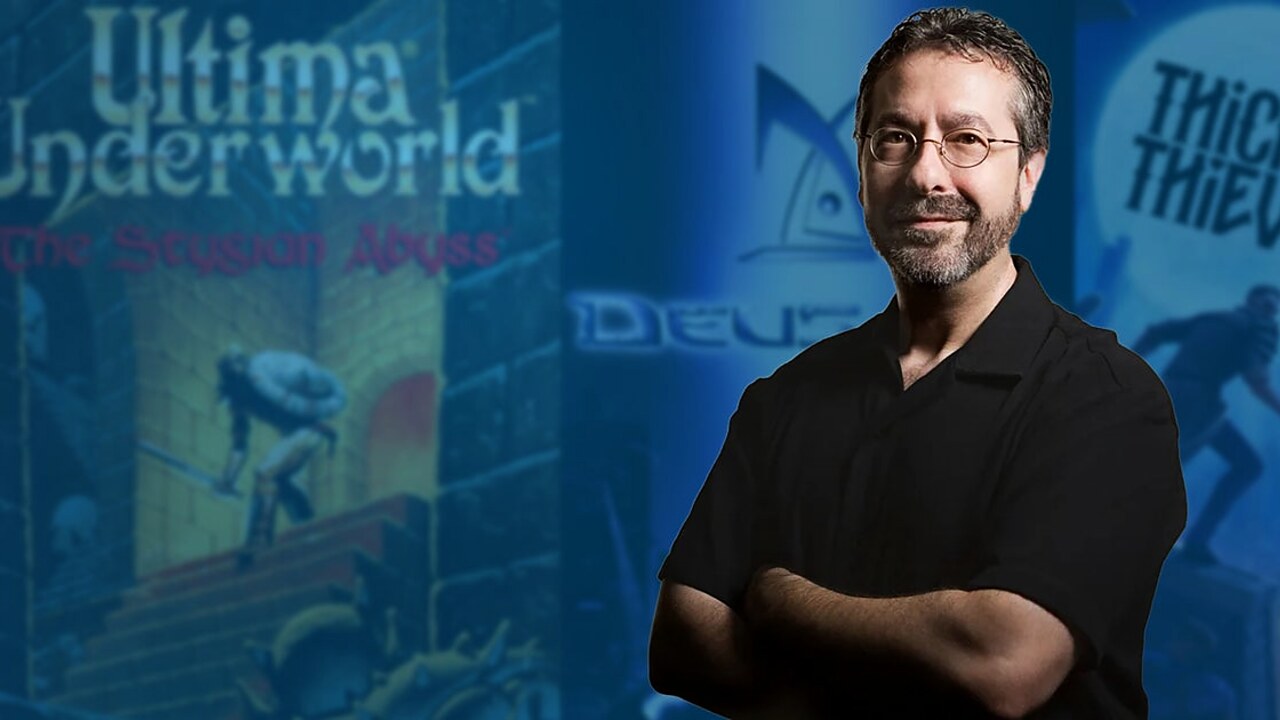
“Let me cut right to the chase. I’m retiring from game development.”
With that, Warren Spector closed the chapter on one of the most consequential careers in video game history. The designer behind Deus Ex, System Shock, and Epic Mickey announced his retirement in a LinkedIn post on 18 August 2026, ending 44 years of game development with characteristic directness. He left no ambiguity, no vague transition to “consulting mode”. Just a full stop — or as close to one as a man who built careers around player agency could manage.
“I’ve been here before and changed my mind,” he wrote, “but this time I’m pretty sure I mean it.”

44 Years, 17 Games, One Genre
Spector arrived in the games industry in the early 1980s and spent his first decade at Origin Systems, contributing to the Wing Commander and Ultima series. He moved to Looking Glass Studios, where his fingerprints ended up all over System Shock, before heading to Ion Storm Austin and producing what many still consider the genre’s defining moment: Deus Ex in 2000.
The immersive sim — a genre built around open-ended systems, player freedom, and meaningful consequences — owes much of its vocabulary to Spector’s design philosophy. Games like Dishonored, Prey, and Deathloop exist in the creative lineage he helped establish.
He went on to lead Junction Point Studios, producing Epic Mickey for Disney — a redemption arc for a forgotten cartoon character that earned genuine critical attention — before joining Otherside Entertainment in 2016 to work on System Shock 3. That project collapsed when Tencent acquired the IP and shut down development. His final release, the co-operative heist sim Thick As Thieves, launched in May 2026 to mixed reviews. Two months later, the studio confirmed there would be “no further content updates”. It was a quiet, slightly muted ending for a career defined by bold noise.
Why Now?
Spector was candid in a way most retiring executives are not. Age and health were factors — he noted he is “a month away from my 44th year as a developer” — but he also pointed to something more intangible: the industry simply isn’t as enjoyable as it used to be.
“The game business has changed and it’s just not as much fun for me anymore,” he wrote. It’s a sentiment that resonates widely at a time when major studios have faced mass redundancies and creative upheaval, driven by engagement metrics and the erosion of mid-budget game development. Spector built careers at studios that no longer exist, in a version of the industry that prioritised craft over quarterly targets.
He was also explicit that a new generation of developers deserves their time in the sun — a generous exit note from someone who had plenty more runway left if he’d wanted it.
Three Games He’ll Never Make
The most telling passage in Spector’s LinkedIn post wasn’t the announcement itself — it was the admission that he has “mixed feelings” about stepping away, because there are still three specific games he would have liked to make. One is described as “very big”, one as “very small”, and a third he doesn’t know how to make, which he says scares him.
He didn’t name them. He probably never will. But that admission — the three games living in his head — is the most human note in the whole statement. Spector spent a career building systems designed to give players freedom, and now the designer himself has run out of runway to run his own experiments.
In his words: “To all of you reading this I want you to remember that games are not a solved problem yet — there is, I hope, plenty of experimentation and innovation to come.”
The Genre Doesn’t Forget Its Founders
Retirement, Spector clarified, doesn’t mean disappearance. He plans to write books, do some lecturing, and is open to consulting work. And there’s a keyboard waiting for him — he wants to get his piano chops back. For someone who spent four decades designing systems of cause and effect, a musical instrument that rewards practice and punishes neglect seems fitting.
He signed off with a message to younger developers that doubles as a statement of intent: “Your job is to make people forget people like me ever existed.” It’s self-deprecating, but it’s also the correct philosophy for someone who understood that the point of a genre pioneer is to be surpassed.
Warren Spector didn’t just make games. He made the conditions under which a certain kind of game became possible. The immersive sim genre continues — Arkane Studios, WolfEye, and others are actively developing in the space he helped define. That’s a better legacy than any LinkedIn post can capture. “Never say never,” he added. But for now, the sunset beckons, and the man who gave us Deus Ex has earned it.