
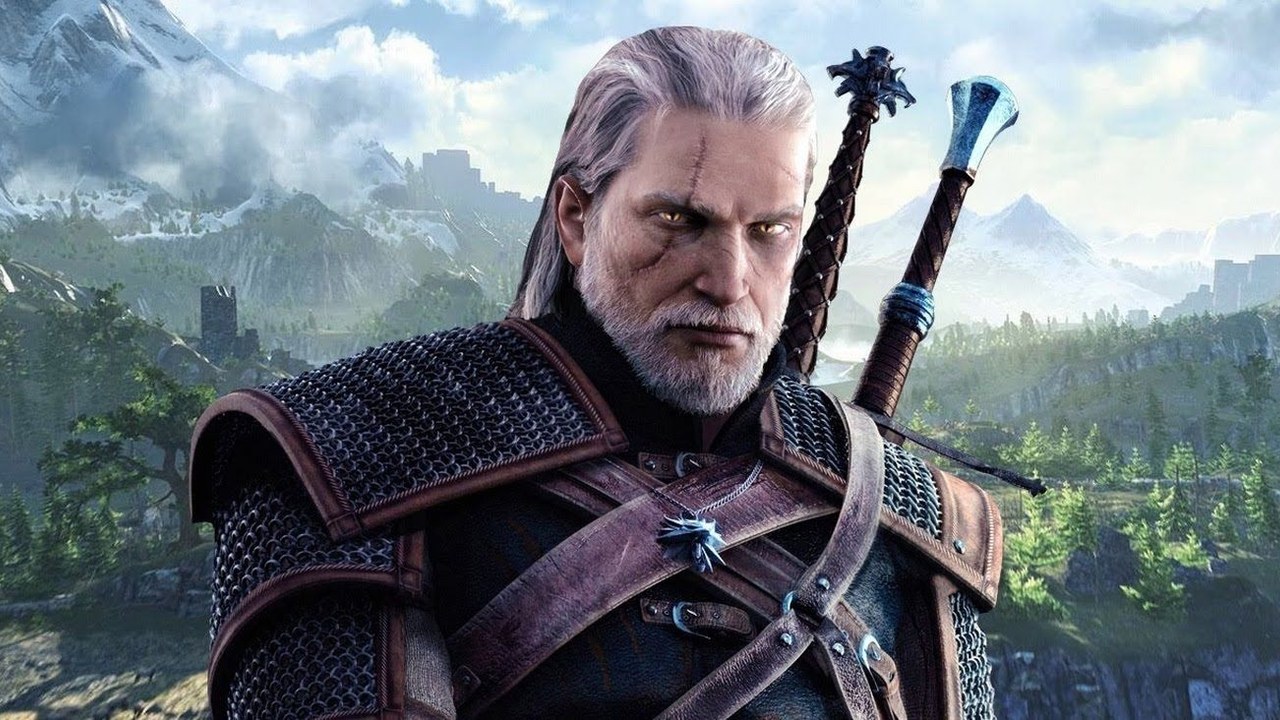
About a year ago, CD Projekt Red invited Jacek Rozenek back to their studios for a listen. Rozenek has been Geralt of Rivia in Polish since the very first Witcher game, recording some 10,000 lines for The Witcher 3 alone — a performance many fans rank alongside Doug Cockle’s celebrated English take. The studio needed to know how much his voice had changed.
The answer, revealed this week in a Game File report by Stephen Totilo, was: enough to require artificial intelligence. For Songs of the Past, the new Witcher 3 expansion due in 2027, Rozenek will record every line himself. Then the voice technology company Respeecher will adjust the recordings so that Geralt sounds the way he did in 2014.
A stroke changed one of gaming’s most famous voices
In 2019, Rozenek suffered a stroke that left him temporarily unable to speak at all. For an actor whose instrument is his voice, it was the cruelest possible injury. He rehabilitated slowly, at one point training six or seven hours a day simply to speak like an actor again, and by 2021 he was well enough to record a handful of new lines for The Witcher 3’s next-gen update.
That session left him exhausted. He kept training regardless, and eventually returned to work in full. So when CD Projekt decided to build a brand-new expansion around the base game, there was never any question about who would play Geralt in Polish. The problem was not his acting — by all accounts the performance is intact. The problem was the sound of his voice, which the stroke and the passage of time had left noticeably lower and gruffer.
Why new lines would clash with old ones
Songs of the Past is set in the middle of The Witcher 3’s timeline, which creates an unusual production problem. New dialogue — reactions, battle cries, one-liners — will play moments before and after lines Rozenek recorded more than a decade ago, sometimes in the very same regions of the map. Geralt’s voice shifting audibly between scenes would have been jarring in a way players would struggle to articulate but immediately feel.
“The point is that this voice should be as close as possible to my voice from 12 years ago. I have great trust… for the creators of this game.” — Jacek Rozenek
Crucially, the actor gave his blessing before a single model was trained. He still performs Geralt exactly as he always has: the emphasis, the emotion, the timing are all his. Respeecher only alters the tonal character of the result.
How Respeecher rebuilt the sound of Geralt
CD Projekt handed the company everything Rozenek had ever recorded for the role. “We basically delivered to Respeecher all the lines that Jacek recorded for us for The Witcher 3,” localisation producer Mikołaj Szwed explained. “They created an algorithm of his voice, based on his lines.”
Synthetic speech artist Dmytro Vasylets described dozens of hours of model training and iteration with the CDPR team, wrestling with AI artefacts that, in his words, never fully disappear. The hardest part was not the timbre but Rozenek’s emotional range — the half-tones, the shouts, the groans, the anger, fear and laughter that make a performance feel lived-in.
Consent, and an uncomfortable precedent
This is not CD Projekt’s first collaboration with Respeecher, nor its most difficult ethical call. The company previously used the technology to recreate the voice of Miłogost Reczek, who played Viktor Vektor and Vesemir in Polish releases before his death in 2021 — with his family’s blessing.
Szwed is candid that generative AI in voice acting is “a big concern” for someone who works with actors across every region, while insisting “this was a special case”, born of Rozenek’s health rather than budget. Nothing similar is planned for Doug Cockle’s English Geralt, and future games set later in the timeline — including The Witcher 4 — will not need the treatment at all, since an older, gruffer Geralt can simply be written into the character. The wider industry is still writing its rulebook: voice actors have fought hard for contractual control, and platforms are moving too, with Nexus Mods introducing AI disclosure rules for community content.
A special case — for now
The news landed a day after veteran actor Stephen Russell discussed returning as Garrett for Nightdive’s Thief: The Dark Project remaster, more than twenty years after he last played the role — a reminder that the industry usually solves the ageing-voice problem with patience, not software.
Rozenek’s situation is the strongest possible advertisement for AI voice tools: a consenting actor, a genuine medical need, a performance preserved rather than replaced. Yet every exception quietly normalises the technology that made it possible. The industry will have to decide who gets to define “special case” — and how long the definition holds.