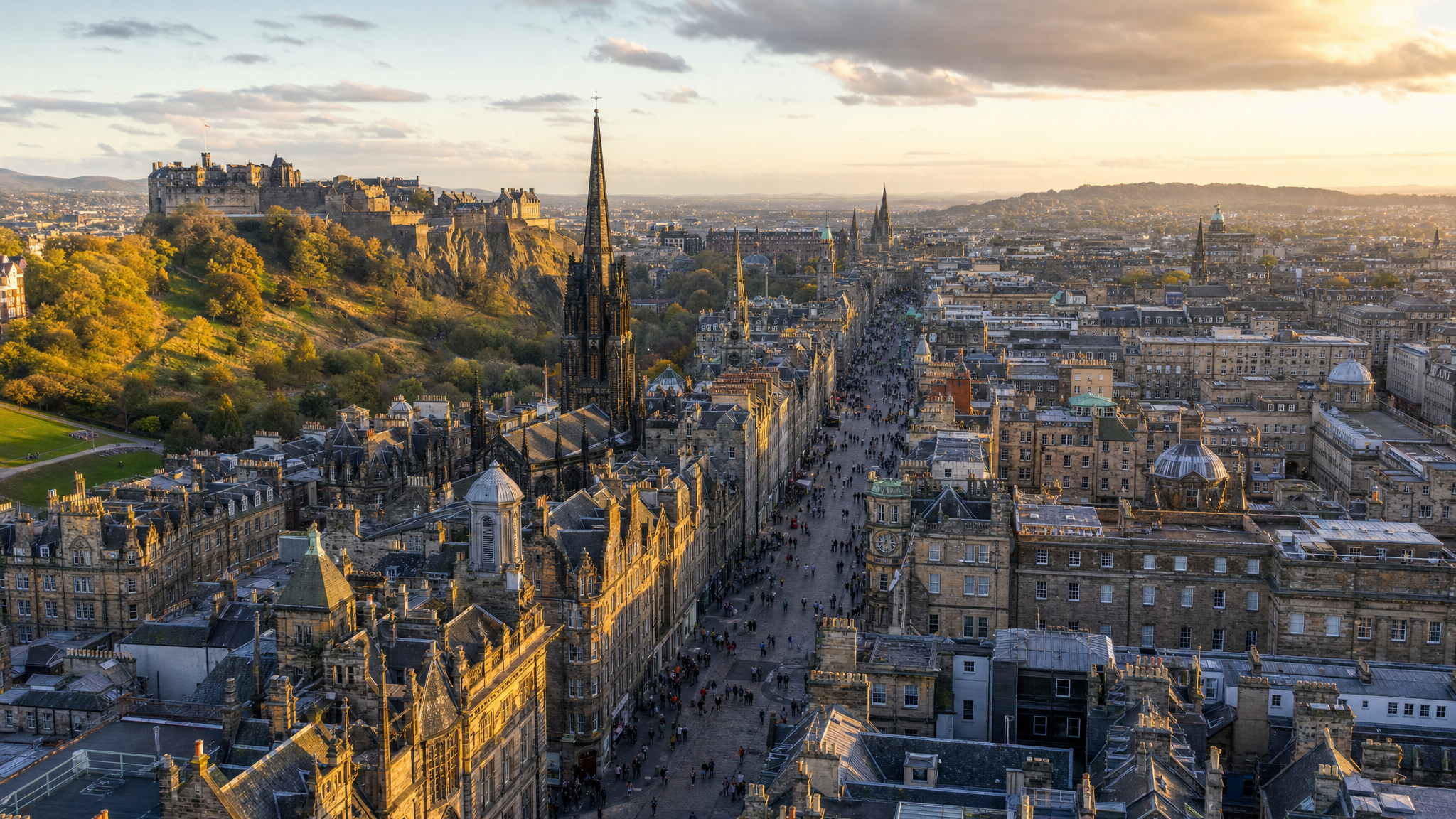
Edinburgh has become the first city in Scotland to introduce a visitor levy, with the 5% tourist tax on overnight stays coming into effect today, 24 July 2026. The charge applies to all paid overnight accommodation across the city and is projected to raise up to £50 million a year. Accommodation providers — from large chain hotels to privately rented AirBnbs — started collecting the levy this morning.
Quick Facts
- What: A 5% surcharge on the cost of all paid overnight accommodation in Edinburgh
- Where: Citywide — hotels, B&Bs, self-catering, holiday lets, hostels, and more
- When: In effect from 24 July 2026
- Cost: 5% added to your accommodation rate — a £100-per-night room costs £105
Who Pays the Levy
The charge applies to anyone paying for overnight accommodation in Edinburgh. Day visitors are not affected — the levy is specifically tied to overnight stays. A wide range of accommodation types are covered: hotels, B&Bs, self-catering apartments, holiday lets, AirBnbs, aparthotels, guest houses, hostels, vessels and boats moored in a single location, student lets during non-term periods, and caravan and camping sites.
There are exemptions. People placed in emergency homeless accommodation, those at risk of domestic abuse, asylum seekers, refugees, and some disability benefits recipients are all exempt from paying. Accommodation providers must still collect the levy from these guests upfront, but affected individuals can claim it back at a later date.
Festival visitors: The 5% rate is flat throughout the year — it does not rise during August’s festival season. Whether you’re visiting for the Fringe, the Edinburgh International Festival, or a quiet January weekend, the charge is identical.
Where the Money Goes
Revenue from Edinburgh’s visitor levy must be reinvested in services and facilities substantially used by visitors — the funds cannot simply be absorbed into the general council budget. The City of Edinburgh Council has already committed to several specific projects.
A £5 million fund will help deliver 472 new homes between 2026 and 2028, alongside public realm improvements at Hunter Square, Cramond, and Portobello. The restoration of the Leith Theatre receives £5 million, and a further £3 million goes towards the long-running project to convert the Old Royal High School into a national music centre. An additional £3 million is earmarked for new and upgraded public toilet facilities across Edinburgh.
Perhaps the most immediately visible change for visitors: around £1 million will fund a new dedicated city centre policing unit — an inspector, three sergeants, and 45 constables — to support events and free up frontline officers elsewhere in the city. Accommodation providers are reimbursed around 2% of the total pot to cover their costs in collecting and remitting the charge.
What You Need to Know When Booking
For most visitors, the levy will appear as a line item on their booking or be built into the final price — there is no separate form to fill in. Accommodation providers collect and remit the charge directly to the City of Edinburgh Council. The levy is calculated on your accommodation cost only and does not apply to food, car parking, tours, or any other extras.
If you’re planning a stay in Edinburgh, a four-night break in a £125-per-night hotel room would attract a £25 levy. Bookings made before 24 July but with check-in on or after today are subject to the new charge. Providers were given advance notice to update their systems ahead of launch.
What’s Next
Edinburgh won’t be alone for long. Glasgow is set to introduce its own 5% visitor levy in January 2027, while Aberdeen is planning a 7% charge from April 2027 at the earliest. Further afield, Manchester brought in a tourist tax in 2023 and Liverpool followed in 2025. Wales is preparing to allow local councils to roll out their own schemes from 2027.
A mandatory three-year review means Edinburgh’s scheme will be assessed before 2030. Revised legislation also gives councils the option to switch from a percentage charge to a flat fee with at least 18 months’ notice. For now, anyone visiting Edinburgh for the August festivals or any other time of year simply needs to budget an extra 5% on their accommodation.