
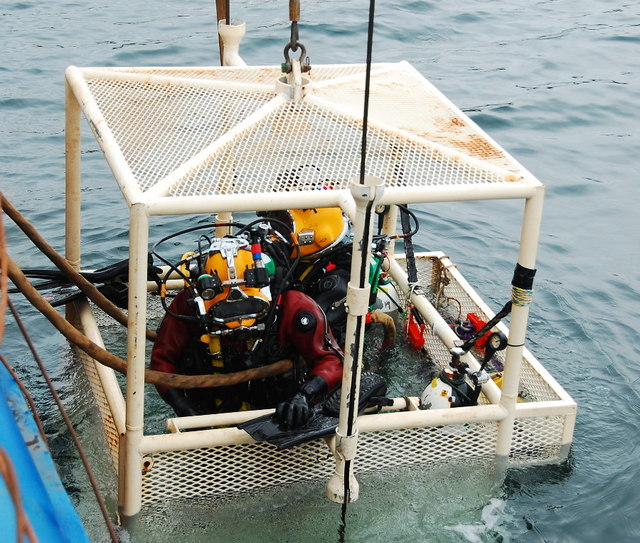
Why settle for seeing the barriers from above when you can go deep below?
Not only can you see the barriers up close during a dive, but you can also swim between sunken warships and spot sea life.
I did a “Try and Dive” with Kraken Diving, a 25-minute (ish) experience led by a professional guide.
The Kraken team provided everything needed; I just turned up in a long-sleeved top without a hood, yoga pants, and warm socks, which I wore underneath the dry suit, flippers and mask.
The dive itself was fascinating, with the sea floor looking like foliage!
We spotted hermit crabs, common crabs, red velvet crabs, pollock, wrasse, scorpion fish, sea urchins, and starfish while slowly making our way through the WW1 British Blockship SS Gartmore, which was sunk on September 14, 1915, and the WW2 British Blockship Empire Seaman, sunk on June 30, 1940.
I’ve dived once before in Cuba but have no formal qualifications—just curiosity and a desire to try new things!
If you are more experienced, you can dive with less support or even do a multi-day diving tour if you are an established diver.
Getting There and Diving Base
Most Orkney dive trips run out of Stromness, where several charter operators are based. From there boats reach the wreck sites in Scapa Flow within a short sail. Dive packages usually include boat, air fills and guiding, and can be combined with local accommodation.
What You Will See
Scapa Flow holds the remains of the German High Seas Fleet, scuttled by its crews in 1919 – three battleships and several light cruisers still rest on the seabed. Divers explore towering hulls, gun turrets and blockships in generally sheltered water, which is why Scapa is ranked among the finest wreck-diving sites in the world.
Who It Suits
The deeper fleet wrecks sit between roughly 30 and 45 metres, so they best suit experienced and technical divers with drysuit and, ideally, nitrox training. Shallower blockships near the Churchill Barriers give newer divers and even snorkellers an accessible taste of the anchorages history.
Practical Tips
Book dive charters well in advance for summer,The deep fleet wrecks suit experienced divers,Cold water – a drysuit and good thermals are essential,Shallower blockships suit less experienced divers,Note the HMS Royal Oak wreck is a protected war grave
Frequently Asked Questions
Why is Scapa Flow famous for diving?
Scapa Flow is where the German High Seas Fleet was scuttled in 1919, leaving battleships and cruisers on the seabed. The combination of intact, historic wrecks in relatively sheltered water makes it one of the best wreck-diving destinations in the world.
Do you need to be an experienced diver to dive Scapa Flow?
The main fleet wrecks lie at around 30 to 45 metres, so they suit experienced and technical divers, often diving with a drysuit and nitrox. Less experienced divers can still explore the shallower blockships near the Churchill Barriers with a local charter.


