
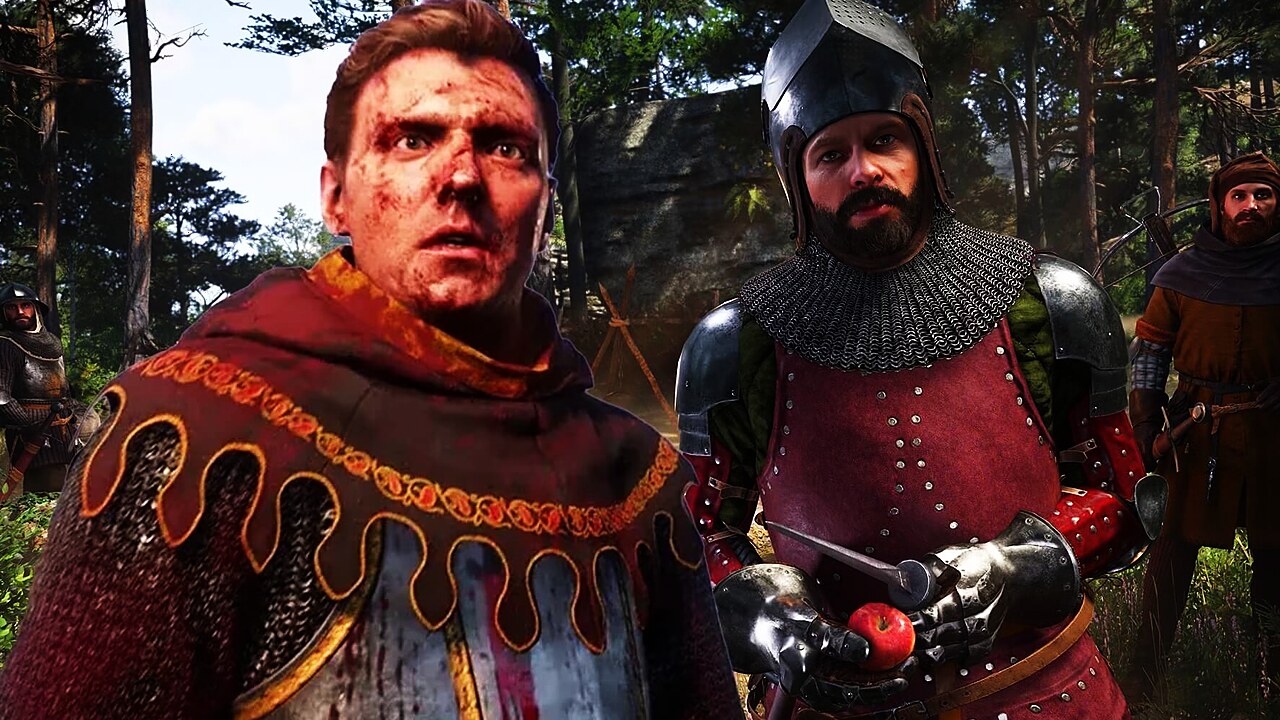
When Nvidia’s DLSS 5 arrived in the hands of players via a leaked mod extracted from NBA 2K27, the reaction split the gaming community almost immediately. Many tried it in their existing games and called the results neural slop — AI-altered faces and lighting they hadn’t asked for. Then Daniel Vávra, the creative director of Kingdom Come: Deliverance II, tried it in his own game and had a very different reaction.
He loved it. And he’s now publicly saying that players who believe the technology undermines artistic intent have, in his words, literally gone crazy.

What DLSS 5 Actually Does to KCD2’s Characters
Vávra was specific about what Nvidia’s technology does and doesn’t change. According to his posts on X, DLSS 5 doesn’t alter the geometry of character models — the actual 3D shapes remain untouched. What it does is upgrade how lighting, shadows, and skin textures render across those models in real time.
That distinction matters because DLSS 5 is a neural rendering system — it uses machine learning to enhance how light interacts with surfaces, rather than editing model geometry. Warhorse Studios built KCD2’s characters using photogrammetry — 3D scans taken directly from real people, subsequently refined by artists. The models, Vávra says, were always meant to look like accurate representations of their real-world subjects. The problem was the game engine’s own limitations prevented that vision from being fully realised in shipping code.
“The absence of helmet shadows on faces and distorted normal map rendering WERE NOT OUR ORIGINAL CREATIVE INTENTION. People are just insane.” — Daniel Vávra, KCD2 creative director
DLSS 5, he argues, corrects for those engine shortcomings. Shadows from hats, helmets, and small props like buckles — elements that the graphics pipeline previously couldn’t render accurately on character heads — now appear as intended. Skin texture and fine detail read closer to what artists saw in ZBrush, before the constraints of real-time rendering stripped them back.
Why Vávra Thinks the Backlash Is Misplaced
The crux of Vávra’s argument is that he is the creative director. If anyone has standing to say whether DLSS 5 violates Kingdom Come: Deliverance 2’s artistic vision, it’s him — and he says it doesn’t. It fulfils it.
He acknowledged that the initial wave of DLSS 5 criticism, back in May when the technology was first announced, had more basis. Early demonstrations did draw uncomfortable comparisons to Instagram-style beauty filters, with some users noting that faces began to look homogenised and artificially smoothed. Vávra himself distinguished between what was shown then and what has since been leaked.
The version modders extracted from NBA 2K27 is, in his view, significantly more restrained. His KCD2 comparisons show improved fidelity rather than a wholesale transformation. The developer noted the technology also shows promise when applied to older games, suggesting it could meaningfully improve classic titles like The Witcher 3, which recently received its own rendering overhaul.
Performance note: In its current form, DLSS 5 roughly halves framerate in KCD2. Vávra acknowledged this as a genuine limitation, though one he expects future iterations of the technology will address.
A Community Divided on AI in Graphics
Not everyone agrees with Vávra, and the industry context helps explain why. A TechPowerUp reader poll found 58% of players do not want AI technology altering the visual output of their games at all — a position that reflects a broader wariness about where AI-enhanced rendering is headed.
For players who fell in love with KCD2’s specific visual character, the idea that its look might retroactively be changed by a post-processing layer — even one its creator endorses — is uncomfortable. The game shipped with a particular set of visual compromises; those compromises are now part of how it’s remembered.
Vávra’s counterpoint is that those compromises were always unintentional. The Nvidia technology, in his reading, isn’t changing his game — it’s finishing it. Whether that argument lands depends a great deal on whether you think a developer’s original intent should always take precedence over how their finished work was received and experienced by players. It’s a question the games industry hasn’t fully answered yet, and DLSS 5 has simply made it more urgent.