
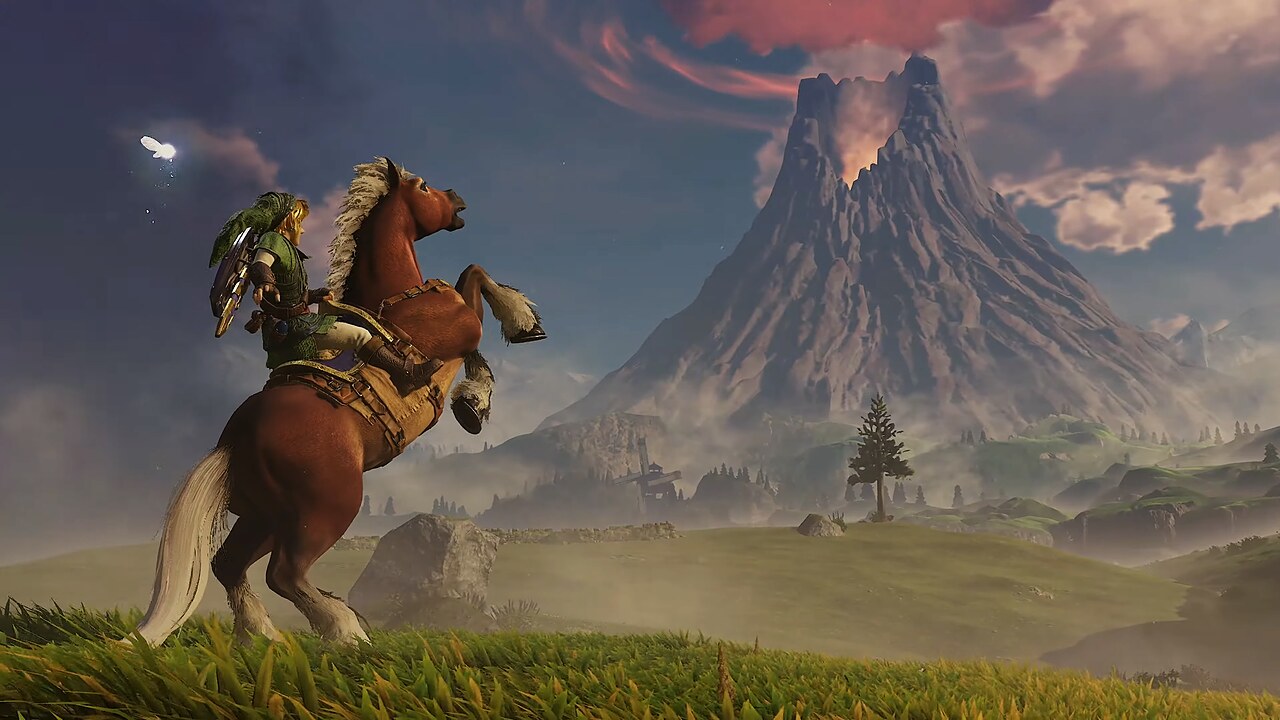
When Nintendo’s Zelda 40th anniversary Direct revealed a full remake of Ocarina of Time heading to Switch 2 on 5 November 2026, producer Eiji Aonuma was careful with the framing: this is a “largely faithful remake,” not a reinvention. What he neglected to mention is just how much even a faithful remake of a 1998 N64 game can change when you rebuild it from scratch for modern hardware.
The Zelda Direct gameplay footage contained more than 40 individual differences, ranging from the obviously expected (visual overhaul, better draw distances) to things nobody quite saw coming, like humming Ocarina songs into a microphone. Here are the changes that will actually affect how the game feels to play.
The Mechanical Overhaul: Camera, Jumping, and Combat
Three additions alone will transform the experience for anyone who remembers the N64 original. Free camera movement is the first — Aonuma acknowledged it sounds like a basic expectation for a 2026 game, but Ocarina of Time shipped without it, making exploration feel rigid by any modern standard. The Switch 2 version lets players spin the camera fully around Link at any point.
A dedicated jump button is the second. Link now jumps freely on the X button, consistent with Breath of the Wild and Tears of the Kingdom. In the original, jumping was automatic — triggered by running off ledges — and the change means players must now be alert to drops rather than trusting the engine to catch them.
Combat has also been reworked to feel snappier. The original Ocarina slowed things down on hit; the remake removes that effect, giving sword attacks and shield blocks a faster, more satisfying rhythm. Lock-on targeting now shifts the cursor from yellow to red when properly acquired.
Quality of Life: Menus, Movement, and the Wallet
The inventory screen has been redesigned along Breath of the Wild lines — a scrollable grid rather than the C-button slots of the N64 era, with item use mapped to ZR and quick access via the directional buttons. The new system also allows Link to keep moving while holding items, which was not possible in the original.
Rolling has been changed to feeding into a sprint — holding the roll button now sends Link into a sustained dash, eliminating the original game’s infamous roll-spam movement trick. Swimming also gets a speed boost option, and the dive meter has been redesigned from a top-screen countdown timer to a vertical stamina bar next to Link.
The starting wallet capacity jumps from 99 rupees to 200, addressing one of the original game’s longstanding irritations: opening a chest containing a high-value rupee only to watch it disappear because you were already full.
Release date: The Legend of Zelda: Ocarina of Time Remake arrives on Nintendo Switch 2 on 5 November 2026.
The World: No Loading Screens, Time, and Castle Town
Loading screens between major areas remain in the remake — Aonuma said the team kept them deliberately, to preserve the feel of the original. But inside towns and dungeons, buildings can be entered without any loading at all. Players simply walk into shops, which now look like actual structures rather than the minimal tree-stump designs of the N64 version.
Time now flows continuously across the entire game world. In the original Ocarina, time paused in locations like Kokiri Forest and Castle Town, only ticking forward in open areas like Hyrule Field. The remake removes that exception entirely, which affects when characters appear and when certain events trigger.
Hyrule Castle Town has received the most substantial world overhaul. The area is now fully explorable without fixed camera angles, with new alleyways, increased crowd density, new mini-games, and expanded dialogue. Characters actually move and interact rather than standing in place.
Threads of Time, Voice Acting, and the Microphone
Three additions stand out as the most surprising. Full voice acting has been confirmed for Ocarina of Time — the same approach Nintendo used in Breath of the Wild and Tears of the Kingdom, and a significant departure from text-only dialogue that defined the original. Whether Navi’s voice survives the upgrade is a question the internet is already divided on.
Threads of Time is a new quest tracking system — a visual timeline that fills in as players progress through the main story, with a sub-menu showing current objectives. The original Ocarina had no such system; players found their way by memory and exploration alone. The feature connects to a new “Zelda Notes” section in the Nintendo Switch app.
Then there is the microphone. Players can hum Ocarina songs into the Switch 2’s built-in microphone and Link will play them in-game, eliminating the need to memorise button sequences. A physical Ocarina of Time model accessory (sold separately) will also work with this system — possibly the most Nintendo thing Nintendo has announced this year.