
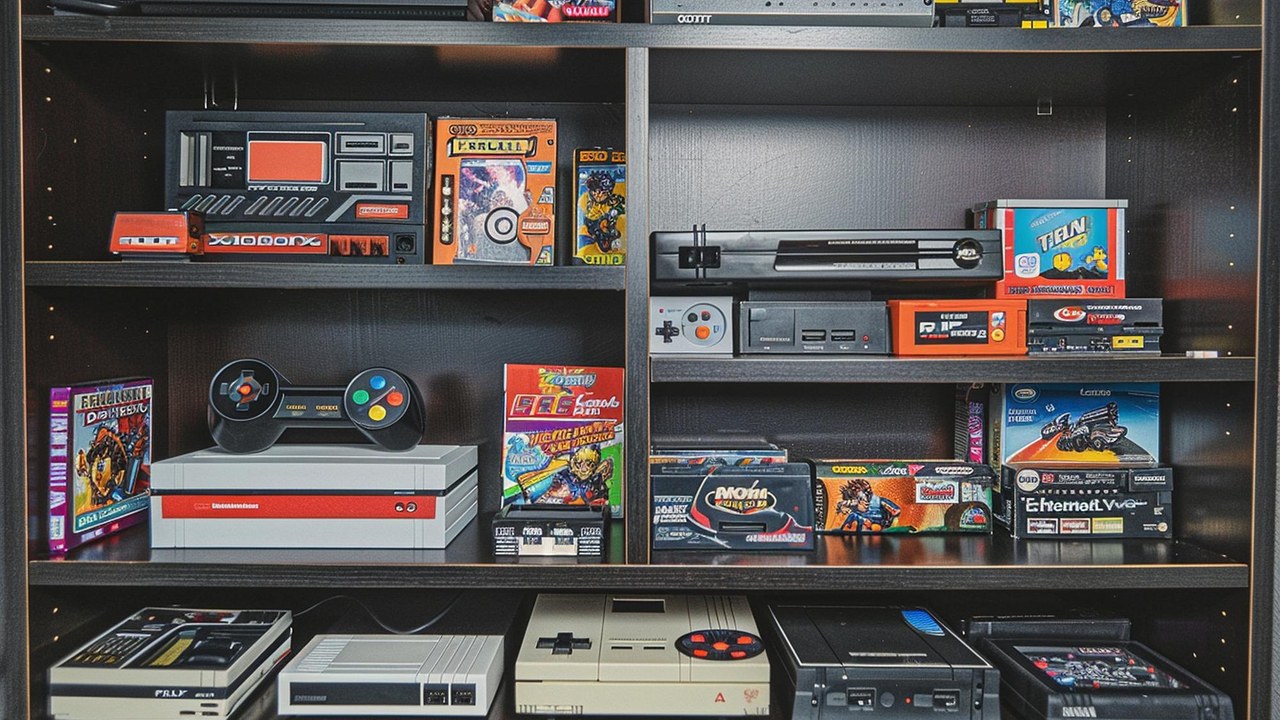
When did you last hold a PC game in your hands? For most players, the answer is years — or never. The DRM-free storefront GOG, whose name once stood for Good Old Games, wants to change that, and its senior business development and partnerships manager Marcin Paczynski has described a surprisingly concrete vision for how.
Speaking to GamesRadar+, Paczynski said selling physical games remains a “dream” the company has not abandoned, even if turning it into reality is, in his words, “a very, very complicated thing.”
A Shelf You Can Actually Order From
The scenario Paczynski sketches is elegant in its simplicity. “Ideally, my dream would be to be able to buy physical versions of those games on GOG,” he explained. “You go to your shelf on GOG, you click on the game that you would like to receive a physical copy of, you order it, and it gets to you. That would be a perfect scenario.”
In other words: your existing digital library doubles as a mail-order catalogue for physical media. No separate store, no guesswork about availability — just a button next to every game you already own. The idea, he noted, has been floating around GOG “for years now”, and while nothing has been announced, he is not ruling it out.
“You go to your shelf on GOG, you click on the game that you would like to receive a physical copy of, you order it, and it gets to you. That would be a perfect scenario.”
Why Physical Is ‘a Very, Very Complicated Thing’
The obstacles are substantial. Physical distribution is effectively a different business from running a digital storefront: logistics, warehousing, shipping and returns are all things GOG has never had to do. On top of that, selling physical copies would require additional approvals from publishers for each title — a licensing layer that could slow any pilot to a crawl.
There is also the question of format. Optical drives are now rare on gaming PCs, which makes CDs, DVDs or Blu-rays an unlikely delivery medium. Speculation has pointed instead to USB drives or SD-style cartridges, which could also open the door to physical extras — printed maps, stickers and lore booklets of the kind that made big-box PC gaming special in the first place.
The Preservation Program’s Small Steps
Until the dream materialises, GOG is taking what Paczynski calls “small steps in that direction”. In September, the GOG Preservation Program — the initiative that keeps classic games running on modern hardware — added scans of original big-box packaging to a growing list of titles, starting with Myst, Descent and Hitman: Codename 47, later joined by Star Trek: 25th Anniversary and Armikrog.
Buyers get full-size printable templates to assemble at home, plus interactive 3D models of each box viewable on Windows and Mac. GOG announced the feature with a characteristically blunt slogan: “If they won’t give you physical games, make your own.” More than 10,000 people have since signed up to donate to the program.
The company’s independence gives it room to manoeuvre. Since late 2025, GOG has been owned not by CD Projekt but by the studio’s co-founder Michał Kiciński, who bought the storefront outright — a change that has sharpened its preservation-first identity.
Could GOG Actually Pull It Off?
Context makes the ambition feel less quixotic than it sounds. Sony and Microsoft have both moved to curtail physical console releases, PC abandoned boxes years ago, and “there is no game preservation with DRM”, as Paczynski puts it. A storefront that could offer tangible, permanent ownership of classics would stand entirely alone in the market.
Would it be commercially sensible? Almost certainly not at first — hence the caution in every quote. But GOG has built its reputation on doing the commercially awkward thing, from DRM-free downloads to keeping 1990s classics playable on modern systems. If anyone resurrects the PC game box, a store that already sells nostalgia by the gigabyte is the obvious candidate. Paczynski’s own summary says it all: “I really hope that at some point we will be able to do it. We’ll see.”