
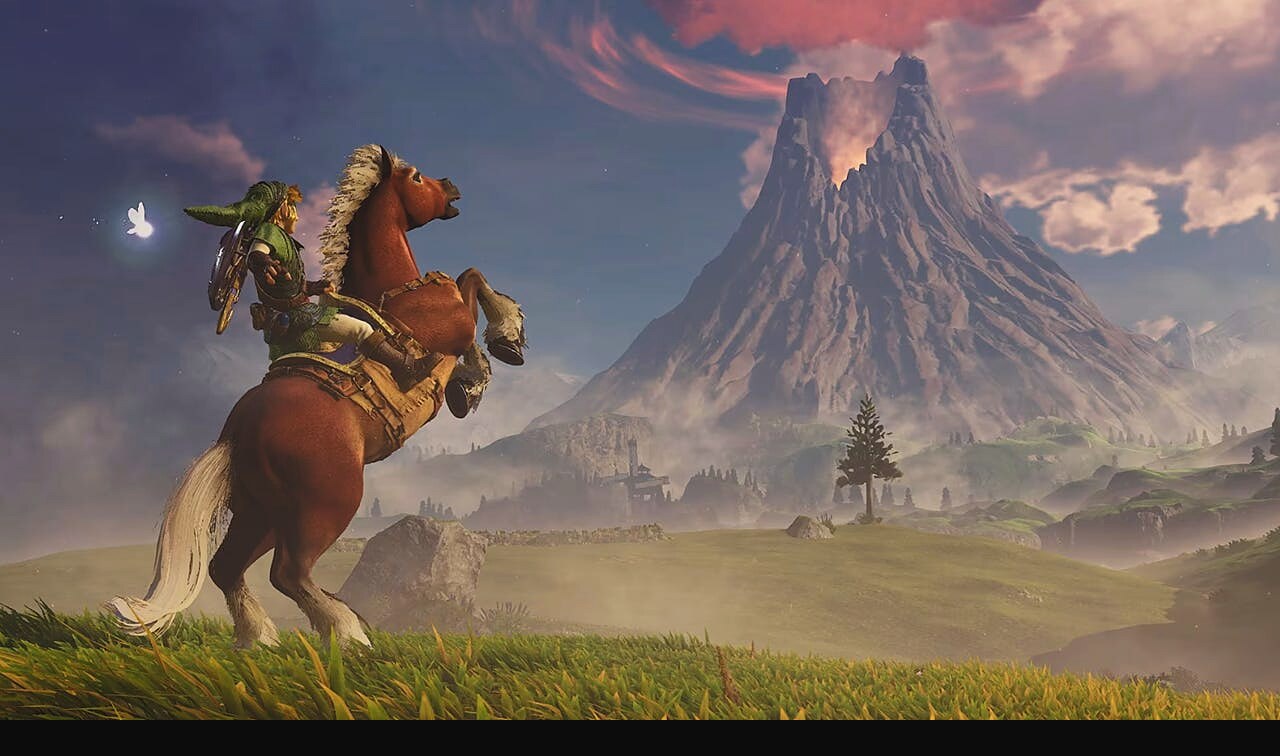
“We realized that we were missing out on the moments of discovery.” That is Eiji Aonuma explaining why a feature he personally ordered for the Ocarina of Time remake — fast travel — was quietly dismantled before anyone outside Nintendo knew it existed.
In the first instalment of Ask the Developer Vol. 24, published this week, the veteran Zelda producer revealed that the Switch 2 remake briefly carried warp points dotted across Hyrule, shortcuts in the mould of Breath of the Wild. Then the team played the game with them installed, understood what they were costing, and pulled every single one back out.
The Warp Points That Almost Were
The reasoning behind the experiment was sound, at least on paper. Anyone who rolled a virtual boulder across Hyrule Field in 1998 knows the drill: the original game’s answer to long distances was Link’s forward roll, abused by players and speedrunners alike ever since. Aonuma looked at how the series had evolved, spotted the iconic field as a stretch that might benefit from modern convenience, and asked the developers to add warp points that never existed in the original.
“Even though I was the one who proposed adding warp points, they just weren’t working for me in the end, so I got the team to take them all back out again. (Laughs)” — Eiji Aonuma
It is a rare thing in games development: a producer proposing a modernisation, watching it fail in playtesting, and having the honesty to reverse his own idea with a laugh. The episode says as much about Aonuma as it does about the design of Ocarina of Time.
Why Rolling Across Hyrule Field Was the Point
The problem, Aonuma explained, was that the shortcuts deleted the detours. Playing with warp points, the team kept losing those small interruptions — the stop-and-stare beat of “Wait, what’s this?” — that turn a journey across the field into a sequence of discoveries. Without them, traversal became what fast travel always risks becoming: a menu.
Through that process, he said, the team was reminded how deeply those moments are woven into the very structure of the game. The inconvenience is the design. Breath of the Wild was built from the ground up around warping across a vast map; Ocarina of Time was built around the slow accrual of landmarks in the player’s head, and grafting one philosophy onto the other simply did not take.
Key detail: The Legend of Zelda: Ocarina of Time remake is a Nintendo Switch 2 exclusive and releases this week, on 5 November 2026 — part of the franchise’s 40th anniversary year.
The Changes That Did Survive
Scrapping the warp points does not mean the remake is a museum piece. Nintendo did find room to experiment with Link’s first true 3D adventure. A sprint feature means Link can finally move faster than a determined forward roll, and there is now a dedicated jump button, replacing the original’s automatic hop off certain ledges.
Some things were preserved deliberately rather than accidentally. The team chose to keep loading screens, for instance, to protect the feeling of stepping into a new area — the same logic that killed the warp points, applied in reverse. Convenience loses whenever convenience threatens atmosphere.
A Remake Built on Restraint
Ask the Developer Vol. 24 also frames the whole project as a teaching exercise. With the original game 28 years old, Aonuma reasoned that rebuilding it from the foundations could hand Nintendo’s current developers fresh insight into the structure and craft of the title that defined 3D adventure games — knowledge to carry into whatever comes after.
He admitted expecting more changes at the start of development, then watching the team’s restraint turn into the story itself. “Looking at what they ultimately created, I’m impressed by how rich an experience they were able to craft from a game that first came out 28 years ago,” Aonuma said, adding that the developers cared about the original “far more than we had imagined”.
When the remake lands on Switch 2 this week, Hyrule will be every bit as big and inconvenient as it was in 1998. After this week’s revelations, that feels less like preservation and more like the entire point.