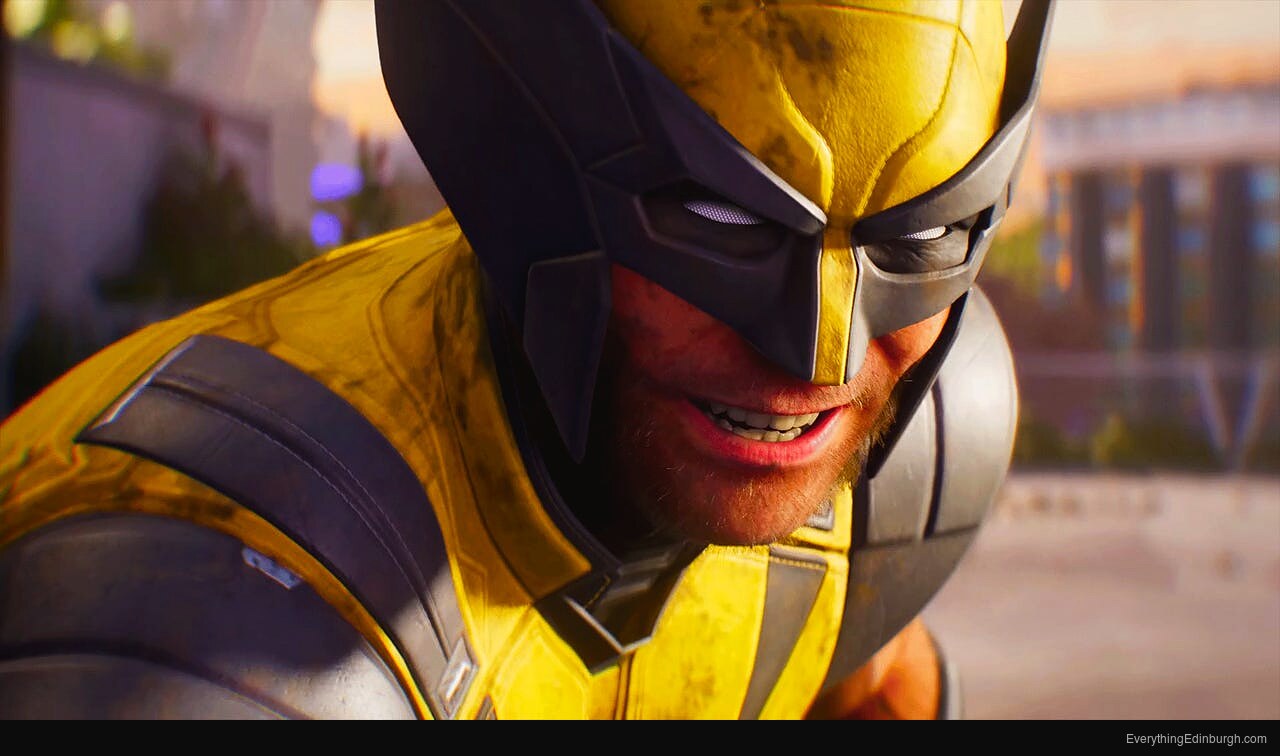
It takes seconds for a screenshot to spread across X, Reddit, and every gaming forum in between. When the image shows what looks like a warped, AI-style sign inside a brand new PS5 title, the reaction is predictable: accusations fly, threads multiply, and a developer has to step in to explain what actually happened. That is exactly what unfolded this week with Marvel’s Wolverine.

The Sign That Set Social Media Off
Marvel’s Wolverine launched on 15 September as the latest superhero adventure from Insomniac Games, following the hugely popular Spider-Man series. Within days of release, a user on X shared an image of a bathroom sign inside the game. The silhouette depicted on the sign looked fractured and oddly repeated — precisely the kind of visual artefact that fans now associate with generative AI image tools, which are notorious for scrambled text and distorted figures.
The post gathered tens of thousands of views. Calls came in that Insomniac had used AI-generated assets to populate its world, a claim that carries particular weight in the current climate, where game developers are under real scrutiny over how they use the technology — and where many studios have faced backlash for doing so without disclosure.
It’s a UV Map Bug — Not Generative AI
Insomniac’s director of community and marketing, James Stevenson, stepped in quickly. Responding directly to the viral post, he was blunt about what caused the strange visual.
“No. This is a UV map bug and we have a fix coming. There are no AI-generated assets in Marvel’s Wolverine.” — James Stevenson, Insomniac Games
A UV map controls how a flat texture wraps around a three-dimensional model. When the mapping goes wrong, the texture distorts — stretching, flipping, or duplicating in ways that look glitchy and, in this case, happened to resemble the kind of warped imagery produced by AI art generators. The sign silhouette breaking apart and repeating was the result of that mapping error, not any machine-learning process.
Stevenson confirmed a hotfix is in development to address the issue. No timeline was given, but the response left little ambiguity: the game contains no AI-generated artwork.
Why AI Suspicion Runs Hot Right Now
The speed at which the accusation spread reflects an industry moment, not just a one-off panic. Several high-profile studios have faced genuine scrutiny over AI content in the past year, and players are increasingly alert to anything that looks out of place. The threshold for suspicion is low, and the appetite for accountability is high.
Insomniac was probably the last studio to need this kind of cloud hanging over a new release. Marvel’s Wolverine has already become the sixth best-selling PS5 game of 2026, grossing more than $100 million since launch, making its Mature-rated content one of the PS5’s best-selling experiences of the year. The title puts Wolverine at the centre of an action-adventure romp set in the same timeline as the Spider-Man games, with Insomniac’s established NYC assets forming the backbone of the world-building.
Key point: A UV map determines how a flat texture is applied to a 3D surface. Errors in the mapping can cause distortions that look intentional — or, in this case, AI-generated — but are purely technical glitches.
A Game Built on Human Craftsmanship
The irony of the situation is that Insomniac’s world detail is one of its most celebrated qualities. Players and critics alike have praised the texture and density of the environments across the Spider-Man games, and Wolverine continues that tradition. Stevenson noted that many in-game assets draw on years of accumulated work from those titles — real, hand-crafted geometry and textures built by artists over multiple productions.
That accumulated craft is a selling point that doesn’t square at all with cutting corners on AI generation. The bathroom sign in question was almost certainly repurposed from existing asset libraries — a quick asset pull that happened to have a UV error that nobody caught before shipping.
The fix is coming. The accusations are settled. What the episode leaves behind is a snapshot of how quickly gaming’s AI anxiety can escalate — and how a single glitchy sign, in a game built on millions of hand-crafted polygons, can become the flashpoint.