
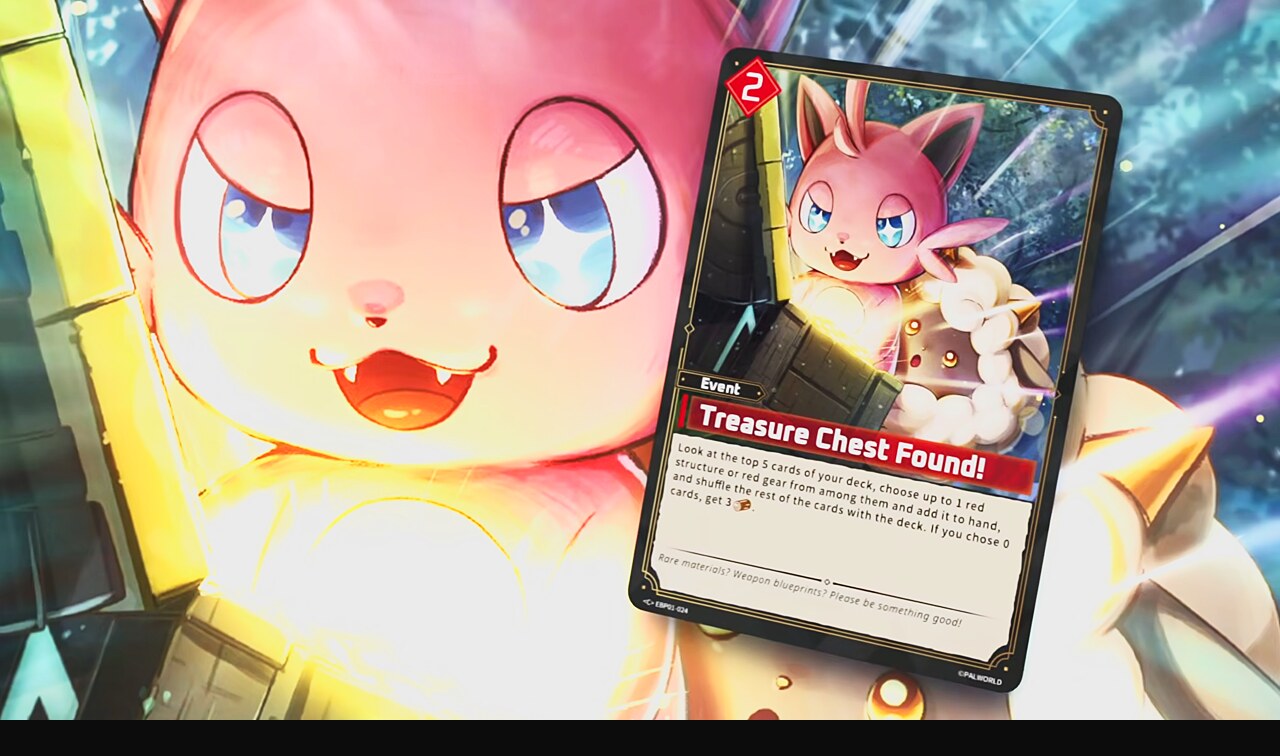
How do you sell a $4,000 trading card for a game where the competitive scene doesn’t even exist yet? Palworld’s fanbase, it turns out, has an answer — and scalpers on eBay are very happy about it.
The Palworld Official Card Game launched its debut set, Dawn of Palpagos, on 30 July 2026. Within hours, eBay had filled with listings for cards going for hundreds — and in some cases thousands — of dollars. Some had already sold before the set was publicly available.

What Is the Palworld TCG?
The Palworld TCG is an official trading card game developed by Pocketpair — the studio behind the survival-crafting hit Palworld — in partnership with Bushiroad, a seasoned Japanese TCG publisher responsible for games like Cardfight!! Vanguard. The deal was announced in January 2026, and Dawn of Palpagos marks the card game’s first set.
Structurally, the Palworld TCG follows familiar lines: booster packs, booster boxes (12 packs per box), and box cases containing 12 boxes. Retailer Lumius priced a standard booster box case at $499.99. A single booster box sits below that — accessible, in theory, to regular players and collectors alike.
The comparisons to Pokémon were immediate and, given that Palworld itself launched as the “Pokémon with guns” game, largely unavoidable. Those comparisons have only grown more apt since launch.
Which Cards Are Selling for Thousands?
The headline figure is the Cattiva Gold Soul Card — a premium alternate-art version of Cattiva, the pink cat-like mascot from early Palworld gameplay. It is among the highest-rarity cards in Dawn of Palpagos, sitting in the Special rarity tier with low pull rates by design.
One copy sold for $3,997.98 on July 27 — three days before the set officially launched. That means it reached the secondary market through early distributor or demo allocation before any retail store had opened its stock.
“Before a single tournament has been played in the Palworld TCG, before any competitive metagame exists to establish what cards are actually powerful, collectors are paying four figures for a pink cat.” — TechTimes
Other cards followed. A Jormuntide Ignis sold for $1,300 even earlier, on 24 July. Chillet Dragon Whisperer went for $1,400 the day before launch, though post-launch copies have settled closer to $1,100. A master case containing three regular box cases sold for $5,990 within 24 hours of launch. Box cases that retail for $499.99 have been going for around $1,800 on eBay.
Why Are Prices So High Before Any Competitive Play?
The key word here is speculative. When a brand-new trading card game launches, there is no established metagame — no tournament results, no tier lists, no evidence of which cards will define competitive play. What drives early prices is not power level but scarcity combined with collector demand.
The Palworld TCG launched with significant speculative buying from collectors and resellers who secured early allocation. When that group competes for limited quantities before any reprint response, prices disconnect from gameplay value entirely. The Cattiva Gold Soul card is not worth $4,000 because it wins games. It sold for that because supply was constrained and demand from collectors was high before the general public could buy.
Note on eBay prices: The sold price is the only figure that reflects what buyers actually paid. Asking prices routinely run well above market. Always check completed sales, not active listings, when researching secondary market values.
Neither Pocketpair nor Bushiroad has issued a public statement on print run strategy or reprint timelines as of 1 August 2026.
Will Prices Come Down?
Early signs suggest yes, significantly. Polygon noted that Cattiva Gold Soul cards with perfect centering had already dropped to around $999 by the time their piece published — a 75% fall from the $4,000 peak in under a week. The pattern mirrors what happened with recent Pokémon TCG releases: a Morpeko special illustration card sold for $200 before retail hit stores, then settled at around $127 weeks later — a 35% correction.
The longer-term trajectory for the Palworld TCG depends on factors that are currently unknown: print run size, reprint timelines, and whether a competitive metagame eventually drives genuine demand for particular cards. Until Bushiroad clarifies its production strategy, the secondary market will remain driven by speculation rather than gameplay utility — which means early prices, while eye-catching, may tell you very little about where values land six months from now.