
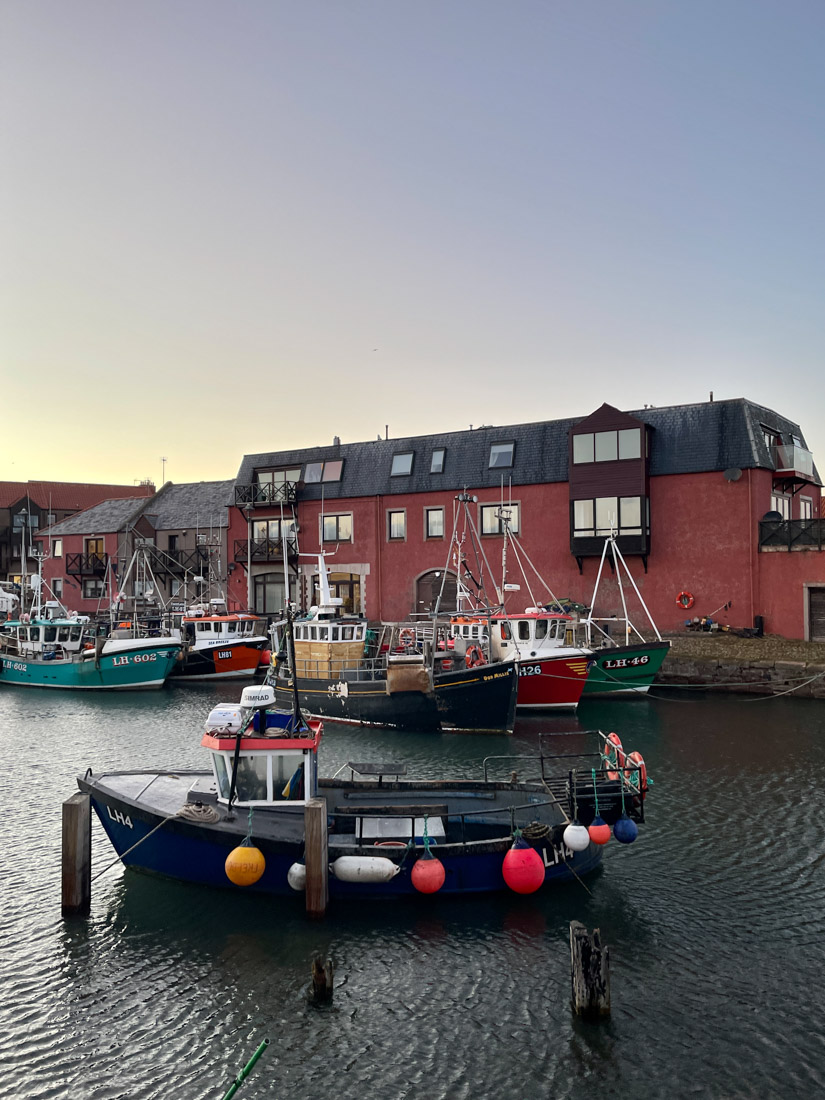
Dunbar actually has three harbours, the oldest dating back to the 17th century. Today the harbour is home to a lifeboat station and to sailing and rowing clubs, and it sits right beneath the ruins of Dunbar Castle.
It is one of the most photogenic spots in town — a mix of fishing heritage, public art and wildlife all in one small area.
The Fisherman’s Monument
Standing on the harbour is the Fisherman’s Monument, an arch first raised in 1856 by William Brodie of Seafield and re-carved in 1998 by sculptor Michelle De Bruin. It originally housed a mercury barometer for the fishing fleet.
The Creel Loaders
On Victoria Street you’ll find The Creel Loaders, a sculpture by Gardner Molloy that celebrates the fishwives who once loaded creels of fish and baited lines — a tribute to the women who kept the fishing community running.
Sammy the Seal
Keep an eye on the water and you may spot Sammy, the harbour’s resident seal, who regularly appears among the boats. Never feed or crowd wildlife — enjoy the sighting from a distance.
Clubs and Lifeboat
The harbour is a genuine working space, home to Dunbar’s RNLI lifeboat station and to active sailing and rowing clubs, so there is usually something happening on the water.
Frequently Asked Questions
Why does Dunbar have three harbours?
The harbour grew in stages over centuries as the fishing fleet expanded, leaving Old, Victoria and the outer harbours side by side — the oldest dates to the 17th century.
Can you see seals at Dunbar Harbour?
Often, yes. A resident seal nicknamed Sammy is regularly seen among the boats. Watch quietly from the quayside and never feed wildlife.
What are the sculptures at the harbour?
The Fisherman’s Monument arch (1856, re-carved 1998) and The Creel Loaders by Gardner Molloy, which honours the town’s fishwives.