
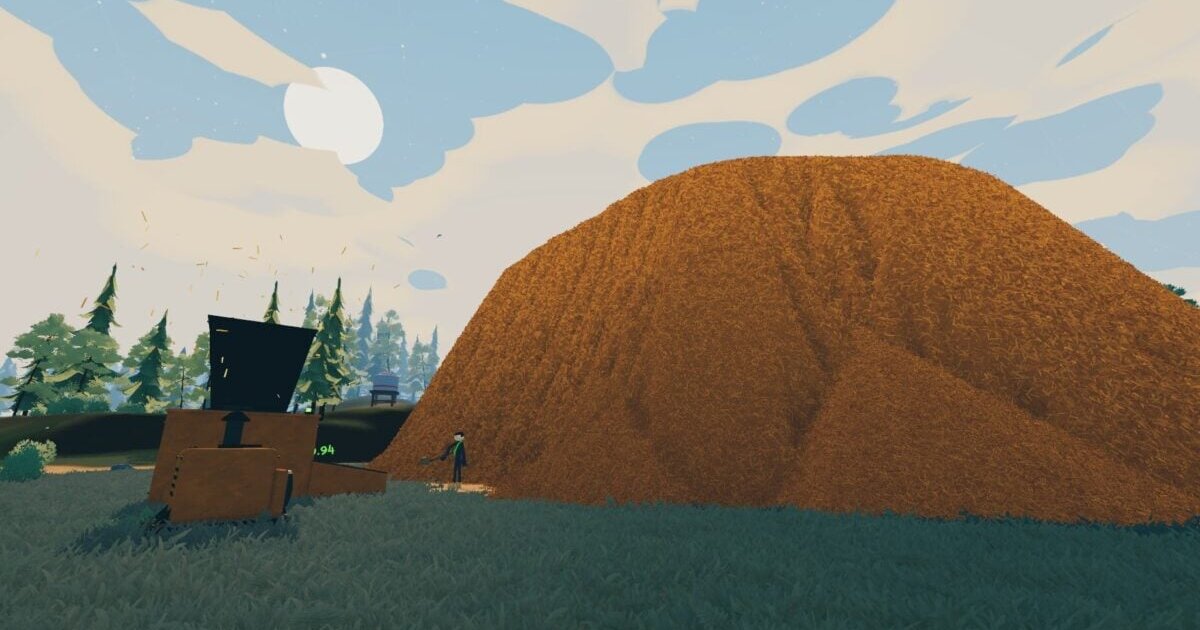
The irony was not lost on anyone. NoGlyph, the developer behind Needle In A Haystack — itself a rapid-fire clone of the earlier Needle In A Haystack Simulator — took to Steam on 16 October to accuse another studio of lifting their code wholesale. The twist? The accused studio had allegedly used AI-assisted decompilation to extract NoGlyph’s proprietary source code and paste it, byte for byte, into their own competing product.
It is the latest chapter in what many industry observers are calling gaming’s vibe-coding apocalypse: a cascade of copying, enabled by large language models, that is reshaping the economics of independent game development on platforms such as Steam.
Thirteen Classes, Word-for-Word Error Messages
The evidence NoGlyph presented was forensic in its detail. After A Game About Needle In A Haystack, developed by Little Field Studios, appeared on Steam on 16 October, NoGlyph’s team examined the rival title’s files and found what they described as undeniable proof of code theft.
“When we looked through their game’s files, we found 13 of our classes inside it with the exact same names,” NoGlyph wrote in a Steam community post. “More than half of the functions in that part match ours exactly. Some of our own error messages are still in there word for word, including one that points to a shader from our project that doesn’t exist in their game.”
That final detail — an error message referencing a shader that was never compiled into the competing product — is considered a classic signature of AI-assisted decompilation. The technique involves feeding a closed-source game’s compiled binaries into a model such as Anthropic’s Claude, which reconstructs readable source code that can then be repurposed. The orphaned error message suggests the AI faithfully reproduced debugging text from the original codebase, even though the referenced component was absent from the new game.
NoGlyph has filed a copyright notice with Valve, Steam’s operator, demanding the removal of the allegedly infringing title.
An Industry-Wide Pattern
The Needle In A Haystack dispute is far from isolated. It forms part of a broader wave of AI-facilitated copying that has accelerated sharply since Anthropic released its Claude Opus 5.5 update on 22 September. That model offered significant efficiency gains for what has become known as “vibe coding” — the practice of using natural-language prompts to generate functional software without traditional programming expertise.
The consequences have been swift. Steam’s most recent Next Fest, which launched on 19 October, listed 8,011 demos — roughly double the figure from the June 2026 edition and eight times the number from June 2022. Industry analysts and developers alike have pointed to AI-generated “slop” as a primary driver of the surge, flooding a storefront whose discoverability mechanisms were already struggling under the weight of more than 14,000 annual game releases.
The problem extends well beyond Steam. When the cooperative climbing game Peak went viral earlier this year, near-identical knockoffs appeared on the PlayStation Store within weeks. A title called Repo Horror surfaced on the Nintendo eShop directly imitating the hit REPO, complete with a fabricated Switch 2 file size listing. On Roblox, at least seven clones of the incremental punching game Escape the Walls were live within days of the original’s announcement — one competing studio even tweeted their version to the original developer, calling it “friendly competition”.
Developers Retreat From Public Showcase
Perhaps the most damaging effect is behavioural. According to industry experts quoted in recent reporting, many independent developers are now reluctant to share early-access builds or development footage, fearing their ideas will be cloned before they can reach market.
Alliance Arts Inc., the studio behind Drunken Goddess Reflux — described as a “Russian roulette drinking survival” game — cancelled its planned public Steam demo entirely. “We are concerned that, based on the content of the demo, works imitating or replicating this game’s presentation and gameplay could be quickly produced using AI or other tools and released ahead of the game’s launch,” the studio wrote in a public statement. It will instead host closed play sessions under strict participation requirements.
Freya Holmér, an independent developer and Unity tool creator, experienced a similar ordeal after sharing a 50-second prototype video of Rotris — a variant combining Tetris mechanics with a rotating board. Within days, multiple AI-generated clones appeared across mobile app stores. “Before, if someone wanted to copy your game, they at least needed technical skill, knowledge and a lot of time,” Holmér observed. “But now AI is rapidly diluting the value of skill and expertise.”
Platforms Under Pressure
Circana analyst Mat Piscatella has warned that the trend amounts to a “discovery death spiral” for digital storefronts. “Good games will get cloned and buried,” he wrote on Bluesky. “Players will default to games and franchises they know and trust. Breaking through will become even more difficult.”
The burden, developers argue, should not fall on them to police every clone. “The burden should fall onto the platforms who are enabling this sort of behaviour,” said one studio representative. “A platform like Steam is profiting and allowing bad actors to sell low-quality clones of a project that a developer worked on, yet they never get the blame.”
Valve has introduced AI disclosure requirements for Steam submissions, but critics say these measures do not address the volume problem. Nintendo has adjusted its eShop ranking algorithm from download-based to revenue-based sorting, hoping to reduce the advantage ultra-cheap clone titles gain from price undercutting. Neither approach has stemmed the tide.
What Comes Next
The legal framework around AI-assisted code extraction remains largely untested. Copyright notices to Valve offer some recourse, but the sheer volume of potential infringements makes enforcement a game of whack-a-mole at best. Meanwhile, the tools continue to improve, and the barrier to producing a functional — if unoriginal — game continues to fall.
For independent developers, the calculus is shifting. The risk of public exposure increasingly outweighs the marketing benefits. And on storefronts already groaning under the weight of tens of thousands of annual releases, the signal-to-noise ratio is approaching terminal levels. The vibe-coding apocalypse is not coming. It is here.