Edinburgh wears its past close to the surface. Behind the shopfronts of the Royal Mile lie buried streets, sealed vaults, prison yards and execution sites, and almost every one comes with a story attached. Some of those stories are documented history: murders, hangings and trials recorded in court papers and museum collections. Others are folklore, passed down by guides, writers and the venues themselves.
This guide keeps the history apart from the stories. For each place we tell you what the records say, then what the legend says, and how to visit in 2026, with prices and times taken from the official websites. We have left out sightings of ghosts that we could not trace to a named, reliable source.
Updated 3 November 2026. Dates, prices and opening times were checked on official venue, museum and tour websites. Legends are reported as folklore, not fact; times change by season, so confirm when booking.
Edinburgh legends at a glance
These are the spooky places in Edinburgh worth planning around. Free sites can be visited any time. The vaults and the Covenanters’ Prison are locked, so you can only enter them with licensed guides.
| Place | Type | Where | Cost (adult) |
|---|---|---|---|
| Real Mary King’s Close | Underground street tour | Royal Mile | From £25 |
| Greyfriars Kirkyard | Graveyard | Candlemaker Row | Free, 24 hours |
| Covenanters’ Prison | Locked graveyard section | Greyfriars Kirkyard | Tour only (£22) |
| South Bridge Vaults | Underground vaults | Blair Street / Niddry Street | Tour only (from £22) |
| Edinburgh Castle | Castle legends | Castlehill | £23.50 online |
| Surgeons’ Hall Museums | Medical museum | Nicolson Street | £10 |
| Edinburgh Dungeon | Scare attraction | Market Street | From £19 online |
| National Museum of Scotland | Arthur’s Seat coffins | Chambers Street | Free |
| Witches’ Well | Memorial | Castle Esplanade | Free |
| Banshee Labyrinth | Pub in the vaults | Niddry Street | Pub with cinema, 18+ only |
Why Edinburgh has so many legends
The history of Edinburgh gives its ghosts plenty of raw material. The city was squeezed onto a narrow ridge, so Edinburgh grew upwards, and later building buried whole streets. That is why so many ghosts here live underground. Public executions took place in the heart of the city until 1864, and accused witches were tried and burned through the 16th and 17th centuries. Plague, body snatching and religious war all left marks on the dark history of Edinburgh.
Today the ghosts of Edinburgh are big business. Tour companies, pubs and attractions each tell their own version, and the same spirit can turn up in several different stories. In this guide, a story told only by a venue or tour company is labelled as such.
True stories from Edinburgh’s dark history
Many of the best stories in Edinburgh need no ghost at all. These are documented crimes and punishments from the 16th century to the early 19th century. Every one of them has left something you can still see in the streets.
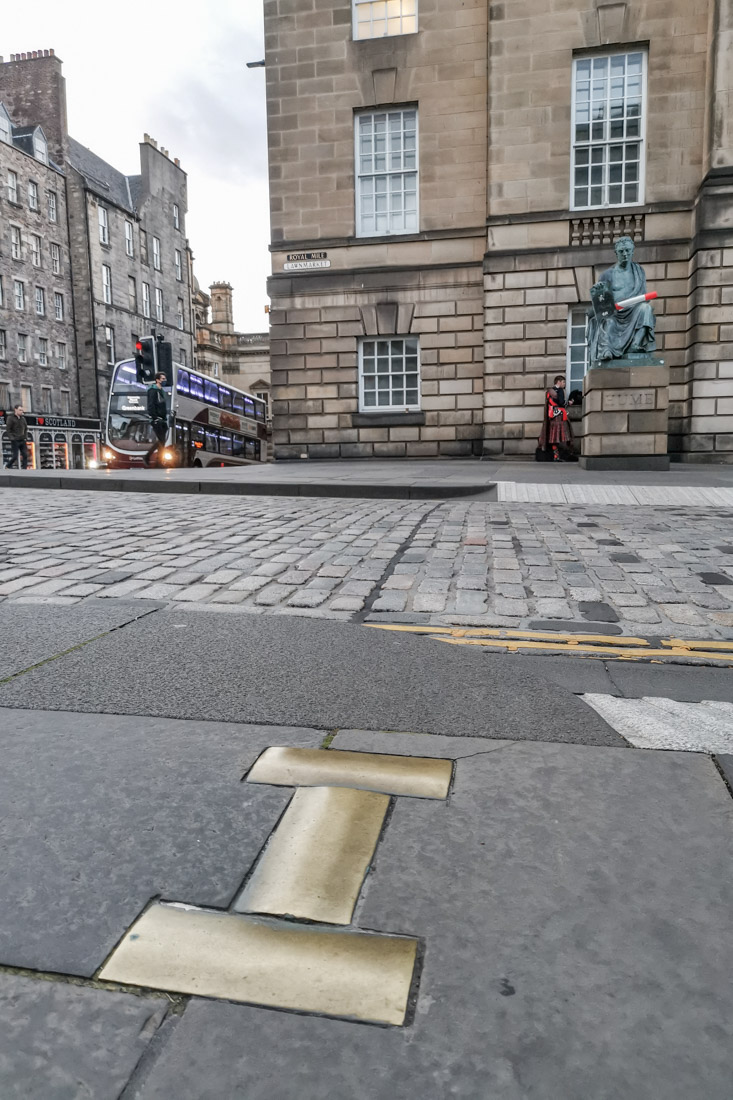
In 1828 William Burke and William Hare killed 16 people in and around a lodging house in Tanner’s Close, off the West Port, and sold the bodies to the anatomist Dr Robert Knox. Hare turned King’s evidence and was released. Burke was hanged on the Lawnmarket on 28 January 1829, before a huge crowd, and then publicly dissected. His skeleton is kept at the University of Edinburgh’s Anatomical Museum. The scandal of the West Port murders helped bring in the Anatomy Act 1832. In the Lawnmarket, according to the plaque beside them, three brass plates mark the site of the gallows used for the city’s last public hanging, of George Bryce in 1864.

Margaret Dickson was hanged in the Grassmarket in Edinburgh in 1724 for concealing a pregnancy. The baby had died. On the road to Musselburgh for burial, noises came from her coffin and she was found alive. Because her sentence had been carried out, she was allowed to go free, and she lived for many years afterwards. She was known as half hangit Maggie, and the Scots Magazine reported crowds gathering to see her. Maggie Dickson’s pub now stands near the spot.
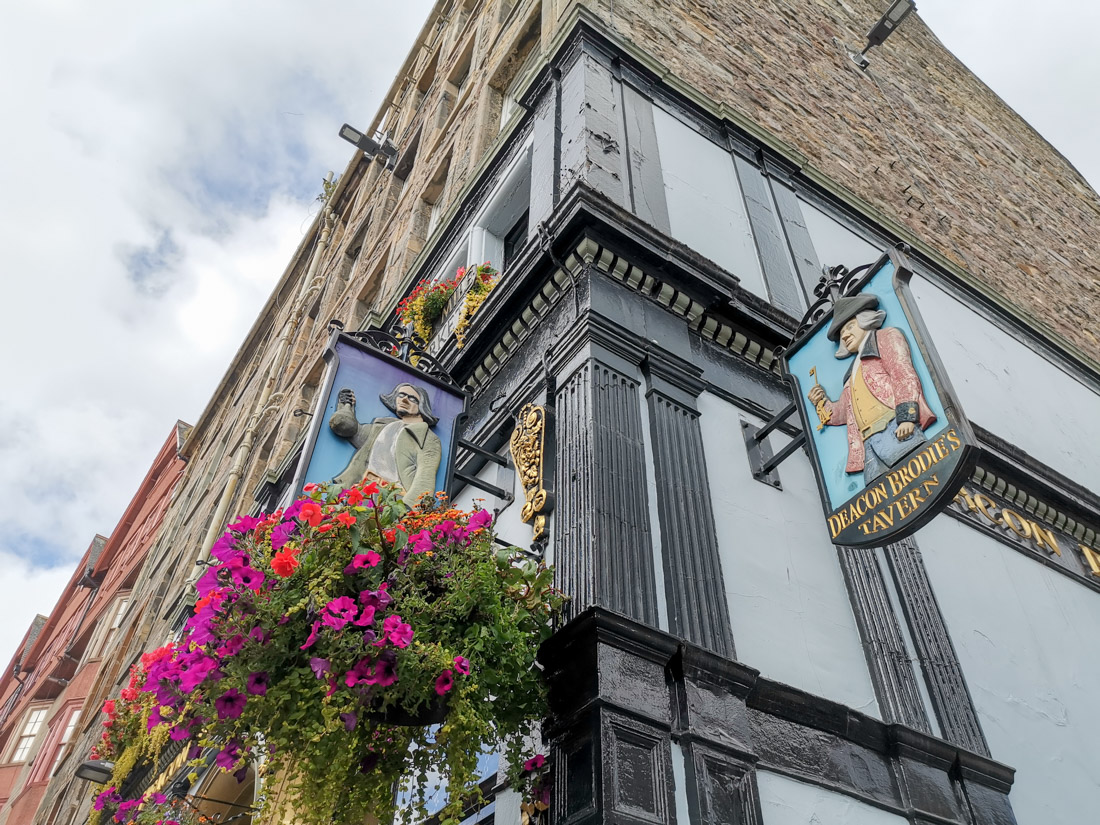
William Brodie (1741–1788) was a cabinetmaker, deacon of the wrights and an Edinburgh town councillor who led a gang of burglars by night. After a failed raid on the Excise Office in Chessels Court on 5 March 1788, he fled to Amsterdam, was caught and was hanged at the Old Tolbooth on 1 October 1788. The popular claim that he designed the gallows that hanged him is a myth. His double life is often linked with Stevenson’s Jekyll and Hyde. Brodie’s Close and Deacon Brodie’s Tavern carry his name.
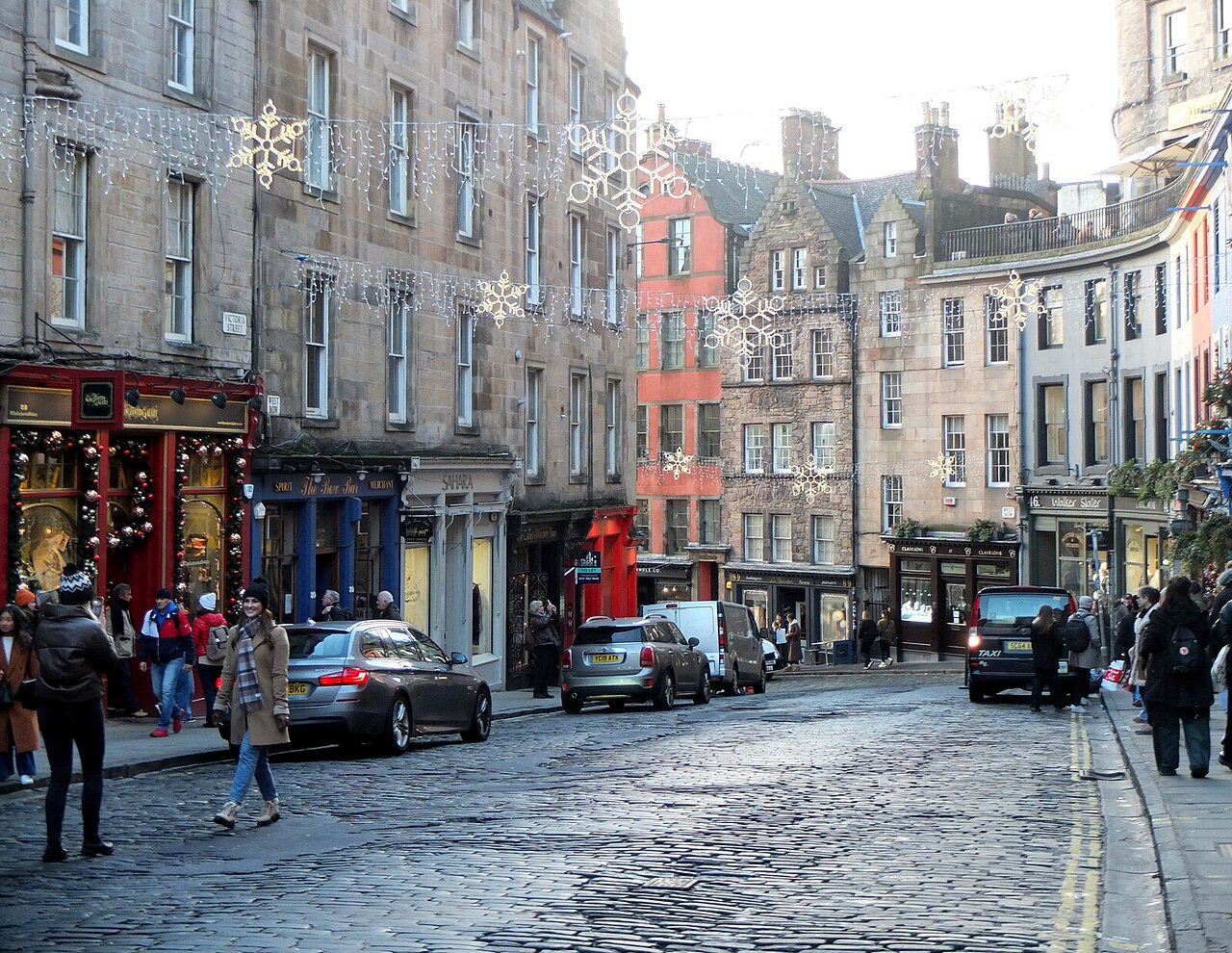
Thomas Weir (1599–1670) was a Covenanter soldier with a strict Presbyterian faith, and his spoken prayers drew visitors to his home. Then in 1670, ill and in his seventies, he began to confess from his sickbed to a secret life of crime and vice. His sister Jean added an even wilder account of sorcery. He was executed in 1670. His house in the West Bow stood empty for more than a century because of its haunted reputation. The house is gone today, but the curving street is still one of the most photographed in the city.
Photo: Jim Barton, CC BY-SA 2.0, via Wikimedia Commons

A heart-shaped mosaic in the setts outside St Giles’ Cathedral marks the site of the Old Tolbooth. The building served as a prison and a place of execution until it was pulled down in 1817. People in Edinburgh still spit on the heart. The habit is said to bring good luck, but it may have begun as a sign of contempt for the executions held at the Tolbooth.
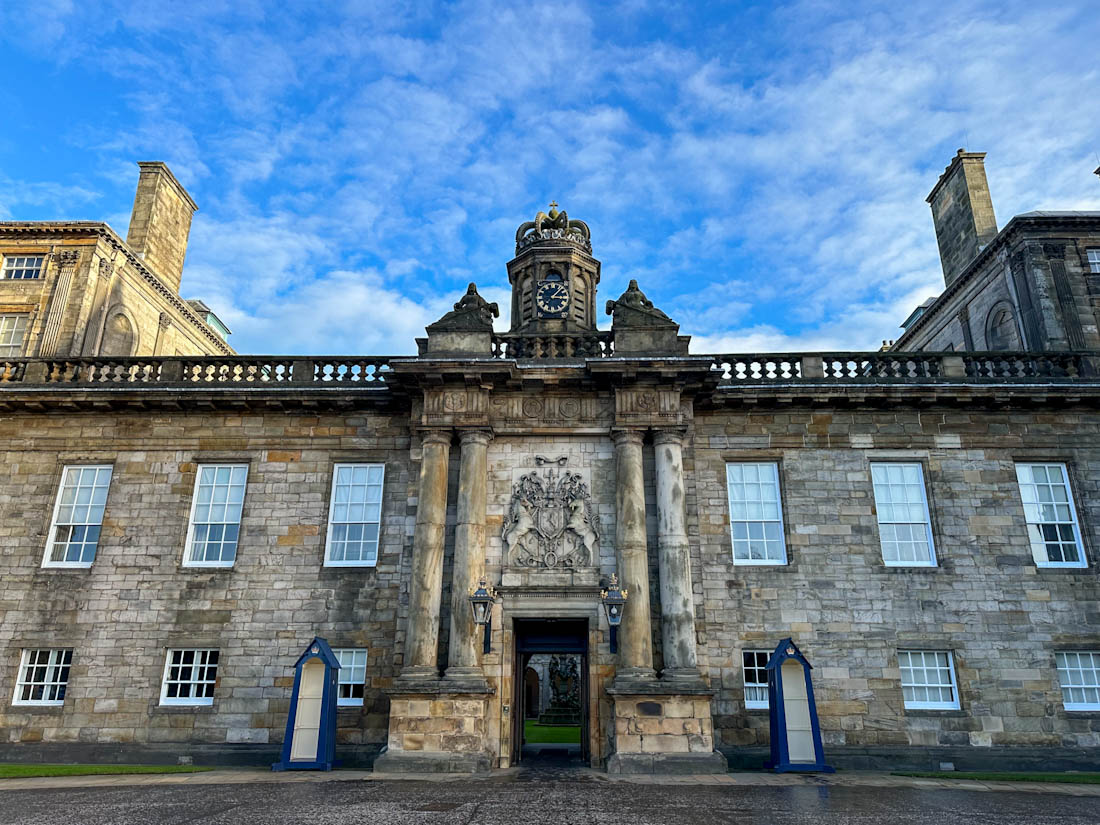
On 9 March 1566, David Rizzio, private secretary to Mary Queen of Scots, was dragged from her supper room and stabbed more than 50 times by Lord Darnley and a group of lords. The Royal Collection Trust itself says only that bloodstains in the Outer Chamber are “claimed” to still be visible. You can see the rooms on a visit to the palace.
Witches, Castlehill and the witch trials
Most of Scotland’s witch trials took place in the 16th and 17th centuries. In Edinburgh, many of those accused were burned at the stake on Castlehill, just below the castle. Two places on the same short stretch remember the witches of Edinburgh.

A small bronze fountain on the wall at the lower end of the Castle Esplanade is the only memorial of its kind in the city. It stands close to where many people accused as witches were burned at the stake. The fountain was commissioned by Patrick Geddes and designed by John Duncan in 1894. Its foxglove and serpent show that the same thing can do good or evil: the serpent stands for both evil and wisdom.

The Witchery is a restaurant with suites in buildings from the late 16th century (1595), near the castle gates. According to its own history page, James Thomson opened it in 1979 and named it after the people burned as witches on Castlehill. The restaurant opens daily at midday and takes its last reservations at 10.30pm. We review the suites in our Witchery guide.
Underground Edinburgh: buried closes and vaults
Old Edinburgh was built upwards and then over itself. When the city built the Royal Exchange and the South Bridge, older streets and arches were swallowed up, and they are the setting for most of the haunted tales told in Edinburgh today.
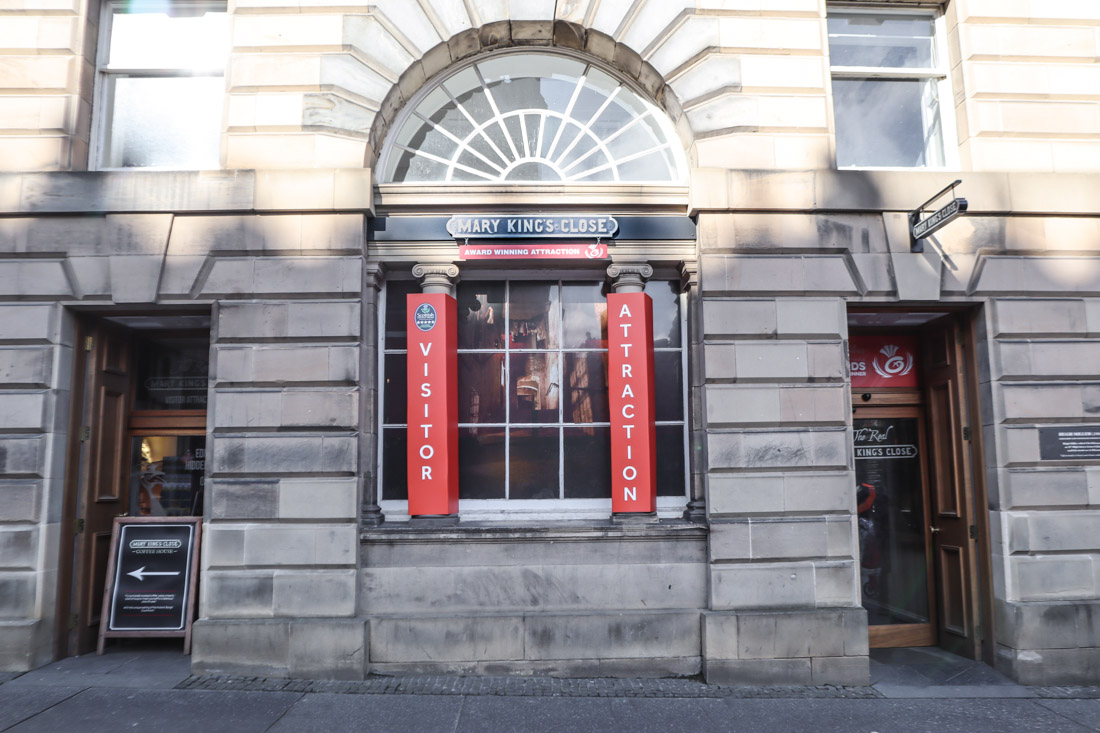
As the city grew, part of this close was sealed over in 1753 and built on for the Royal Exchange, now the City Chambers. Costumed guides lead you through the streets that survived underneath. The venue’s own history notes that 1645 brought the worst plague outbreak in the city’s history, and that the city appointed John Paulitius as its plague doctor in December 1644. The best-known legend is Annie. In the 1990s the Japanese psychic Aiko Gibo, filming a programme about haunted Britain, said she made contact with the spirit of a young girl in one room. Visitors have left toys there for her spirit ever since. The venue says there is no record of Annie ever living there. Signature Tour tickets cost from £25 for an adult (Essential) or £28.50 (Standard). In September only, a one-hour Myths and Legends tour covers the Glaistig, a half-woman, half-goat creature said to guard cattle, along with ghostly pipers and witchcraft. Book ahead.

The South Bridge opened in 1788 on 19 arches. Only one arch is still visible. The chambers inside the others housed taverns, cobblers’ workshops and stores for about 30 years before damp drove the traders out. They were later filled with rubble and forgotten until excavation began in 1985. The vaults can only be visited with a guide. Mercat Tours’ Haunted Underground starts at the Mercat Cross at 5.30pm and 6.30pm. It lasts 1 hour 15 minutes and costs £30 for an adult, £24 for a child and £27 concession (ages 5+). City of the Dead and Auld Reekie Tours also have vaults routes; see the comparison below.

This bar, live-music venue and cinema runs through dark, vaulted rooms under the South Bridge and calls itself Edinburgh’s most haunted pub. In old Irish and Scottish tradition, a banshee is a female spirit whose wail warns of a death, and the pub’s own ghost-stories page explains the name. During renovation, it says, workmen heard a scream in the empty building, and soon afterwards one of them was told by phone that a relative had died. Karaoke and gigs keep it busy most nights. It is strictly over-18s.
You cannot visit the vaults on your own. The rooms belong to the tour companies and the Banshee Labyrinth, so book a tour to go inside.
Graveyards, body snatchers and the Covenanters
In the early 19th century the medical schools of Edinburgh needed more bodies than the law allowed them, so graves were robbed for corpses. This history explains the iron cages, high walls and watchtowers you still find in old burial grounds.
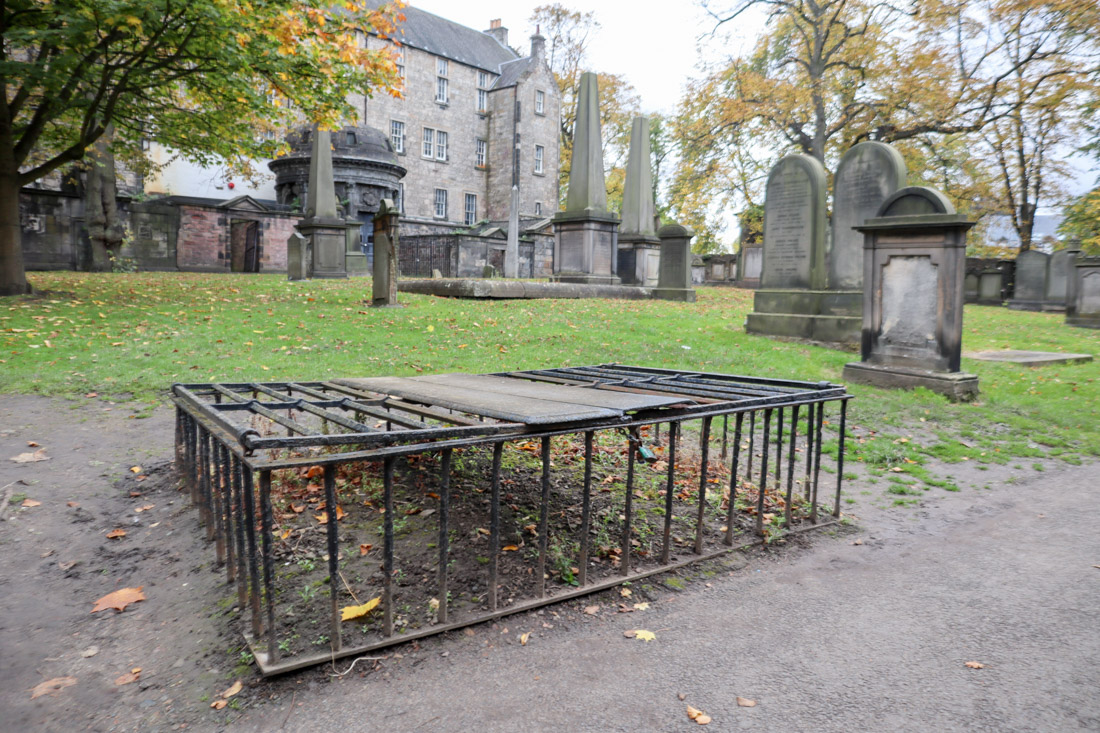
The kirkyard is open 24 hours a day, every day of the year, and entry is free. The kirk was founded in 1562. Look for the iron mortsafes, cages fixed over new graves to stop the resurrection men from digging up bodies for the anatomy schools in the early 19th century. The body snatchers worked after dark, and families paid for watchmen as well. Also here is the domed tomb of Sir George Mackenzie, designed by James Smith. As Lord Advocate he persecuted the Presbyterian Covenanters, which earned him the nickname Bloody Mackenzie.

After the battle of Bothwell Bridge in 1679, about 1,200 Covenanters were brought to Edinburgh as prisoners, and several hundred were held in a field south of the kirkyard. Part of that field later became the area now called the Covenanters’ Prison. City of the Dead Tours has its own story about the Mackenzie Poltergeist. Its website dates the first recorded sightings to 1999. After those reports the Council locked the prison, and now it can only be entered with a licensed guide. Treat the poltergeist as that company’s story, not as proven fact. The Black Mausoleum, which the same walk also visits, is a different tomb from Mackenzie’s.

The kirkyard’s gentlest legend is about a small terrier. The story says that Bobby spent 14 years guarding the grave of his owner, John Gray, who died in 1858. Bobby himself died on 14 January 1872. The bronze statue by William Brodie (not the deacon) was commissioned by Baroness Burdett-Coutts. Our cemeteries guide covers more graveyards.
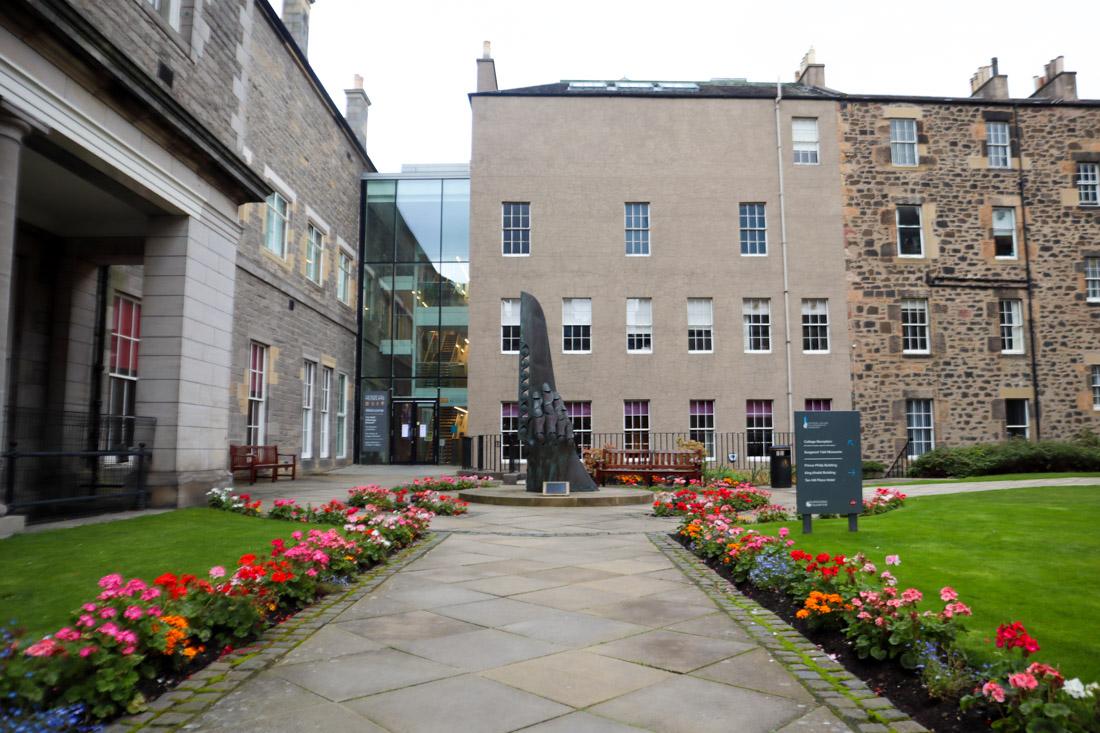
The museum collection dates from 1699 and is housed in the Playfair building, which was finished in 1832. It covers the body trade that fed the anatomy schools of Edinburgh. On display are Burke’s death mask and a pocketbook said to be bound in his skin. It is open 10am to 5pm daily, with last entry at 4.30pm. Tickets cost £10 for an adult, £6.50 concession, £5.50 for a child aged 5–15 and £25 for a family. The museum does not recommend it for under-10s. Allow about two hours.
Castle legends and a mystery from Arthur’s Seat
Two of the oldest mysteries sit at either end of the Old Town: the legends told about Castle Rock, and a real find from the hill above Holyrood that nobody has explained.

Three stories come up again and again. The castle’s legends include a headless drummer boy, said to have been seen in the courtyard in 1650 and treated as an omen of bad luck. Another tells of a lone piper sent into newly found tunnels to play as he walked, so the route could be mapped above ground. The pipes stopped, and no trace of him was found. A third features a ghostly black dog at the burial ground for regimental mascots near the Argyle Battery. Mercat Tours tells all three on its blog. None of these ghosts appears in the historical record. Castle tickets cost £23.50 for an adult online (£26 on the day) and the castle opens at 9.30am.
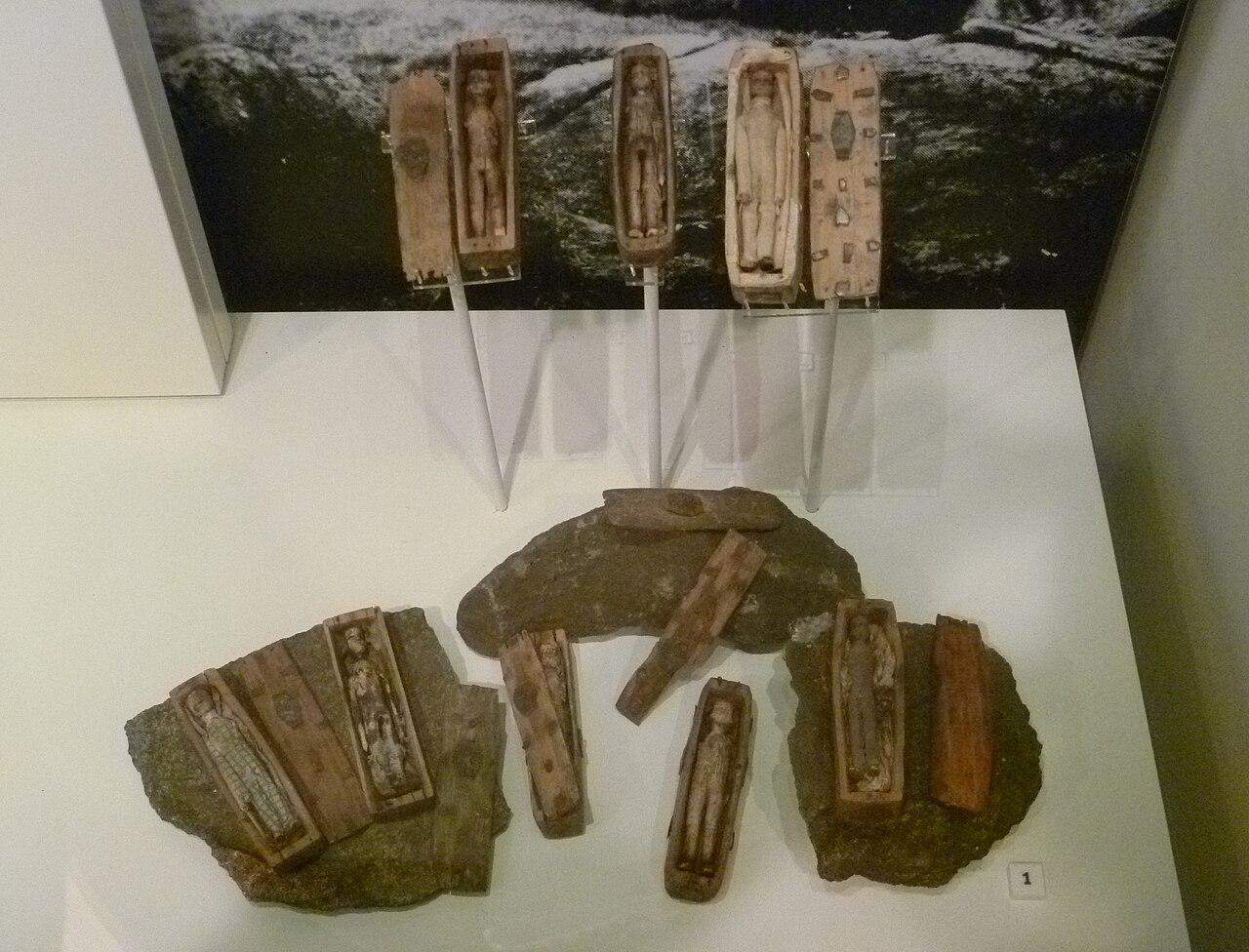
In June 1836, boys out rabbiting on the north-east slopes of Arthur’s Seat found a small cave holding 17 miniature wooden cases. Each had a carved wooden figure inside. Eight survive, and they have been in the national collection since 1901. You can see them on Level 4 of the Scotland galleries at the National Museum of Scotland. No one knows who made them or why. One theory links the figures to the victims of the West Port murders, but that has never been proven.
Photo: Kim Traynor, CC BY-SA 3.0, via Wikimedia Commons
Spooky attractions and themed bars
If you want theatre with your shivers, these places in Edinburgh add actors, effects or a pint to tales of ghosts.

This is a scare attraction with live actors, not a historic site. The shows cover the cannibal Sawney Bean, Agnes Finnie, the West Port murderers and the plague cleaner known as the Foul Clenger. Standard tickets cost from £19 online (£25 on the day). The Drop Ride is closed until further notice. Opening hours vary, so pre-book on the official site.
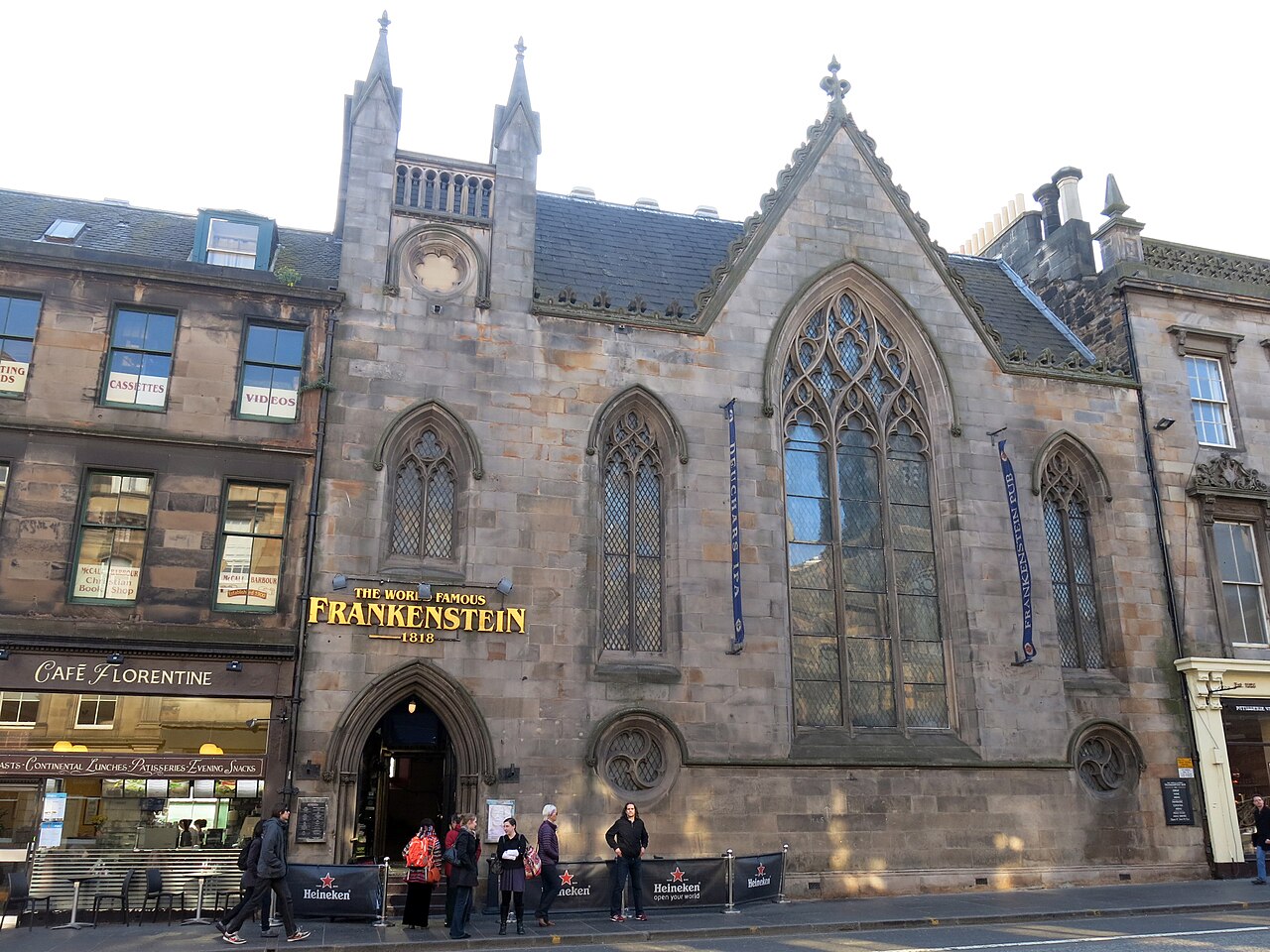
Frankenstein is a horror-themed bar inside a 19th-century church on George IV Bridge, based on Mary Shelley’s novel. The bar invites you to “party with the Monster”. Its what’s-on page lists karaoke on Fridays and Saturdays, a pub quiz and Monster Wednesdays.
Photo: Enric, CC BY-SA 4.0, via Wikimedia Commons
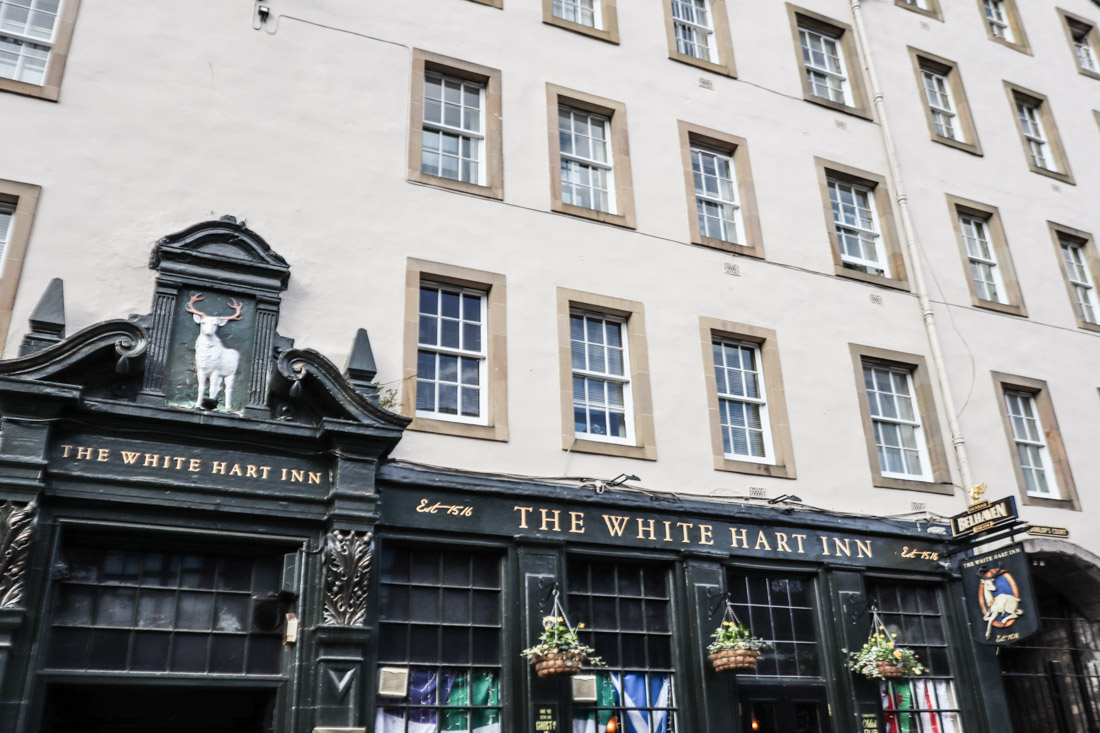
Belhaven, which runs the pub, calls it Edinburgh’s most ancient tavern, founded in 1516. The Gazetteer for Scotland records that Robert Burns stayed here in 1791 and William and Dorothy Wordsworth visited in 1803. It also says that William Burke and William Hare drank here and picked out victims. A pavement slab outside marks where a bomb from Zeppelin L14 fell on 2 April 1916.

Not a ghost story, but a fun stop for a spooky night out. The Cauldron’s official Instagram calls it a wizard bar and experience space, with potion making, a bar and weekly events. Its old website no longer works, so check sessions and prices on Instagram when booking.
Off the tourist trail
Two odd sights in the suburbs of Edinburgh that are well worth the bus ride. Neither has a ghost, but both make a good break from the spooky Old Town.

This is not a ghost site, but it makes a striking walk. The 140-metre Victorian railway tunnel on the Water of Leith Walkway in south-west Edinburgh is now painted end to end. The charity behind it calls it Scotland’s largest historical mural, led by artist Chris Rutterford.

In the early 1990s, Michael Faulkner built a row of cowboy-town facades as an advert for his furniture shop, Pine Country. There is a jail, a general store, a blacksmith and a cantina. The shop closed after IKEA opened in 1999, and the lane is now used by workshops and garages. Please be respectful when you visit.
Edinburgh ghost tours compared
A ghost walk with a guide is the only way into the vaults and the Covenanters’ Prison. Below are the main options, with times and prices taken from each company’s booking page. Departure times in Edinburgh change between summer and winter. For a longer list, see our Edinburgh ghost tours guide, or compare more options on GetYourGuide.
| Tour | What you see | Meets | Length | Adult price |
|---|---|---|---|---|
| City of the Dead: Double Dead | South Bridge Vaults, then the Covenanters’ Prison and Black Mausoleum | Tree of the Dead, by St Giles’ wall | About 1h50 | £22 (no under-12s) |
| Mercat Tours: Haunted Underground | Blair Street Vaults | Mercat Cross | 1h15 | £30 |
| Auld Reekie Tours: Vaults | South Bridge Vaults | See website | See website | £24 |
| Ghost Bus Tours | Theatre show on a 1960s Routemaster bus | Central Library, 7–9 George IV Bridge | 75 min | £19 |
| Real Mary King’s Close: Myths and Legends | Folklore tour of the buried close (September only) | 2 Warriston’s Close | 1 hour | See website |
- City of the Dead: from Easter to Halloween, tours start at 8pm, with an extra 9.30pm tour on Fridays and Saturdays. From Halloween to Easter they start at 7.30pm, plus 7pm on Fridays and Saturdays. No under-12s, hen or stag parties, or animals.
- Mercat Tours: Haunted Underground starts at 5.30pm and 6.30pm; child £24, concession £27, ages 5+.
- Ghost Bus Tours: child (5–15) £14, family £51. Seats are not reserved, so arrive 15 minutes early.
- Real Mary King’s Close: the Myths and Legends tour runs only in September, for ages 5+. The Signature Tour runs all year.
A free self-guided walk of the Old Town
You can see most of the outdoor sites in Edinburgh in about two hours on foot without a ticket. The closes feel darker after dark, but they are steep, so wear good shoes. Here is a route that works downhill:
- Start at the Witches’ Well on the Castle Esplanade.
- Walk down Castlehill past The Witchery to the brass gallows markers in the Lawnmarket, where Burke was hanged, then look into Brodie’s Close.
- Find the Heart of Midlothian outside St Giles’. The Real Mary King’s Close is opposite.
- Turn down George IV Bridge, passing Frankenstein, to the Greyfriars Bobby statue and Greyfriars Kirkyard, with its mortsafes and Mackenzie’s tomb.
- Walk down Candlemaker Row to the Grassmarket for the Covenanters’ memorial, Maggie Dickson’s pub and the White Hart Inn, then climb the West Bow back towards the centre of the city.
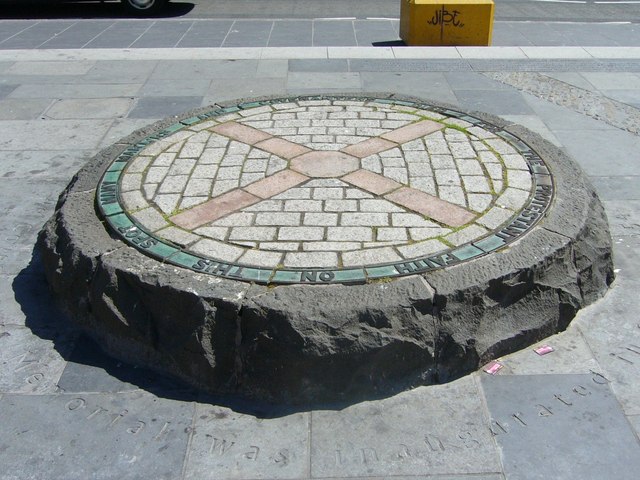
The memorial in the Grassmarket was paid for by public subscription in 1937. It remembers more than 100 Covenanters who died on the gallows here between 1661 and 1688, the period known as the Killing Time.
Edinburgh legends: questions answered
What is the most famous legend in Edinburgh?
Greyfriars Bobby is probably the best-known story. The castle’s lone piper and the spirit of Annie at The Real Mary King’s Close are the best-known folklore. Bobby was a real dog who died in 1872. The ghosts of the piper and Annie are legends with no historical record.
Which places in Edinburgh are said to be haunted?
No haunted site can be proven. The places with the strongest haunted reputation in Edinburgh are the South Bridge vaults, the Covenanters’ Prison at Greyfriars, The Real Mary King’s Close and the Banshee Labyrinth, which calls itself the most haunted pub in the city. Major Weir’s house in the West Bow had a haunted reputation for more than a century.
Is Burke and Hare a true story?
Yes. In 1828 William Burke and William Hare murdered 16 people and sold the bodies to Dr Robert Knox. Burke was hanged on 28 January 1829, and his skeleton is kept at the University of Edinburgh.
Can you visit the Edinburgh vaults without a tour?
No. The South Bridge and Blair Street vaults can only be visited with a guide, or as a customer of the Banshee Labyrinth pub, which is over-18s only.
Is Greyfriars Kirkyard open at night?
The kirkyard is open 24 hours a day, every day of the year, and entry is free. The locked Covenanters’ Prison can only be entered on an evening City of the Dead tour.
Where can I see the Arthur’s Seat coffins?
Eight of the 17 miniature coffins found in 1836 are on display on Level 4 of the Scotland galleries at the National Museum of Scotland on Chambers Street. Entry to the museum is free.
Are Edinburgh ghost tours suitable for children?
Some are. Mercat Tours’ Haunted Underground is for ages 5+ and Ghost Bus Tours sells child tickets for ages 5–15. City of the Dead Tours does not take under-12s, and Surgeons’ Hall Museums does not recommend a visit for under-10s.
What is the best time of year for spooky Edinburgh?
Tours and street sites in Edinburgh run all year. October brings Halloween events, some tours change their start times after 31 October, and the Real Mary King’s Close runs its Myths and Legends tour only in September. The kirkyards are free all year.