
Princes Street Gardens is a popular park in Edinburgh.
Updated September 2026
This Edinburgh’s World Heritage Site is sandwiched between Edinburgh’s Old Town and New Town, and the garden is split into two.
This is where the infamous Nor Loch was located, the dumping ground that possibly gave the city the nickname Auld Reekie.
East Princes Street Gardens is the busiest of the two, close to Edinburgh Waverley Train Station.
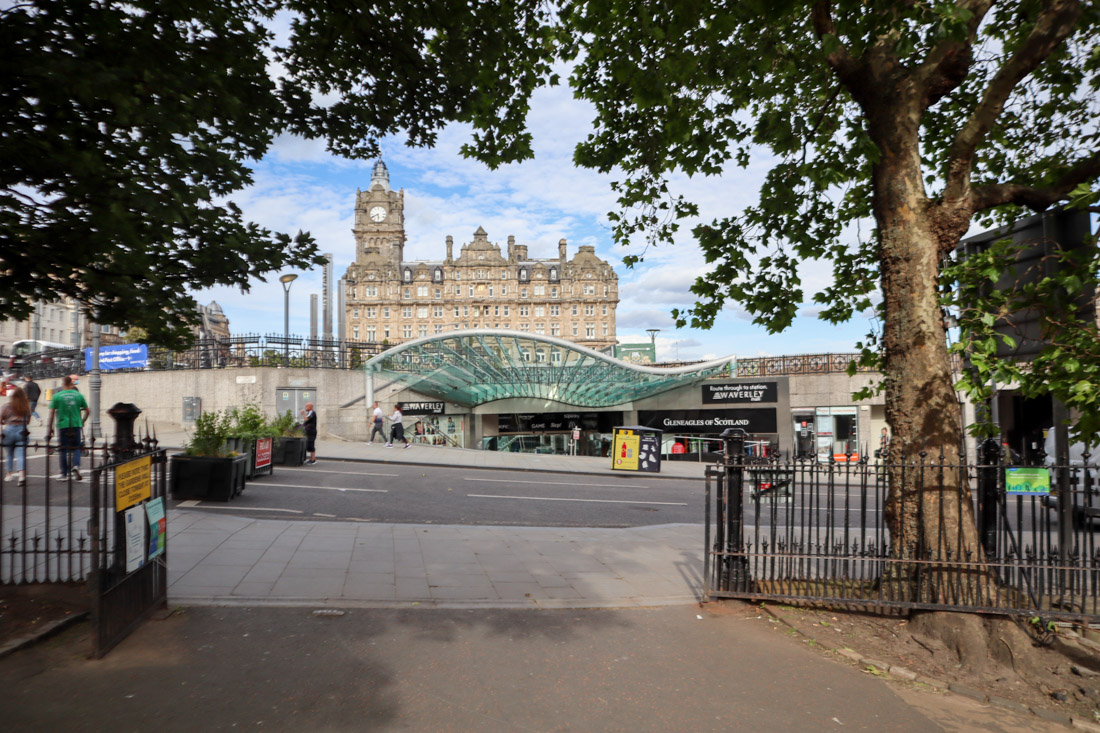
West Princes Street Gardens is between The Mound, which leads to The Royal Mile, and buzzing Lothian Road.
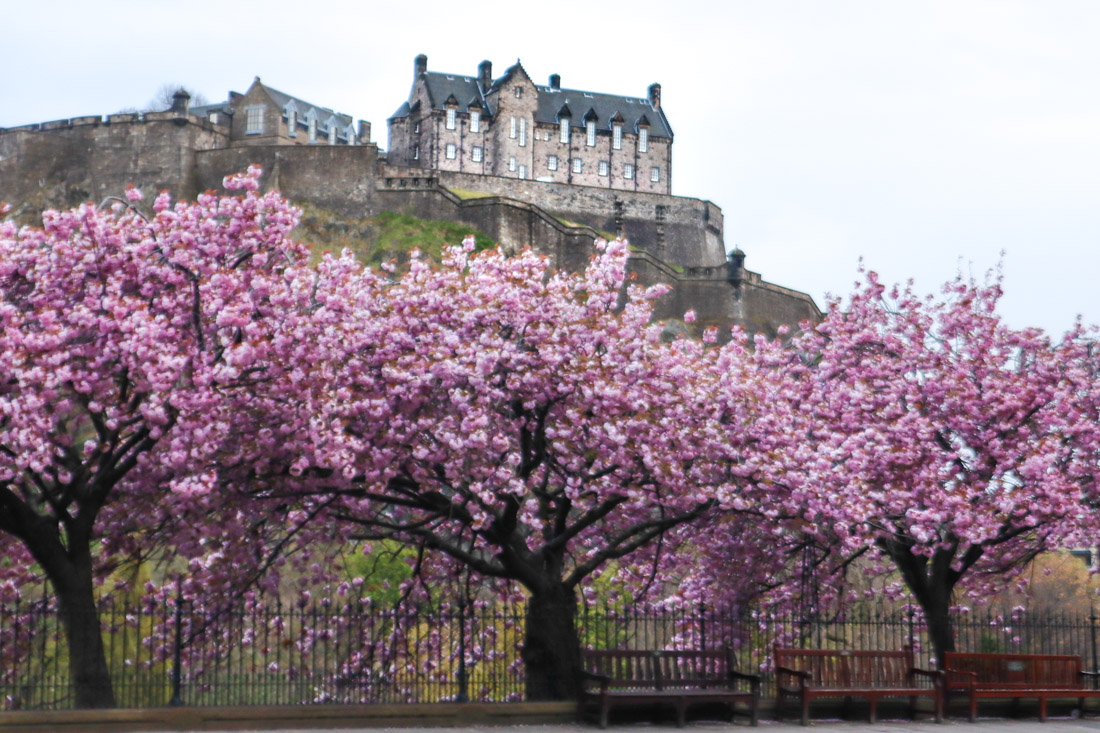
Edinburgh Castle overlooks the gardens, and during spring, photographers use the beautiful cherry blossom trees to frame the Castle.
You can read more about the cherry blossoms in Edinburgh here.
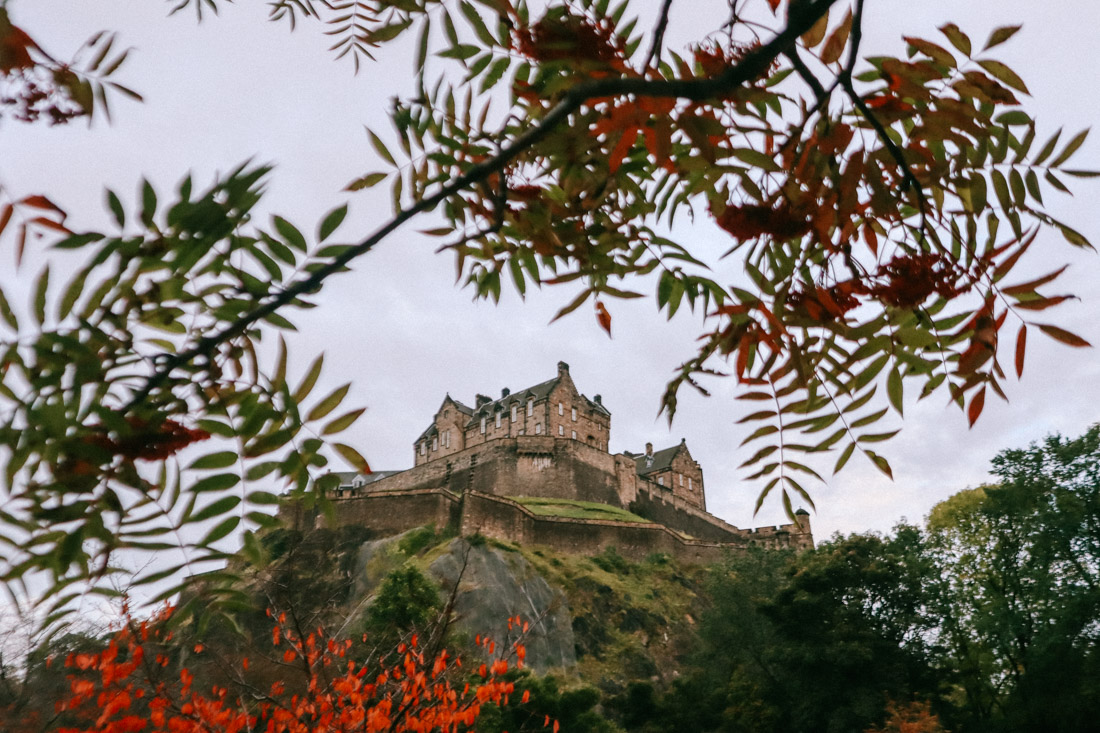
In autumn, there are a few lovely frames to capture, too! Walk along Princes Street for these shots.
| Feature | Location | Notes |
|---|---|---|
| Scott Monument | East Gardens | 287 steps, £9 adult entry, 61m tall |
| Ross Fountain | West Gardens | Cast iron, installed 1872, restored 2018 |
| Floral Clock | West Gardens | World’s oldest, dates from 1903 |
| Wojtek Statue | West Gardens | WWII memorial, unveiled 2015 |
| St Margaret’s Well | West Gardens | 11th century holy well |
| Gardener’s Cottage | West Gardens | Featured in BBC’s Teacup Tales |
The History of Princes Street Gardens
Before the gardens existed, this valley was home to the Nor Loch (also spelled Nor’ Loch or North Loch), a man-made body of water created in 1460 when King James III ordered a stream to be dammed to strengthen the defences of Edinburgh Castle. The loch formed a natural barrier along the north side of the Castle Rock, protecting the Old Town from attack.
Over the centuries, the Nor Loch became notorious as a dumping ground for the city’s waste. Sewage, household rubbish, and other detritus washed down the hillside into the stagnant water, contributing to Edinburgh’s nickname of Auld Reekie. The loch was never used for drinking water due to its polluted state.
In the 16th century, the Nor Loch was also used for punishment. From 1562, the burgh council ordered that adulterers and “fornicatouris” be ducked in its waters. There are also stories of witch dunking during the witchcraft trials, though this practice was not widely used in Scotland and was reportedly abandoned when the loch became so clogged with waste that suspects would not sink.
With the construction of Edinburgh’s New Town in the late 18th century, the Nor Loch was drained between 1813 and 1820 under the supervision of engineer James Jardine. The former lake bed was transformed into the beautiful Princes Street Gardens we see today, creating a green space that now separates the Old Town from the New Town – both UNESCO World Heritage Sites.
Entering Princes Street Gardens
There are various entry points to the gardens:
- Waverley Bridge by Princes Street
- Market Street close Edinburgh Dungeons
- The Mound
- Princes Street
- King Stables Road
The park closes overnight for public safety.
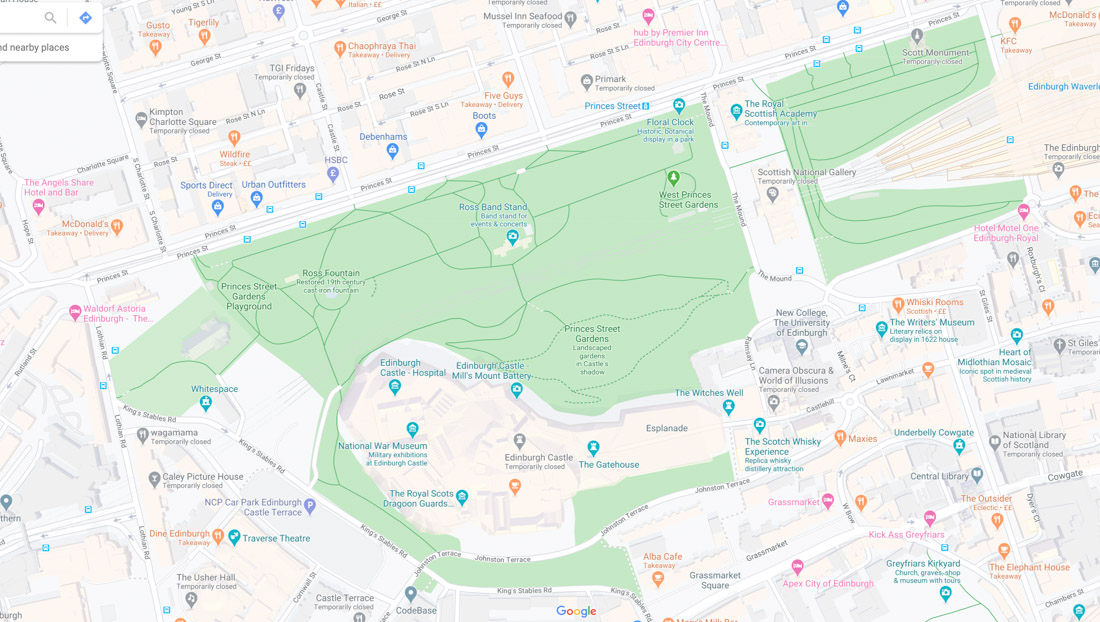
West Princes Street Gardens
West Princes Street Gardens has lots to see, including St Margaret’s Well, The Ross Fountain (below), and a series of monuments.
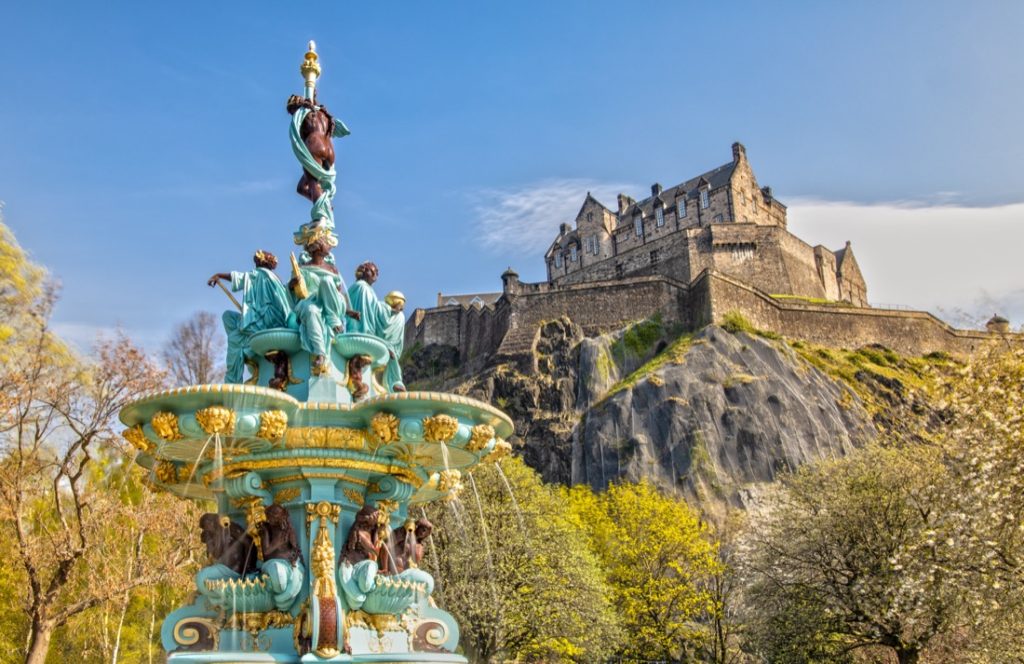
The Ross Fountain, located beneath Edinburgh Castle in the West Gardens, is one of the garden’s most striking features. This cast-iron structure was produced at the Antoine Durenne foundry in Sommevoire, France, and was exhibited at the Great Exhibition in London in 1862. Edinburgh gunmaker Daniel Ross purchased the fountain for £2,000 and gifted it to the city. It arrived in Leith in 1869 in 122 pieces and was installed in its current position in 1872. The fountain features four female figures at the top representing science, arts, poetry, and industry, with mermaids, walrus, lion heads, and cherubs adorning the base. After extensive restoration work costing £1.9 million, the fountain was re-inaugurated in July 2018 and is now painted in turquoise, brown, and gold.
Near the Ross Fountain, you can also find St Margaret’s Well, a historic holy well named after Queen Margaret, wife of King Malcolm III. The well has supplied water to Edinburgh Castle since the 11th century, and the adjacent well-house tower dates from the 1300s. The well can be found behind the Norwegian Boulder, accessible via the bridge near the Ross Bandstand.
One of the most unique things about West Princes Street Gardens is that it houses the world’s oldest floral clock, which dates back to 1903.
Since 1903, the Flower Clock has been planted; today, it uses around 30,000 plants.
Each year, the design of the floral clock celebrates an individual or group, such as the NHS workers, who have contributed to the city.
You can find the clock at the northeast corner of West Princes Street Gardens just before you cross the road into East Princes Street Gardens.
You may also like | The most Instagrammable spots in Edinburgh
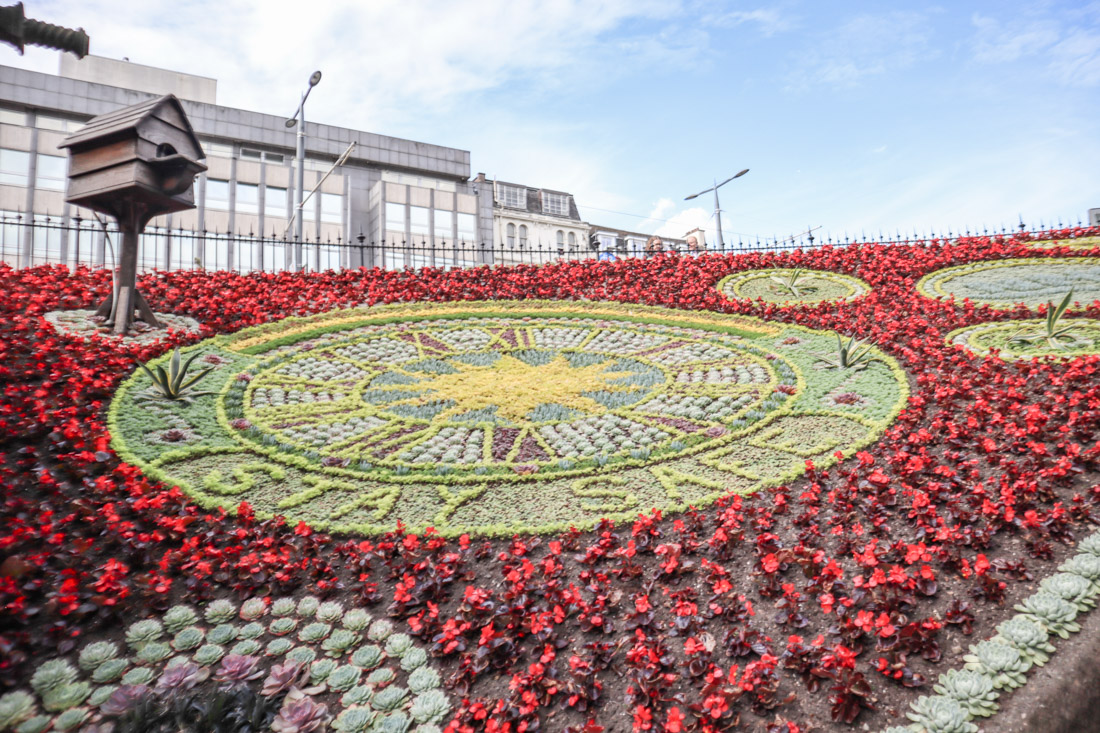
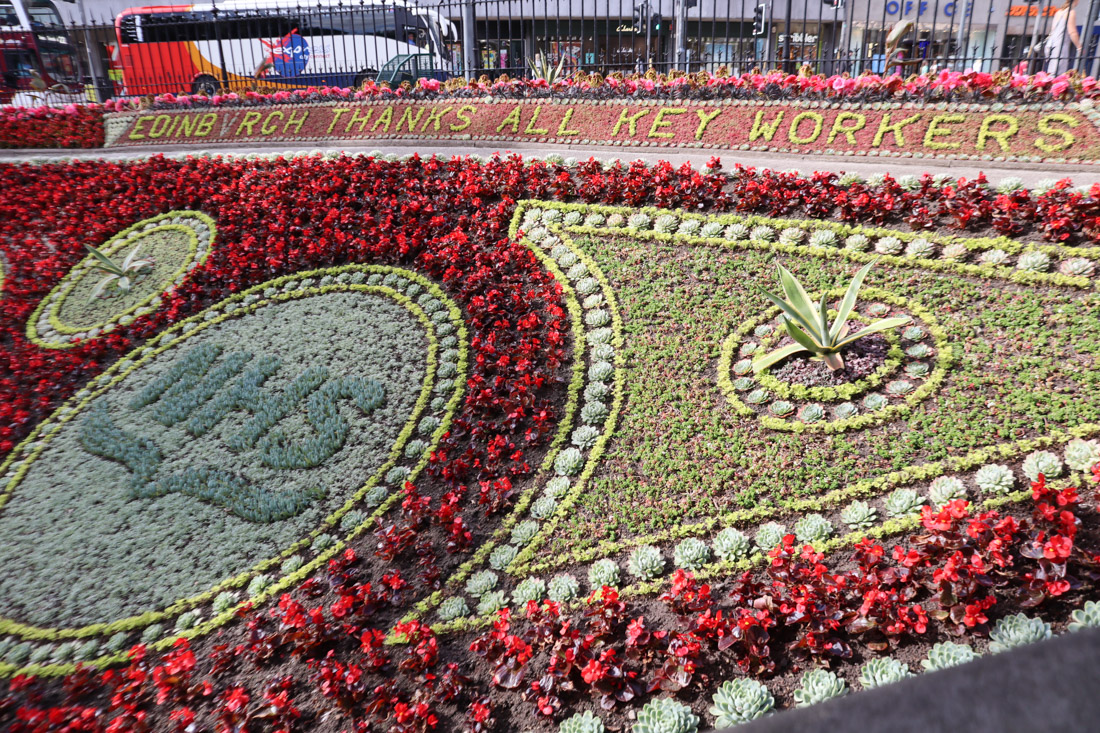
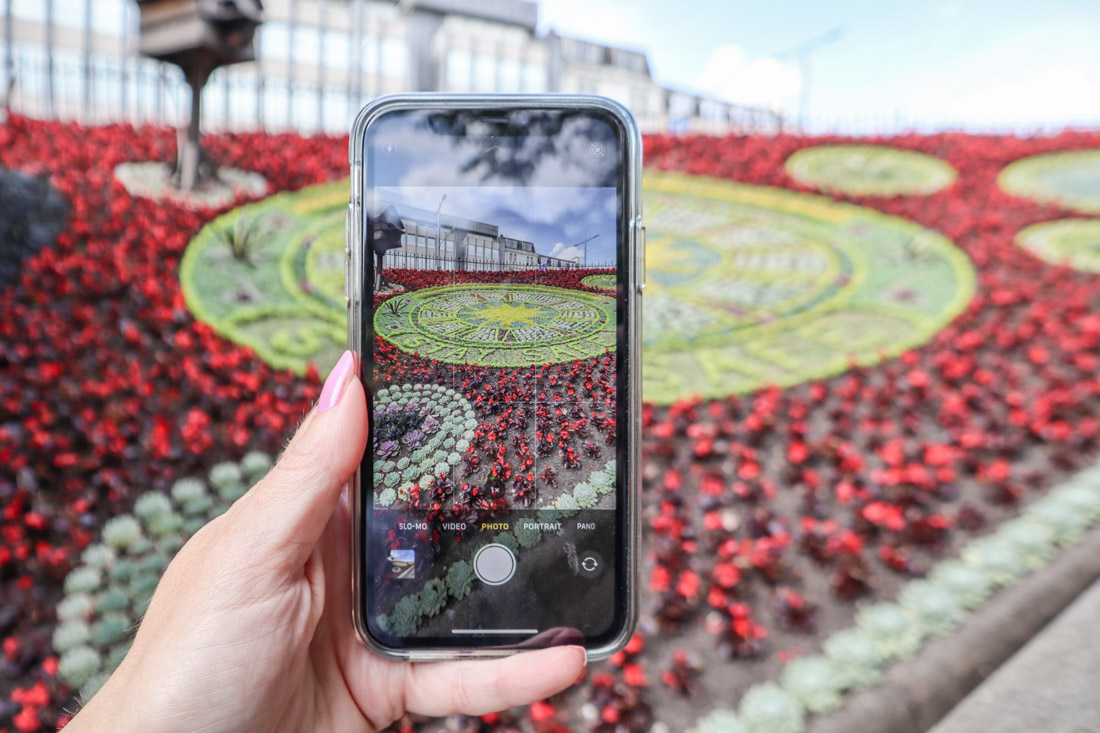

It is worth walking around the gardens to find the photogenic Gardener’s Cottage, aka Great Aunt Lizzie’s House, from the BBC show Teacup Tales.

Throughout this garden are several monuments, such as a memorial to Robert Louis Stevenson, the Scottish novelist who wrote a significant book about Edinburgh, The Strange Case of Dr Jekyll and Mr Hyde.
Learn more about Jekyll and Hyde in our spooky Edinburgh legends guide.
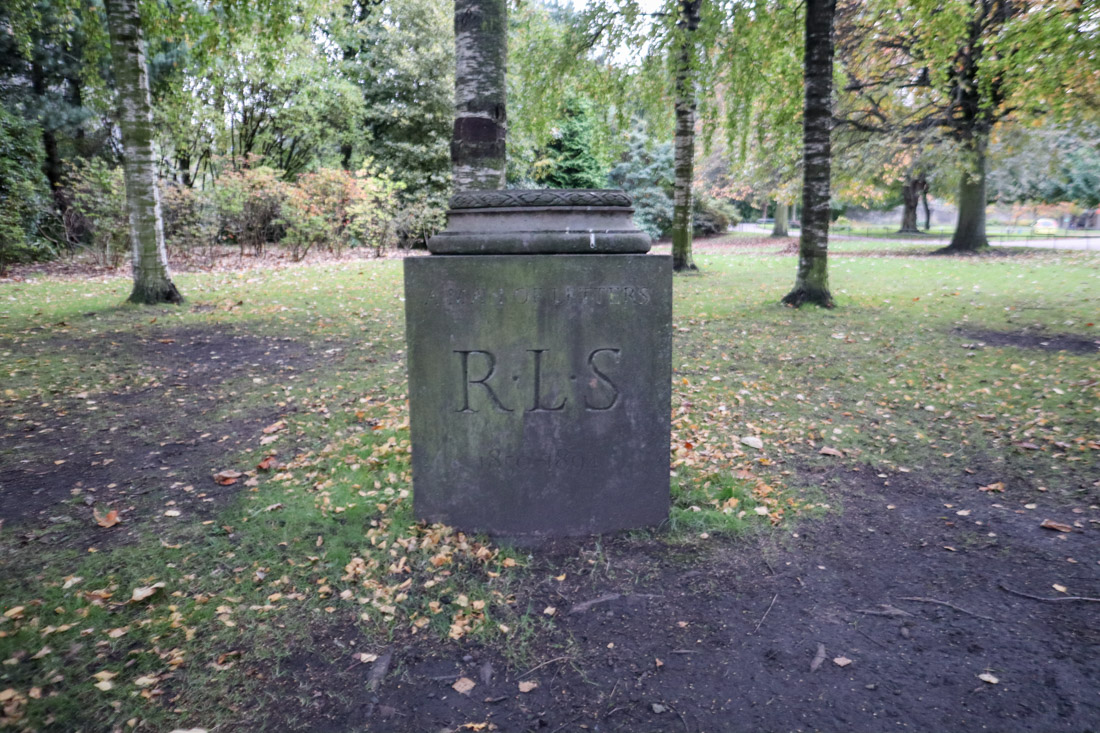
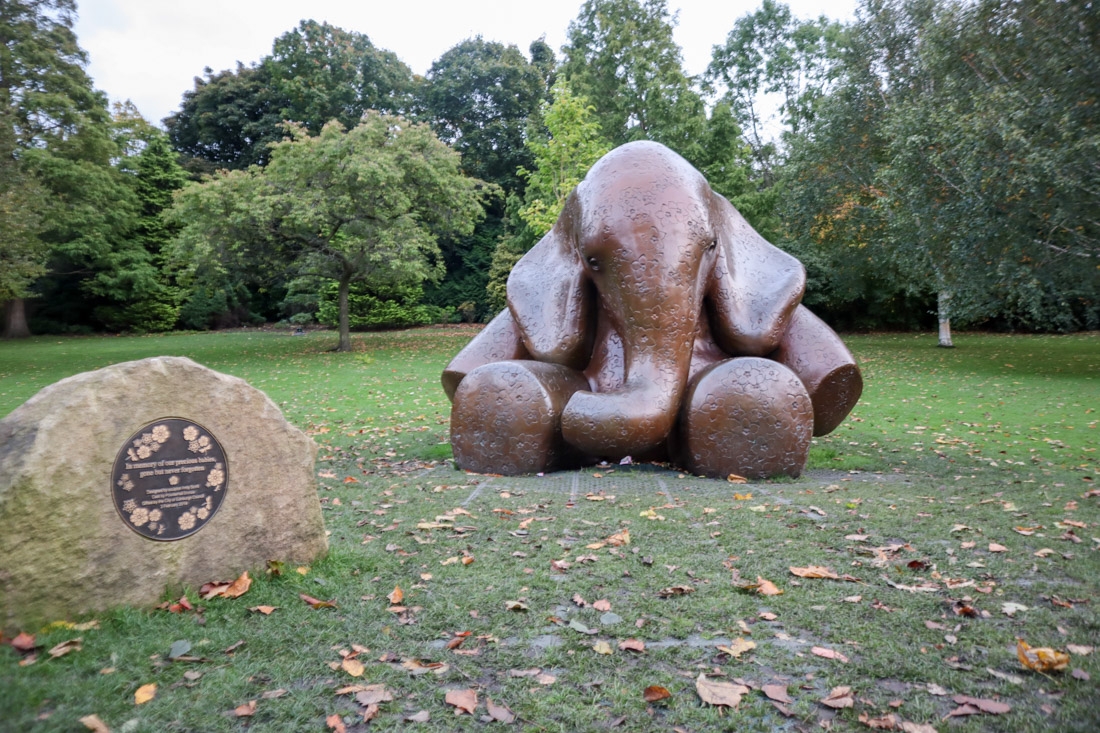
There is also a bronze elephant titled ‘Never Forget’ dedicated to the children of the Mortonhall baby ashes scandal.
Another significant memorial in the West Gardens is the Wojtek statue, unveiled in November 2015. This bronze sculpture by artist Alan Beattie Herriot depicts a Polish soldier walking alongside a bear, commemorating Wojtek, the “Soldier Bear” who was adopted by the Polish 22nd Artillery Supply Company during World War II. Wojtek helped carry ammunition at the Battle of Monte Cassino and became a symbol of the enduring bond between Poland and Scotland. After the war, Wojtek lived at Edinburgh Zoo until his death in 1963. The statue stands close to Castle Street as a tribute to the Polish men and women who fought “For Your Freedom and Ours.”
East Princes Street Gardens
East Princes Street Gardens is the busiest garden.
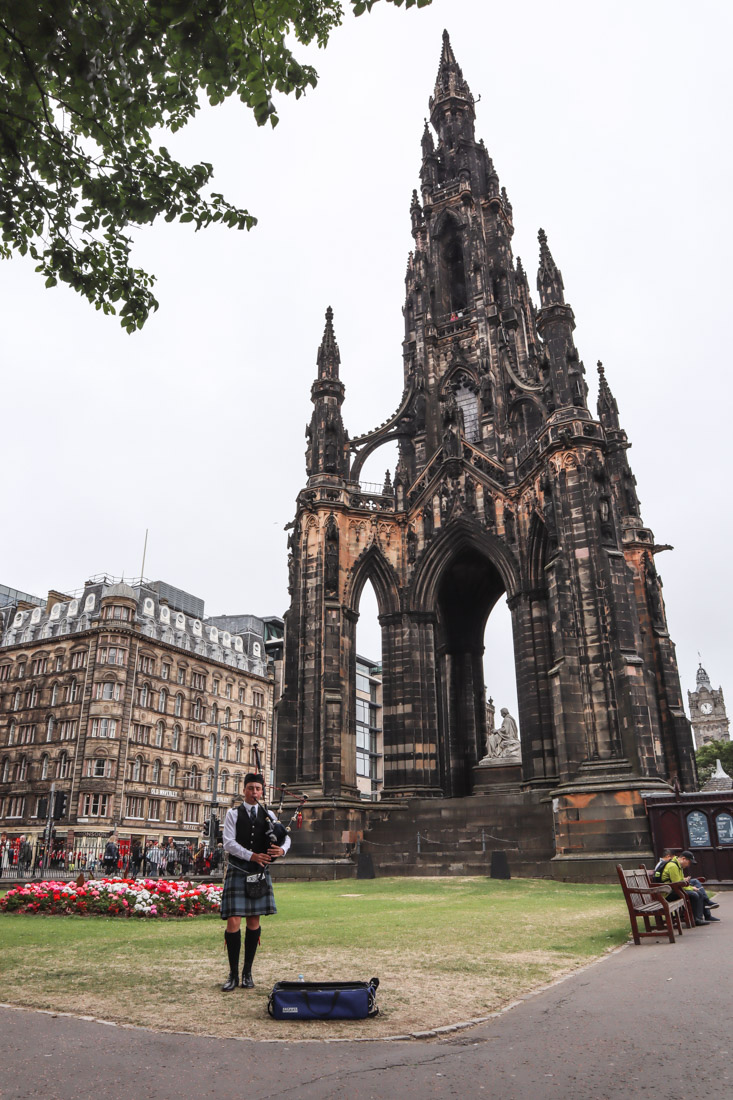
Tourists can mostly be found around the Scott Monument area, looking to climb the 287 steps for views of the city, or at the Waverley Bridge entrance, waiting on a bus tour to start.
The Scott Monument is the largest monument to a writer anywhere in the world, standing at 61 metres (200 feet 6 inches) tall. Visitors can climb the 287-step spiral staircase across four viewing platforms for panoramic views of central Edinburgh. As of 2026, tickets cost £9 for adults and £7 for children or concessions. There is no lift – the climb is stairs only, and the staircase narrows noticeably on the upper platforms. Budget 30 to 45 minutes for the full experience, including time on the viewing platforms. The ground-floor entrance and museum room are accessible without climbing.
On sunny days, workers and groups of friends enjoy lunch and people-watching.
From the garden, you can access the Royal Scottish Academy and are close to the Scottish National Gallery.
Princes Street Gardens in December
In winter, Princes Street Gardens comes alive in the late afternoon and evening when the Edinburgh Christmas Market festivities take place.

Princes Street Gardens also plays its part during Edinburgh’s Hogmanay celebrations at the end of December.
On the 31st, bands take to the Ross Bandstand to play to local and international crowds who are raring to ring in the new year.
Did you know that Edinburgh’s Hogmanay is the biggest street party in the world?

Museums at Edinburgh Princes Street Gardens
The Royal Scottish Academy (RSA) and the Scottish National Gallery are located in separate buildings between the East and West Gardens.
Both are free to enter unless there is an exhibition at the RSA.
In February, the RSA showcases award-winning graduates handpicked from Scottish art schools.
My cousin and Everything Edinburgh writer Katherine Fay Allan’s exhibition ‘The Rest of Us, We Just Go Gardening’ was presented at the RSA in 2020.
It was a very proud moment for my family.
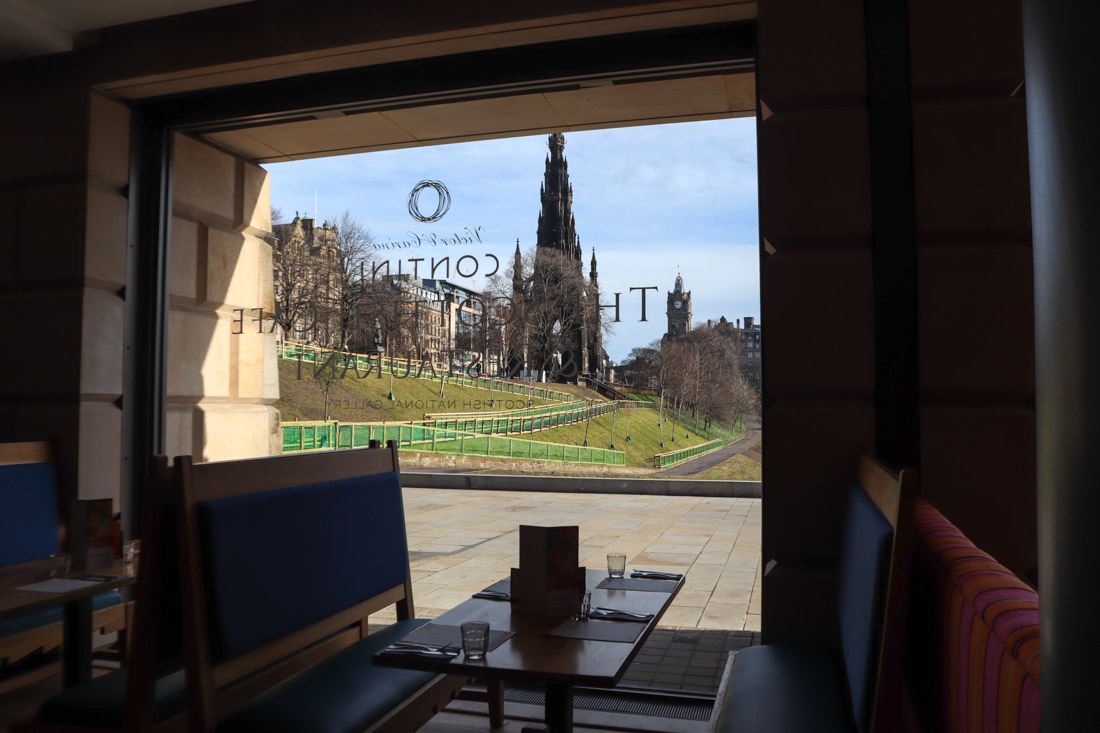
The Gallery Cafe (Contini) offers lovely views of the gardens.
These views are best enjoyed with a cup of tea and a scone with jam.
Read next | Free things to do in Edinburgh
Princes Street Gardens Facilities
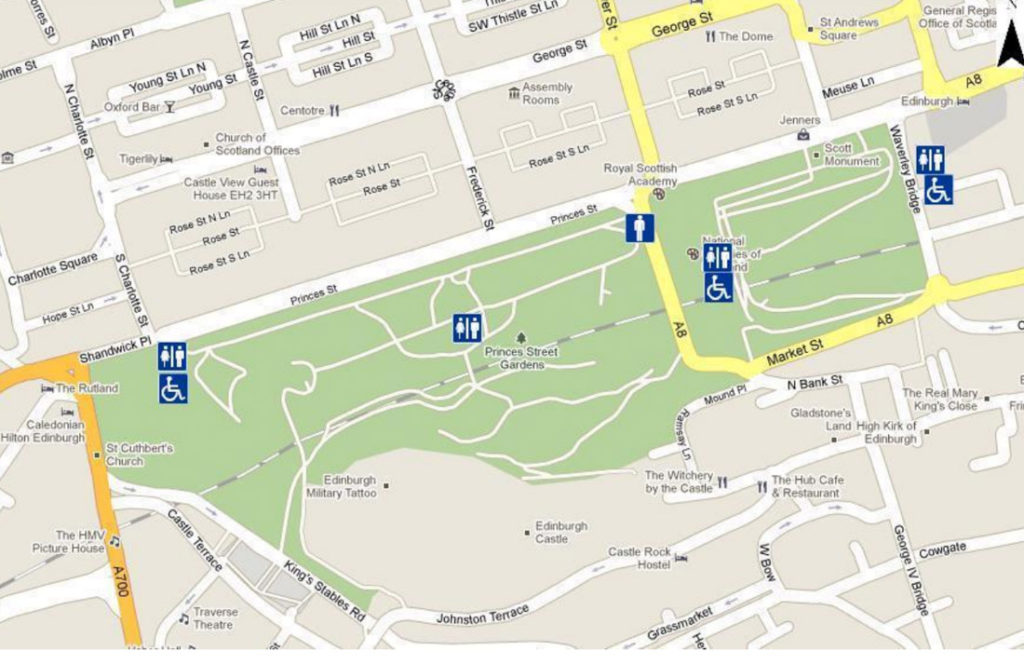
There are toilets dotted around both parks. Disabled access toilets require a radar key.
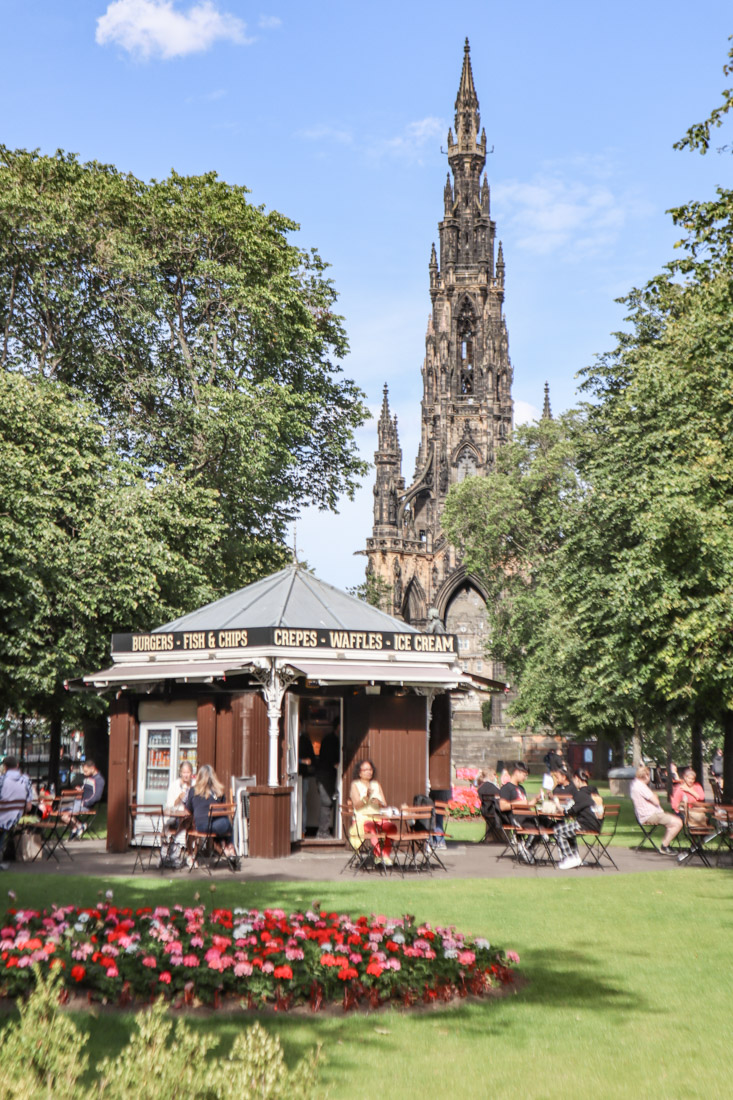
You can purchase snacks, lunch, and drinks at Sir Walter’s Cafe in the Gardens, a cute kiosk with outdoor seating in East Princes Street Gardens.
There is also a cafe with outdoor seating in the West Garden close to the Ross Fountain.
Princes Street Gardens Opening Hours
Princes Street Gardens opens at 7am daily. The gates close approximately one hour before the official closing time to allow staff to safely clear the gardens. Closing times vary by season:
- 1 January to 29 March: closes 6pm (west gate from 5pm, east gate from 5:15pm)
- 30 March to 26 April: closes 7pm (west from 6pm, east from 6:15pm)
- 27 April to 31 May: closes 8pm (west from 7pm, east from 7:15pm)
- 1 June to 30 August: closes 10pm (west from 9pm, east from 9:15pm)
- 31 August to 27 September: closes 8pm (west from 7pm, east from 7:15pm)
- 28 September to 25 October: closes 7pm (west from 6pm, east from 6:15pm)
- 26 October to 31 December: closes 6pm (west from 5pm, east from 5:15pm)
Entry to Princes Street Gardens is free. The gardens are managed by the City of Edinburgh Council. For enquiries, contact [email protected] or call 0131 529 7921.
What’s in the Gardens
Frequently Asked Questions
How long does it take to walk around Princes Street Gardens?
A leisurely walk around both the East and West Gardens takes approximately 30 to 45 minutes. If you plan to climb the Scott Monument, visit the floral clock, or explore the monuments in detail, allow 1 to 2 hours for your visit.
Is there a charge to enter Princes Street Gardens?
No, entry to Princes Street Gardens is free. However, there is a charge to climb the Scott Monument (£9 adults, £7 children/concessions as of 2026).
What is the floral clock in Princes Street Gardens?
The floral clock in West Princes Street Gardens is the world’s oldest, dating back to 1903. Each year, around 30,000 plants are used to create a new design that celebrates an individual or group who has contributed to the city, such as NHS workers.
Can you climb the Scott Monument?
Yes, visitors can climb the 287 steps of the Scott Monument for panoramic views of Edinburgh. The climb uses a narrow spiral staircase across four viewing platforms. There is no lift, and the staircase becomes tight on the upper levels. Tickets are £9 for adults and £7 for children or concessions (2026).
Are dogs allowed in Princes Street Gardens?
Yes, dogs are allowed in Princes Street Gardens but must be kept on a leash at all times. This is one of the garden rules to ensure the safety of all visitors.
Princes Street Garden Rules
- Dogs must be on leashes at all times.
- Ball games are prohibited.
Did you find this useful?
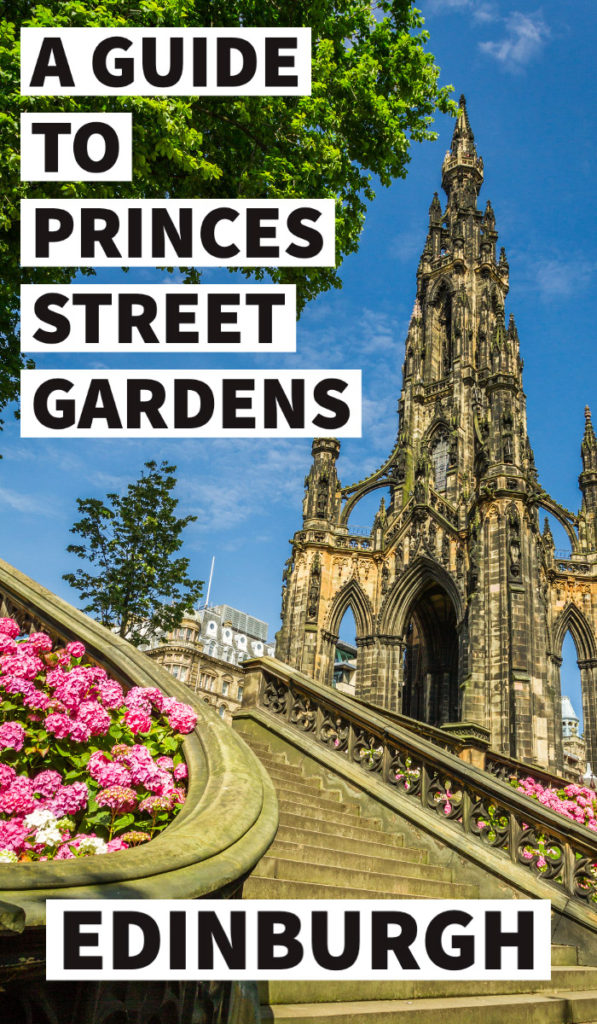
Pin to your Edinburgh planning board to bookmark
Any questions or comments?
Let us know below.
Its a long time (mid 1960’s) since I last visited the city – so this guide has been useful!! I am aware that benches in the gardens are normally dedicated to deceased family or friends. My grand parents had a bench dedicated to them which I saw during that last visit. Is there any way of finding out if that bench still remains? And if so, where is it located?
That’s a lovely thing to read. I think Edinburgh Council would be the best people to start with. I hope you have success.