

The Isle of Iona is only about three miles long, yet it has shaped Scottish history for more than 1,400 years. St Columba landed here in AD 563 and founded a monastery that became a centre of learning and pilgrimage across the Inner Hebrides. Today the restored abbey, the Augustinian nunnery ruins, white-sand beaches and short hill walks sit within an easy walk of the pier.
This guide covers the best things to do on Iona in 2026: how to get here on CalMac, what Historic Environment Scotland charges for the abbey, which beaches and coastal routes are worth your time, how to add a Staffa sailing, and where to eat and stay. We have dropped legends and figures we could not confirm on official or primary sources. Pair it with our Mull travel guide if you are combining both islands.
Whether you come for a quiet day trip from Mull or a longer Hebridean stay, the island rewards a slow pace: timed abbey tickets, a sandy shoreline, and a ferry timetable you trust.
Updated 6 November 2026. Prices, hours and ferry fares re-checked on official websites. Confirm when booking or visiting, as island services change with the season.
Iona at a Glance
| # | Attraction | Area | Adult price | Best for |
|---|---|---|---|---|
| 1 | Iona Abbey (HES timed ticket) | North of Baile Mòr | £10 online / £11 on the day | History, pilgrimage |
| 2 | Iona Nunnery ruins | Village road | No charge to view | Quiet photos |
| 3 | St Oran’s Chapel & Reilig Odhráin | Beside the abbey | No charge | Carved stones |
| 4 | Northern beaches & Dùn Ì | Northern tip | No charge | Beaches, views |
| 5 | St Columba’s Bay / south shore | South coast | No charge | Longer outing |
| 6 | Staffa Trips (Fingal’s Cave) | From Iona or Fionnphort | £45 | Boat trip, seabirds in season |
| 7 | Fionnphort–Iona CalMac | Pier | £2.40 adult single | Foot passengers |
| 8 | Oban–Craignure CalMac | Mainland link | £4.90 adult single | Getting to Mull |
Adult prices as published on official websites in November 2026. Concession, child and family tickets are noted in each section. Where a price is not published, confirm it when booking.
What’s Changed for Iona Visitors in 2026
- Staffa landings are running again: Staffa Trips reports that work on the landing and stairways is complete, so boats can put you ashore when sea conditions allow.
- CalMac winter timetables for Fionnphort–Iona and Oban–Craignure run from 19 October 2026 to 25 March 2027; summer 2027 dates are listed as 26 March to 17 October.
- Iona Abbey tickets remain timed-entry online for the best price (£10 adult). Winter hours (1 October–31 March) are shorter, and the abbey is closed on Sundays in that season.
- Visitor vehicles still need a permit from Argyll and Bute Council before boarding the Iona ferry — allow 48 hours for approval.
Sacred Sites: Abbey, Nunnery and Chapel
Most visitors head north from the pier along the single-track village road. The nunnery comes first, then the abbey complex, St Oran’s Chapel and Reilig Odhráin. Book the abbey online if you can. The same short stretch still frames Iona’s sacred story for many first-time visitors.
1. Tour Iona Abbey with a Historic Environment Scotland ticket
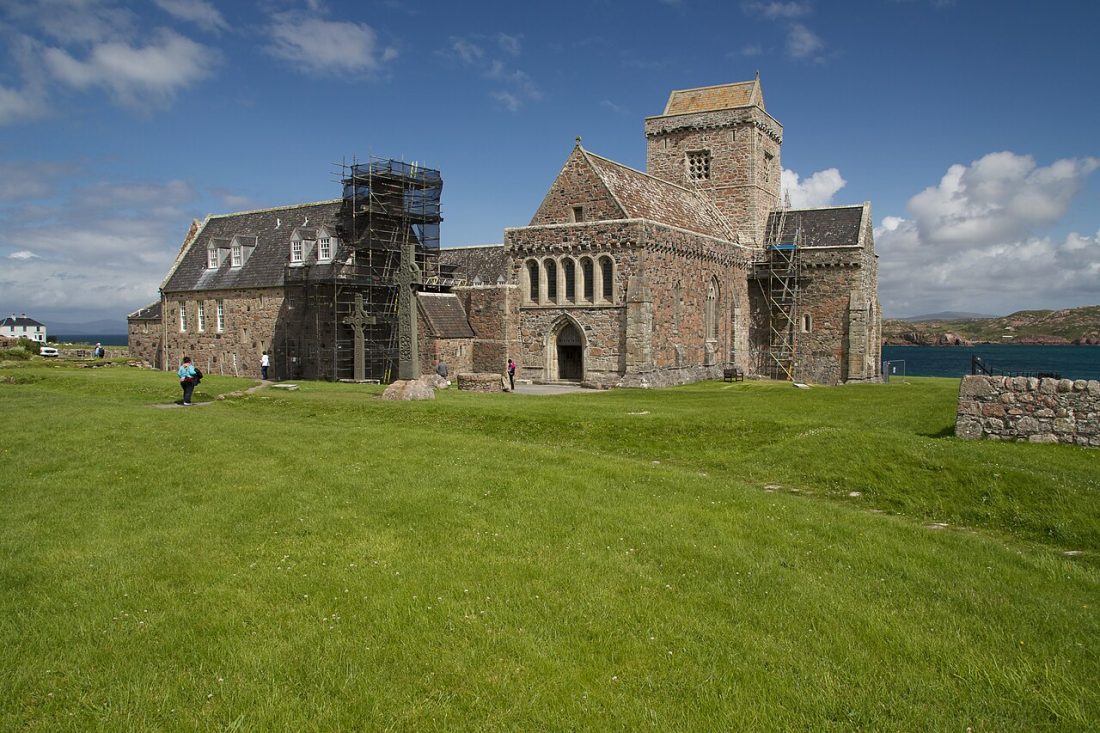
Photo: Tom Parnell, CC BY-SA 4.0, via Wikimedia Commons
Iona Abbey has been a place of Christian worship since St Columba’s monastery was founded in AD 563. The abbey church you see today spans the 13th to 16th centuries and was restored in the twentieth century. Historic Environment Scotland cares for the site; the Iona Community, formed in 1938, still uses it for work, worship and teaching.
Timed tickets cost £10 online or £11 on the day for adults (16–64), £8/£9 for concessions (65+) and £5/£5.50 for children aged 7–15. Historic Scotland members enter free; Young Scot and National Entitlement Card holders pay £1. Book ahead for the best price. The Abbey Museum holds an important collection of early medieval carved stones and crosses, and the site is traditionally linked with the making of the Book of Kells.
Summer opening (1 April–30 September) is 9.30am–5.30pm Monday to Saturday and 12.30pm–5.30pm on Sunday. Winter (1 October–31 March) is 10am–4pm Monday to Saturday, closed Sunday, and closed 25–26 December and 1–2 January. The abbey may close at short notice if the ferry is disrupted. Allow time to sit in the church if a service or quiet hour is underway — the atmosphere here is as much about stillness as sightseeing.
Where & when: About 600 m uphill from the Iona ferry pier (roughly a 10-minute walk). Official HES page
2. Wander through the Iona Nunnery ruins
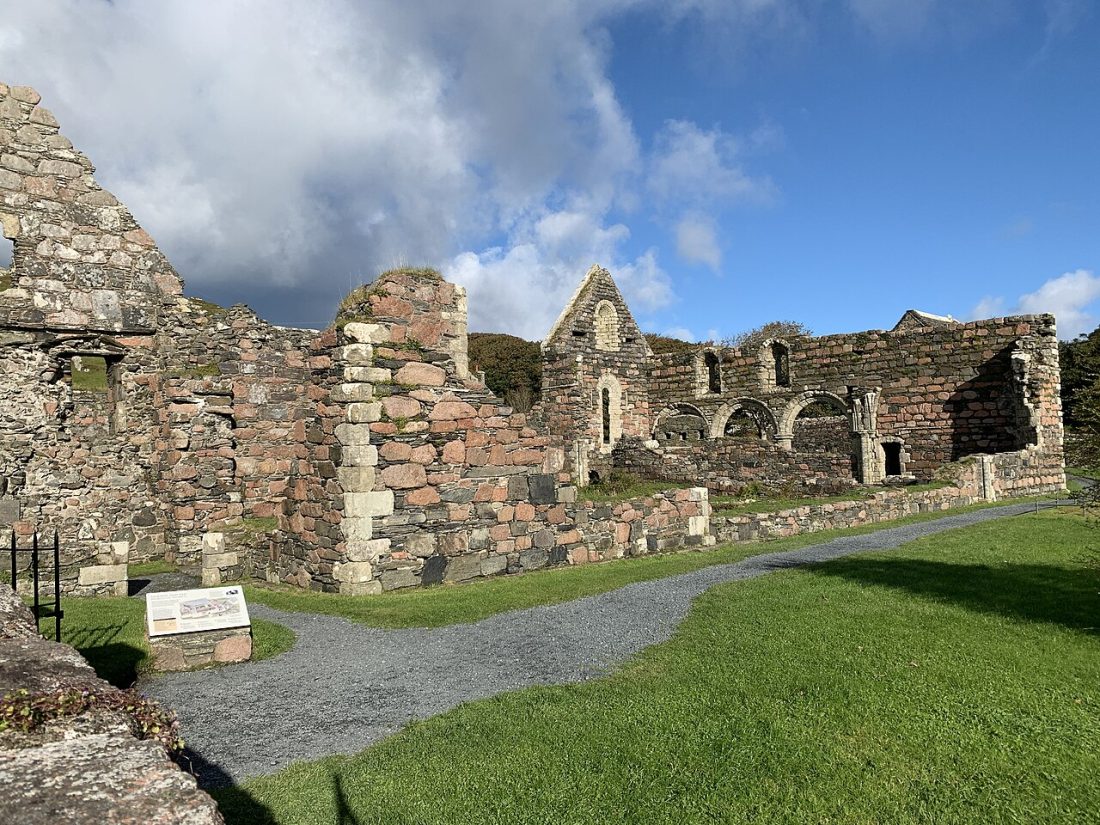
Photo: Andrew Abbott, CC BY-SA 2.0, via Wikimedia Commons
On the road up from the pier you pass the Augustinian nunnery, which Historic Environment Scotland calls the most complete nunnery complex to survive in Scotland. The 13th-century ruins sit in a quiet garden beside St Ronan’s Bay and make a natural stop before or after the abbey.
You can view the ruins without a separate ticket — a short walk from the pier road. There are no toilets on the HES abbey site; the nearest are at the Iona Community shop just north of the ticket office.
Where & when: Baile Mòr, between the pier and the abbey. Open site. HES overview
3. Visit St Oran’s Chapel and Reilig Odhráin
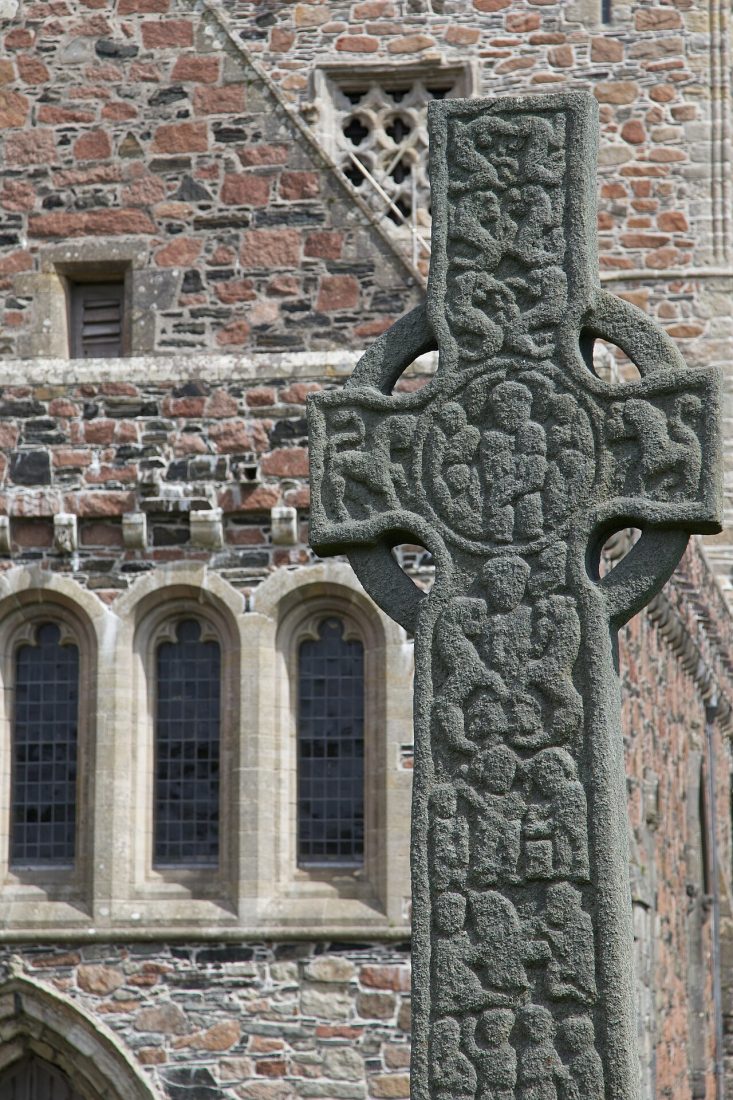
Photo: Tom Parnell, CC BY-SA 4.0, via Wikimedia Commons
St Oran’s Chapel stands beside the abbey and is among the oldest standing buildings on the island. Next to it lies Reilig Odhráin, the burial ground reached along Sràid nam Marbh — the Street of the Dead. Tradition holds that early Scottish kings were buried here; treat specific king-counts you see online as folklore unless a primary source confirms them.
Carved graveslabs and crosses reward a slow look. Some of the finest early stones are now protected inside the Abbey Museum. The chapel exterior is free to view and pairs well with a short look at the carved stones before you continue outdoors.
Where & when: Beside Iona Abbey. Free to view the chapel and exterior of Reilig Odhráin. HES history
4. Look for St Martin’s Cross and Torr an Aba
In front of the abbey stands St Martin’s Cross, a tall 9th-century Celtic high cross that has stood in the open for centuries. A replica of St John’s Cross also marks the approach; fragments of the original are in the museum. Together they are among the best-known Celtic crosses linked with early Iona.
Above the abbey, the little knoll of Tòrr an Aba is traditionally linked with St Columba’s writing hut. It is a short climb — more of a stiff walk than a scramble — for a wider view back over the monastery and the Sound of Iona.
Where & when: Abbey precinct. Included with an abbey visit for indoor museum spaces; outdoor crosses are freely visible from the approach.
Beaches and Coastal Trails
Iona’s sandy beaches and short hill walks are the reason many people stay overnight. The north end is easiest from the abbey; the south shore needs a longer outing.
5. Wander the White Strand of the Monks
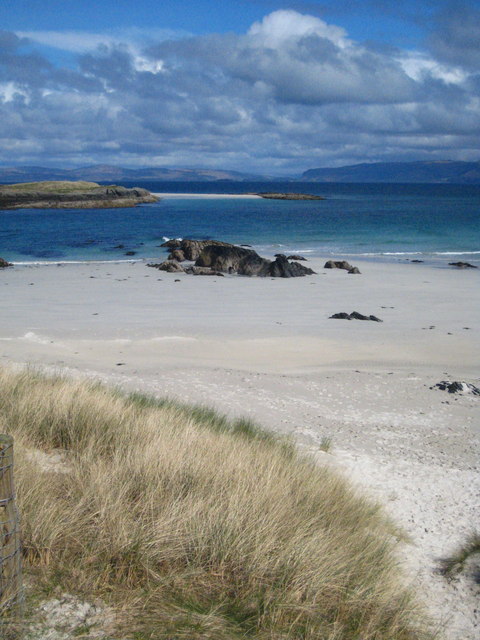
Photo: Rod Allday, CC BY-SA 2.0, via Wikimedia Commons
North of the abbey a run of white sand beaches and dunes opens toward the Atlantic. Tràigh Bhàn nam Manach — the White Strand of the Monks — is the best-known strand here, with clear water on a calm day and space to sit away from the village.
Walkhighlands describes a 7.5 km (about 4.75 miles) out-and-back from the ferry jetty via the abbey and northern beaches, taking around two hours if you keep moving. Stay on paths across croftland, and keep dogs under close control. On a breezy day the dunes are as much of a draw as the sand itself, and the walk stays mostly on easy paths.
Where & when: Northern tip of Iona. No charge. Walkhighlands northern route
6. Climb Dùn Ì for island views
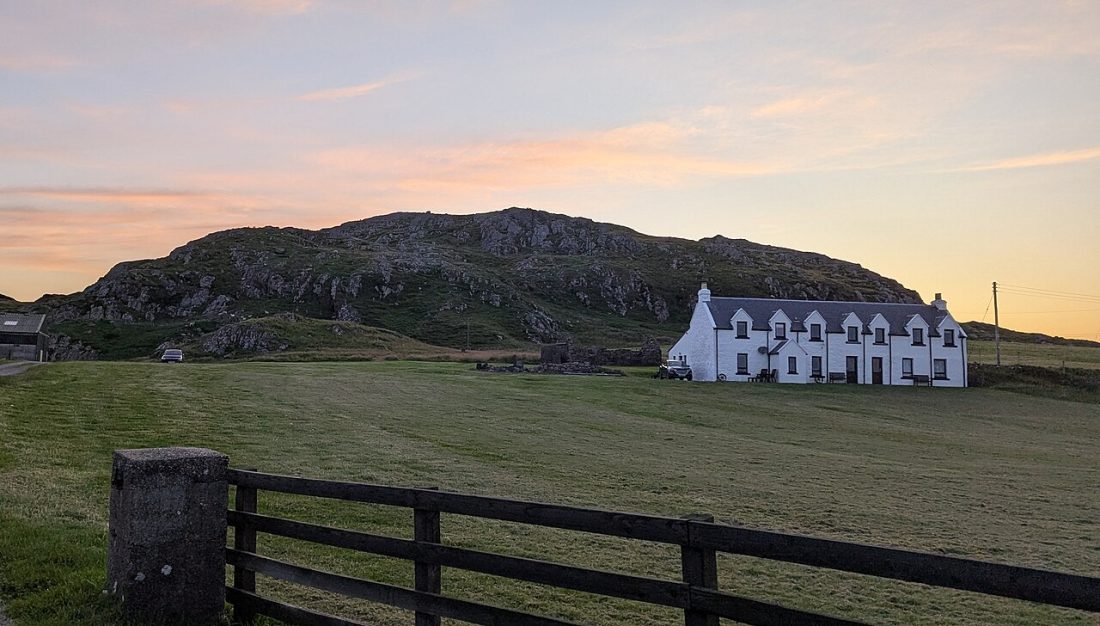
Photo: Clydiee, CC BY-SA 4.0, via Wikimedia Commons
Dùn Ì is the highest point on Iona — a modest hill by Highland standards, but the panorama takes in Mull, the Treshnish Isles and the open sea. The Walkhighlands northern route includes an optional steep, often muddy spur to the summit cairn and trig point.
Pick a clear spell. The climb is short but rough underfoot after rain — take the walk slowly if the path is slick. From the top you get wide views back over the village pier and across to the Ross of Mull.
Where & when: North of the abbey, signed from the track toward the northern beaches. No charge.
7. Hike to St Columba’s Bay and the south shore
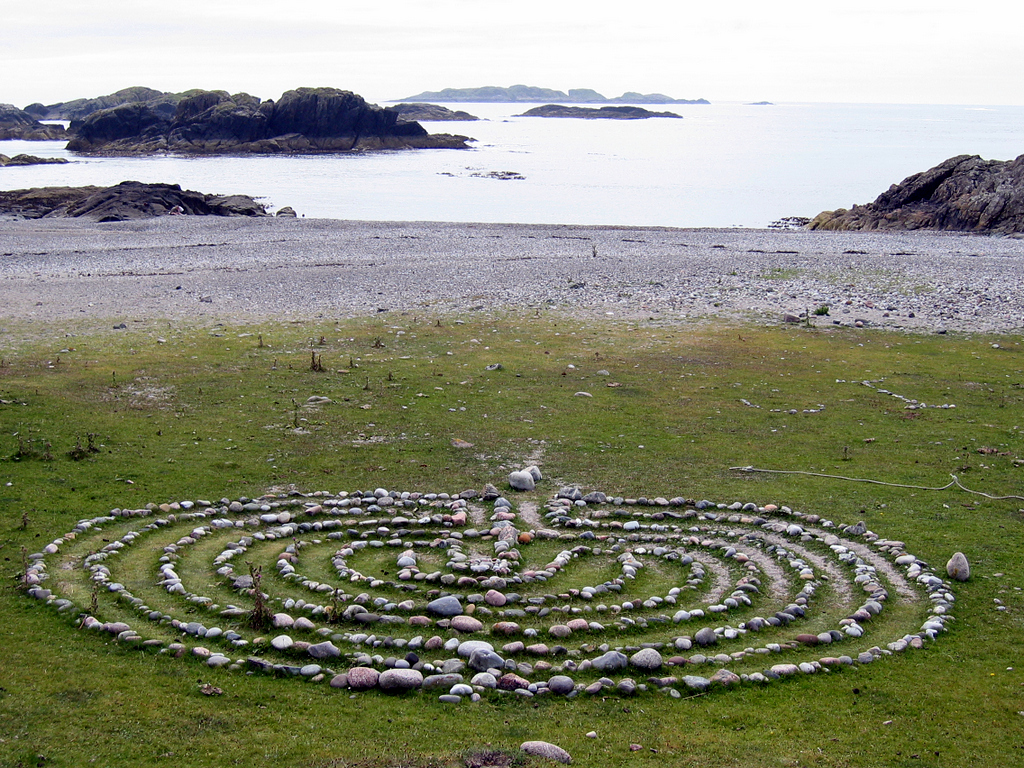
Photo: Andrew Curtis, CC BY-SA 2.0, via Wikimedia Commons
St Columba’s Bay on the south coast is the traditional landing place associated with Columba’s arrival. Green and white pebbles line the shore, and the route crosses machair and rough pasture.
Walkhighlands rates the south-shore circuit at 8.5 km with 2.5–3 hours of walking. It is a fuller half-day than the northern beaches, so pack water and check the return ferry time before you set out. Good walking shoes matter more here than on the village road. The walking is quieter than the north beaches once you leave the village.
Where & when: South coast of Iona. No charge. Walkhighlands south-shore route
8. Find Port Bàn, the Bay at the Back of the Ocean and village sands
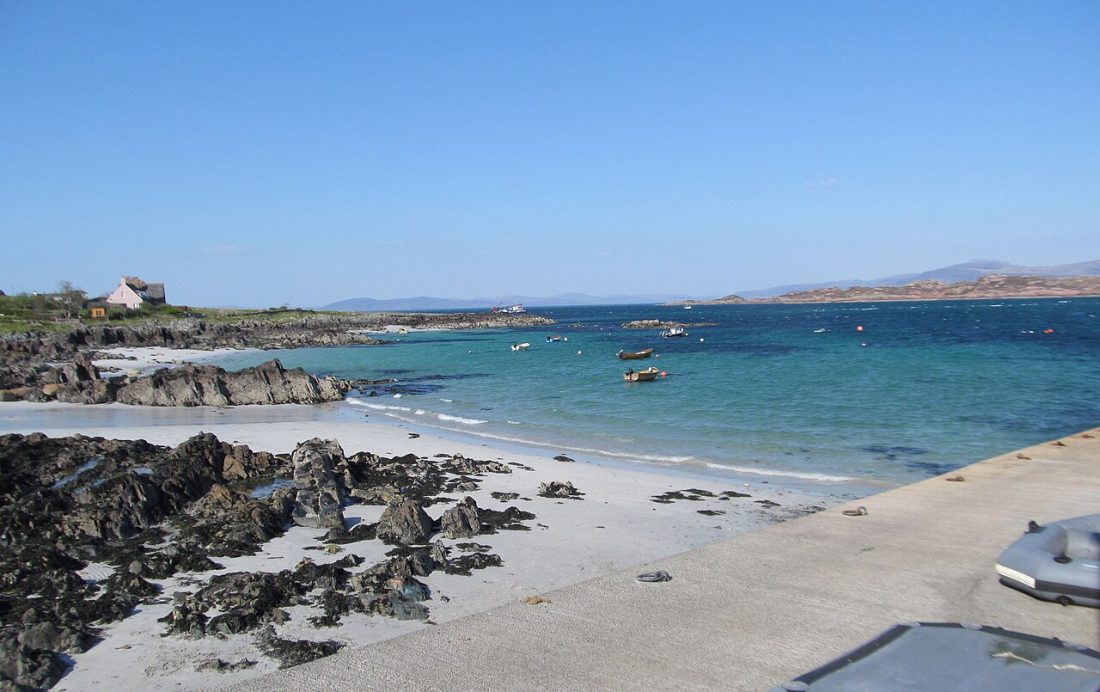
Photo: Patrick Hamilton, CC BY-SA 2.0, via Wikimedia Commons
On the west side, Camas Cùil an t-Saimh — often called the Bay at the Back of the Ocean — faces the open Atlantic. Port Bàn and other north-west strands are quieter alternatives when the abbey path is busy.
Back in the village, the beach by St Ronan’s Bay and Baile Mòr is the easy option for a last coffee while you watch the ferry work the Sound of Iona. These village sands suit anyone who wants sea views without a long walk.
Where & when: West and village coasts. No charge. Local beach notes: Welcome to Iona beaches
9. Seek out the old marble quarry
In the south-east of the island, remains of the 19th-century green marble workings survive as an industrial archaeology site (Canmore / scheduled monument). It is a detour if you already plan a south-shore walk rather than a first stop for a short day visit.
Paths can be rough; wear proper shoes and leave machinery and stonework undisturbed. Combine it with the south-shore circuit if you have a full afternoon.
Where & when: South-east Iona. Open site; no visitor centre. Confirm access on the ground.
Staffa and Boat Trips
From Iona you can add one of Scotland’s most famous small-island landings — Staffa’s basalt columns and Fingal’s Cave — when the sea allows. The same sailings are also among the island’s best wildlife outings.
10. Take a Staffa Trips sailing to Fingal’s Cave
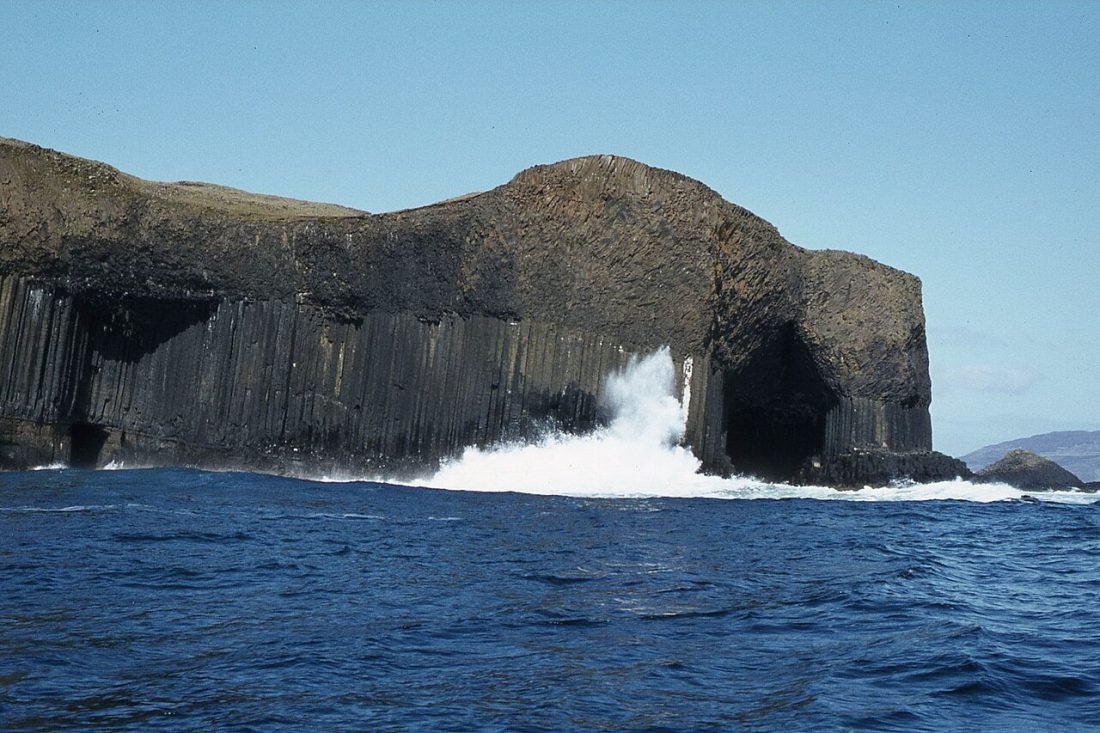
Photo: Colin Park, CC BY-SA 2.0, via Wikimedia Commons
Staffa Trips runs sailings from Iona and Fionnphort twice daily from 1 April to late October. The outing lasts about three hours and aims for at least an hour ashore when landings are possible. Adult tickets are £45; children aged 5–15 are £22; under-5s travel free.
The operator states that landing-stair works are complete, so disembarkation is again possible in suitable conditions. In season you may see puffins ashore, plus other seabirds from the boat. Wildlife watching continues on the crossing — seals and dolphins are reported in these waters, though sightings are never guaranteed. You can leave from Iona and return to Fionnphort (or the reverse) if that suits your Mull plans.
Staffa itself is a National Trust for Scotland National Nature Reserve. Pair this trip with our things to do on Mull guide if you are based on the larger island. Book early in July and August; spaces fill when the weather looks settled.
Where & when: Departures from Iona and Fionnphort, April–late October. staffatrips.co.uk · NTS: Staffa NNR
Village Life: Shops, Craft and Quiet Corners
Baile Mòr is tiny, but the pier village packs in craft shops, a grocery stop and gardens worth a pause between walks.
11. Browse Iona Craft Shop
Iona Craft Shop has sold island knitwear, gifts and crafts since 1965 and remains a natural stop near the pier. Stock is seasonal; check the shop’s site for what is on the shelves when you visit.
It is also a useful place to ask about bike hire and current village hours in summer.
Where & when: Near the pier, Baile Mòr. ionacraftshop.com
12. Pick up picnic supplies at St Columba Larder
St Columba Larder, linked with the hotel of the same name, sells sandwiches, soup, island produce and bottles to take away — handy before a beach walk toward Dùn Ì. Hot drinks and cakes are usually available to go when the counter is open.
Hours follow the hotel season, so confirm on the day rather than relying on last year’s notes. A packed lunch matters if you plan to walk the south shore without a café stop.
Where & when: Beside St Columba Hotel. St Columba Larder
13. Sit in the Quiet Garden at St Columba Hotel
The Quiet Garden in front of St Columba Hotel is open for visitors who want a bench and a view over the Sound of Iona without booking a room. It is a good reset between the abbey and the ferry.
The hotel also runs an organic garden and garden tours in season — details are on its website. If your morning was spent at the abbey and nunnery, this is an easy afternoon pause.
Where & when: St Columba Hotel grounds. Quiet Garden info
14. See the craft steadings and galleries
Across from St Columba Hotel, the steading buildings house makers including Aosdana jewellery and other craft studios. Opening depends on the season and each maker’s schedule.
Further along the village you will also find Martyrs Bay’s shop beside the restaurant — useful for last-minute snacks before you board.
Where & when: Village road, Baile Mòr. Check each studio on the day.
Where to Eat on Iona
Food options are limited and seasonal, so build lunch into your plan — especially if you are on a tight ferry connection. These are the places we could verify as trading on the island:
- St Columba Hotel — sit-down meals with an emphasis on garden and local produce; see food and drink.
- Argyll Hotel — small hotel restaurant overlooking the Sound of Iona; sample menus on argyllhoteliona.co.uk.
- Martyrs Bay — restaurant, shop and rooms by the pier; practical if you are waiting for the ferry (martyrsbay.co.uk).
- St Columba Larder — takeaway picnic food and drinks opposite the hotel.
- Ailidh — Hebridean street-food / pizza stall often mentioned by recent visitors; opening is irregular, so check their Instagram on the day rather than treating it as a fixed address.
- On the Mull side at Fionnphort, cafés and takeaways by the car park cover you if Iona kitchens are between services.
Where to Stay on Iona
Beds on Iona are scarce in summer — book early. Visitor cars are restricted, so plan to go on foot from the pier or arrange a hotel luggage pickup.
- St Columba Hotel — central rooms near the abbey; the hotel can meet the ferry and help with bags.
- Argyll Hotel — owner-run hotel on the village street with sea-view rooms and a strong food reputation.
- Martyrs Bay — rooms above the pier-side restaurant if you want to be closest to the ferry.
- Iona Pods — glamping pods on a croft near Dùn Ì (book via their own site; confirm current availability).
- Iona Community — residential stays and programmes at the Abbey Centre when spaces are open; see iona.org.uk/visit-and-stay.
- Self-catering and private rooms also appear on Airbnb’s Isle of Iona search — always check house rules and ferry timing before you book.
How to Get to Iona
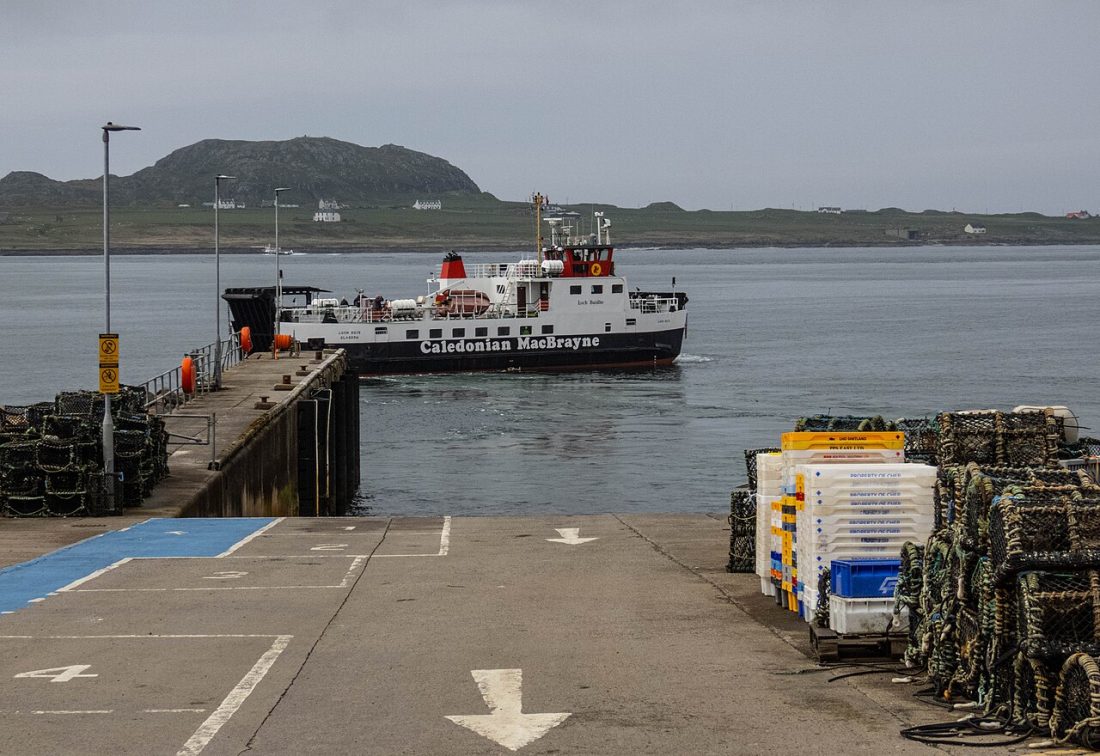
Photo: Carroll Pierce, CC BY-SA 2.0, via Wikimedia Commons
Almost everyone reaches Iona via Mull. The usual chain is mainland → Oban → Craignure (Mull) → road or bus to Fionnphort → foot ferry to Iona. The Fionnphort ferry terminal is the last car park for most day visitors.
- Oban–Craignure (CalMac) — adult £4.90 single / £9.80 return; child £2.45 / £4.90; car £18.20 / £36.40 (driver not included). Book online; check in 30 minutes before for vehicles, 10 minutes for foot passengers. Oban–Craignure fares
- Craignure–Fionnphort — about an hour by car on mostly single-track road, or West Coast Motors bus service 96 (timetable dependent).
- Fionnphort–Iona (CalMac) — adult £2.40 single / £4.80 return; child £1.20 / £2.40. Turn-up-and-go tickets are valid across the summer or winter timetable period, but CalMac still asks you to book a preferred date online. Check in 10 minutes before departure. Fionnphort–Iona route
- Cars on Iona — visitor vehicles need a permit from Argyll and Bute Council (01631 569160; allow 48 hours). Most day visitors park at Fionnphort and cross as foot passengers. Blue Badge holders may board, but parking on the island is very limited.
- Guided options — day tours from Oban (for example West Coast Tours’ Mull/Iona itineraries) suit travellers without a car. Multi-day trips from Edinburgh that include Mull and Iona are another option if you prefer not to arrange each ferry yourself.
Practical Tips for Visiting Iona
- Build slack into ferry connections — weather and traffic on the Ross of Mull can eat your margin.
- Book Iona Abbey timed tickets online before you sail, especially in July and August.
- Wear proper shoes for Dùn Ì and the south shore; paths are muddy after rain.
- There is no large supermarket on Iona — buy lunch supplies on Mull or at the Larder.
- Cash helps at smaller stalls, but cards are widely accepted on CalMac and at the main hotels.
- Midges can appear on still summer evenings; a head net earns its keep near the machair.
- If you only have a few hours, prioritise the abbey, nunnery and a northern beach rather than forcing the south circuit.
- For wildlife, bring binoculars on the Staffa sailing, keep a respectful distance from nesting birds ashore, and watch for seals on nearby skerries from the boat or shore.
- Organised groups sometimes book abbey slots as a block; independent visitors should still reserve their own timed entry.
Iona FAQs
How long do you need on Iona?
A well-paced day covers the ferry, abbey, nunnery and a northern beach. Add a night if you want St Columba’s Bay, Dùn Ì at sunset and a Staffa sailing without rushing.
Can you take a car to Iona?
Only with a permit from Argyll and Bute Council, arranged in advance. Most visitors leave the car in Fionnphort and cross as foot passengers on CalMac.
How much is the Fionnphort–Iona ferry?
In November 2026 CalMac lists £2.40 adult single and £4.80 return (£1.20 / £2.40 for children). Always re-check the fare table before travel.
Do you need to book Iona Abbey?
Yes for the best price and a guaranteed slot in high season. Historic Environment Scotland sells timed tickets online; members still need to reserve.
Is Staffa running from Iona in 2026?
Staffa Trips advertises twice-daily sailings from Iona and Fionnphort between 1 April and late October, with landings when conditions allow. Confirm on the morning of your trip.
Are dogs allowed?
Dogs are common on the ferries and beaches but must be controlled on croftland. Assistance dogs are welcome at HES sites; check each hotel’s pet policy before you book.
What is the best time to visit Iona?
May to September brings longer opening times, Staffa sailings and craft shops. Early autumn is quieter. Winter abbey hours are shorter and Sunday is closed.
Is Iona good for a wildlife day?
Yes if you add Staffa in season and keep expectations realistic: seabirds, occasional marine mammals, and quiet machair rather than a zoo-style guarantee.
Final Words
Iona rewards a slow pace: an abbey ticket, a beach stroll and a ferry timetable you trust. If you are building a wider Mull and Argyll route, continue to Mull or the remote Ardnamurchan peninsula, or ask us to plan your Scotland itinerary.