
One of the first things people usually do when they arrive is stop at Sligachan Old Bridge.
Engineer Thomas Telford built the bridge between 1810 and 1818, arcing it over the magical waters of the River Sligacha.
Telford also created the Caledonian Canal (Fort William) and played a part in the project that connected the Highlands with the Lowlands.
The old stone bridge is Category B listed and a scheduled monument.
The bridge arch also provides striking framing for The Cuillin mountains.
Getting There & Parking
Sligachan sits at the junction of the A87 and A863 in the middle of Skye, so it is hard to miss. There is a car park by the Sligachan Hotel, and the old three-arched bridge is a short signed walk from there across the moor.
This is one of the most central spots on the island, which makes it an easy stop between Portree and the west coast or the Fairy Pools.
What to See
The old stone bridge is the foreground; the jagged Cuillin ridge is the backdrop. Together they make one of the most photographed scenes on Skye, especially when the peaks catch morning or evening light.
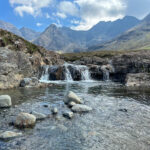
The river below runs over pale rock into clear pools.
Best Time & Tips
- Shoot from the downstream side to get the bridge and Cuillin in one frame
- Morning light on the ridge is usually the cleanest before cloud builds
- The ground is boggy after rain, so proper footwear helps
- The Sligachan Hotel has food, toilets and a mountain-rescue history worth a look
Frequently Asked Questions
Why is Sligachan Old Bridge famous?
It frames the Cuillin mountains almost perfectly, making it one of Skye’s signature photo spots. The bridge was built by Thomas Telford between about 1810 and 1818 and is a scheduled monument.
Is it free to visit Sligachan?
Yes. The bridge and river are open access with no charge. There is a car park by the Sligachan Hotel and a short walk out to the old bridge.
Where is Sligachan on Skye?
It is at the A87 and A863 junction in the centre of the island, roughly halfway between Portree and the west, which makes it an easy stop on most itineraries.