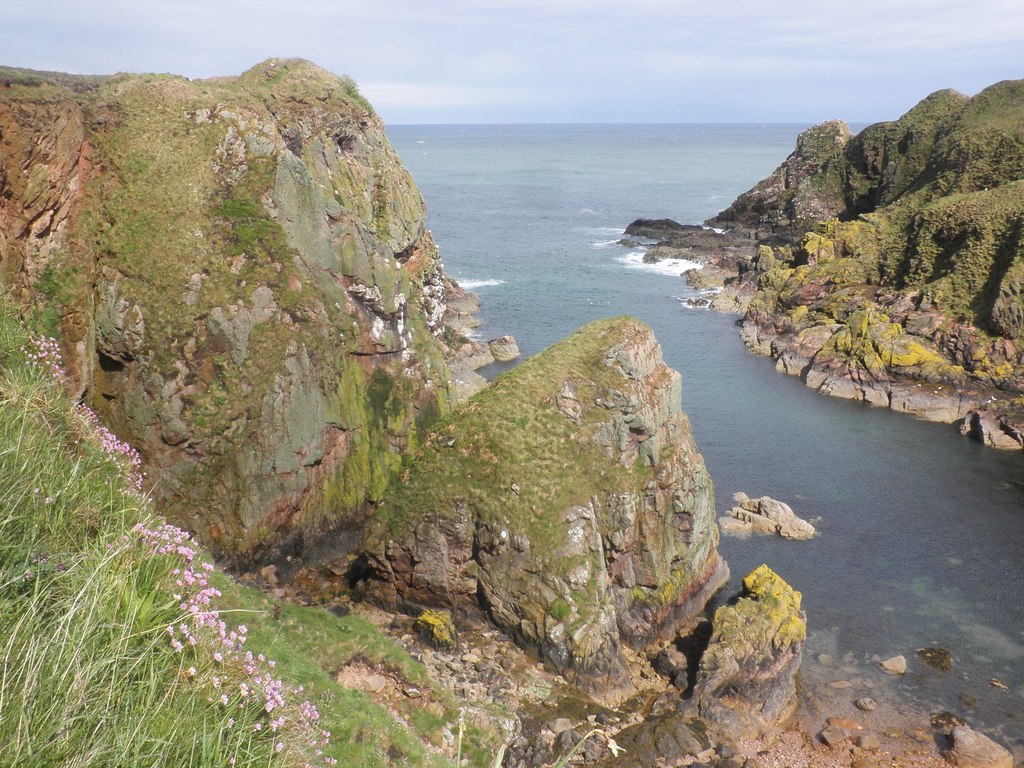
The Bullers of Buchan is a spectacular collapsed sea cave, a deep circular chasm where the sea churns far below through a natural rock arch. The name buller comes from the boiling, roaring water that fills the cauldron in a swell.
Set on the cliffs south of Peterhead, the site draws walkers and birdwatchers to a rim path that skirts the drop. In spring and summer the surrounding cliffs are crowded with nesting seabirds, making it one of the northeast most atmospheric coastal spots.
Location & Getting There
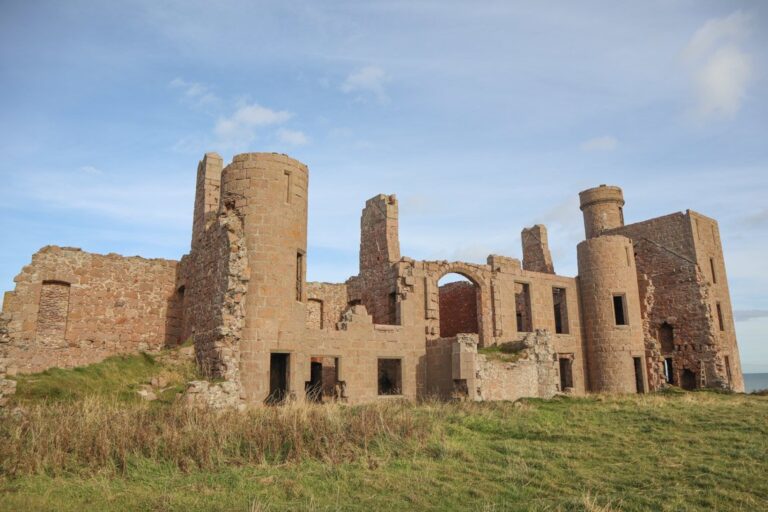
The Bullers lie off the A975 between Cruden Bay and Peterhead, about 25 miles north of Aberdeen. A small roadside car park marks the start; from there a short path leads to the cauldron and clifftop. It pairs easily with Slains Castle just to the south for a single coastal outing.
What to See & Do
Walk the narrow rim to look down into the collapsed cave where the sea surges through the arch, then follow the clifftop to watch guillemots, razorbills, kittiwakes and puffins in season. Bring binoculars for the seabird ledges and keep an eye offshore for dolphins. The raw geology and noise of the sea are the main draw.
Who It Suits & Best Time
Bullers suits walkers, birdwatchers and photographers who are steady on exposed ground. Late spring to midsummer is best for nesting seabirds including puffins. The rim path is narrow and unfenced, so it is not ideal for small children or in strong wind; choose a calm, clear day.
Practical Tips
- The rim path is narrow and unfenced, so tread carefully
- Bring binoculars for the seabird colonies
- Best for puffins and nesting birds from May to July
- Park in the small roadside car park, not on verges
- Combine with Slains Castle just to the south
Frequently Asked Questions
What is the Bullers of Buchan?
It is a collapsed sea cave, a deep circular chasm connected to the open sea by a natural rock arch. In rough weather the water boils and roars inside, which gives the site its name.
Can you see puffins at Bullers of Buchan?
Yes, in season. From roughly May to July the surrounding cliffs host nesting seabirds including puffins, guillemots and kittiwakes. Bring binoculars and keep to the path to avoid disturbing the colonies.