
Looking for the loveliest gardens in Edinburgh? This guide details the popular green spaces in the city and lesser-known hidden urban parks so you can take a stroll, people watch or eat your pieces in peace. Unless otherwise stated, all of these are free to access.
You may also like our guide to the best walks.
Updated September 2026
| Garden | Area | Type | Postcode | Key Feature |
|---|---|---|---|---|
| Princes Street Gardens | New Town | Public park | EH1 1YP | Scott Monument views, seasonal flower beds |
| Royal Botanic Garden Edinburgh | Inverleith | Botanic | EH3 5LR | 70 acres, 13,000+ plant species, Palm House |
| The Meadows | Southside | Community park | EH9 1QF | 35 acres, free pitch-and-putt golf |
| George Square Gardens | Southside | Historic | EH8 9HX | 18th-century layout, mature trees |
| St Andrew Square | New Town | Public | EH2 2AD | Melville Monument, reflective pool |
| Nicolson Square Garden | Southside | Pocket park | EH8 9AJ | Quiet courtyard |
| Dunbar’s Close Garden | Old Town | Secret | EH1 1PG | Hidden 17th-century off Royal Mile |
| Surgeons’ Hall Garden | Old Town | Historic | EH8 9AG | Medical herb, quiet courtyard |
| Starbank Park | Comely Bank | Public park | EH4 1BG | Community allotments, orchard |
| Japanese Garden (RBGE) | Inverleith | Themed | EH3 5LR | Peaceful water feature, maple trees |
| Deaconess Garden | Leith | Community | EH6 6EG | Rooftop, former hospital site |
| Saughton Park Gardens | Saughton | Public park | EH11 3BQ | Winter gardens, bandstand |
| Jupiter Artland | Wilkieston | Sculpture park | EH27 8BY | 200+ contemporary artworks in 100 acres |
| Dr Neil’s Garden | Duddingston | Secret | EH15 3PX | Secluded woodland by Arthur’s Seat |
| Malleny Garden | Balerno | Historic | EH14 7AF | 17th-century formal, NTS property |
| Redhall Walled Garden | Colinton | Walled | EH14 2LZ | 6-acre therapeutic, community plots |
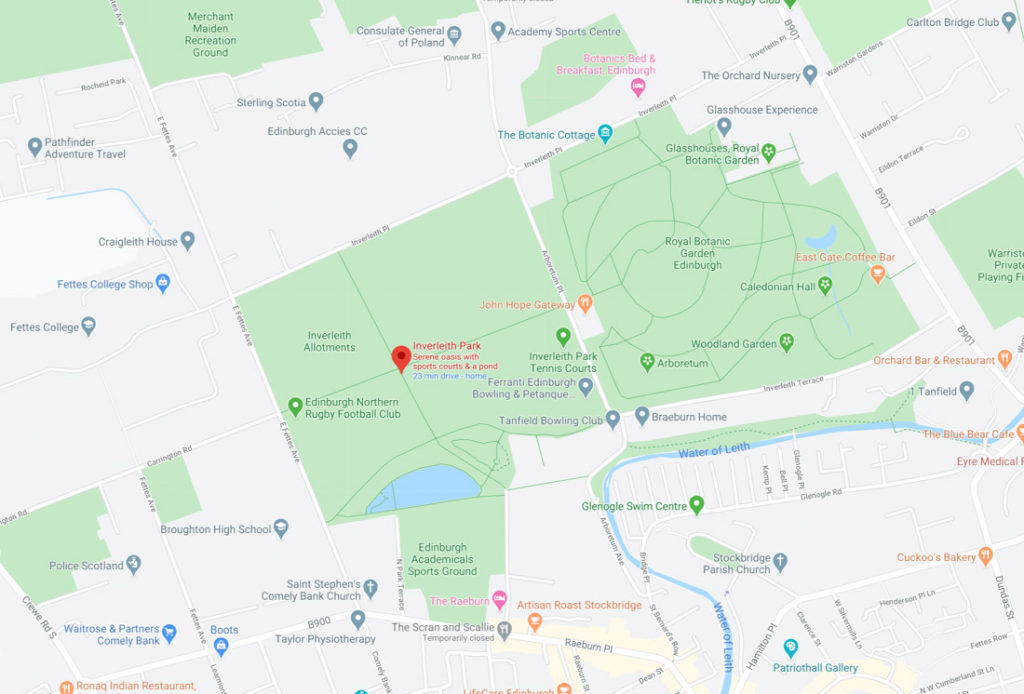
| Inverleith Park | Inverleith | Public park | EH3 5NZ | 54 acres, boating pond, sundial |
| Bruntsfield Links | Bruntsfield | Historic links | EH9 1DY | Free 36-hole golf course since 1890 |
| Holyrood Physic Garden | Holyrood | Historic | EH8 8HZ | Recreated 2020, medicinal plants, free |
Popular Gardens
1. Princes Street Gardens
Princes Street Gardens is the most publicised park in Edinburgh.
Positioned between Edinburgh’s Old Town and New Town.
East Princes Street Gardens is close to Edinburgh Waverley Train Station and West Princes Street Gardens is sandwiched between The Mound and Lothian Road (West End).
The park is accessed from many points including Waverley Bridge by Princes Street, Market Street close to the Edinburgh Dungeons, The Mound and King Stables Road.
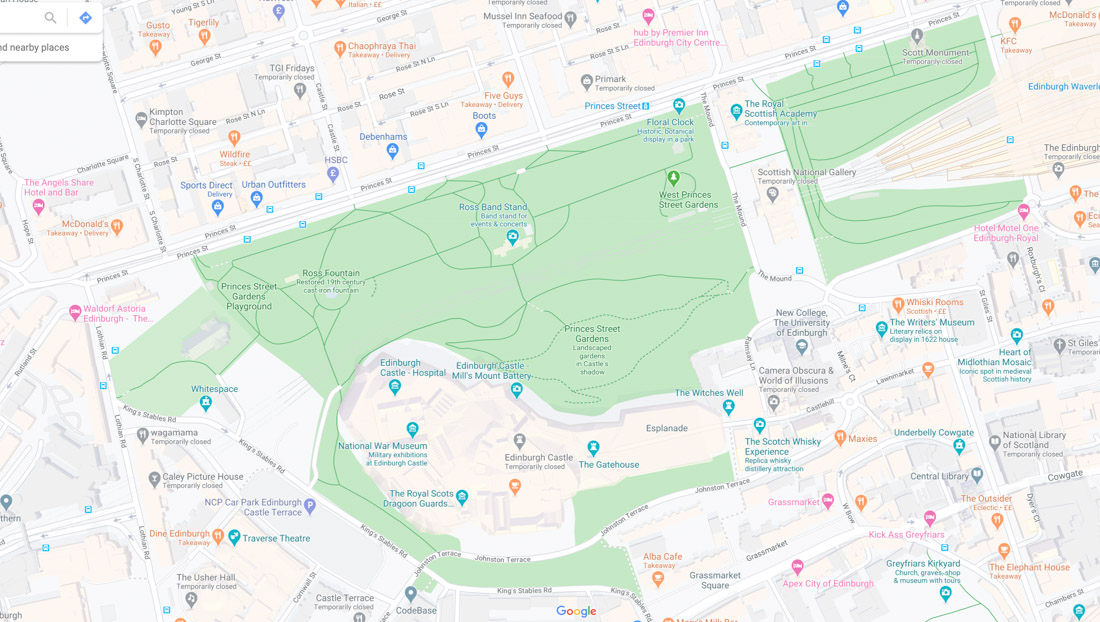
The park closes in the evenings for public safety.
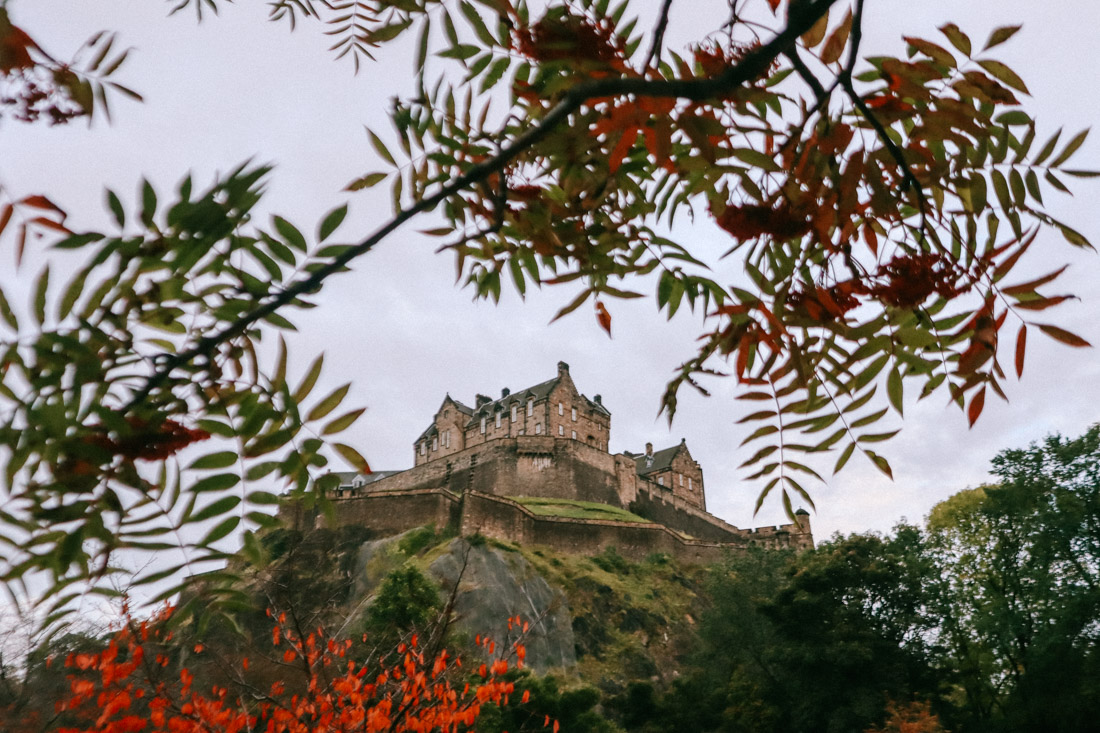
Edinburgh Castle sits on the cliff above the western end.
The cherry blossom trees make beautiful frames for the castle in spring.
You can read more about the cherry blossoms in Edinburgh here.
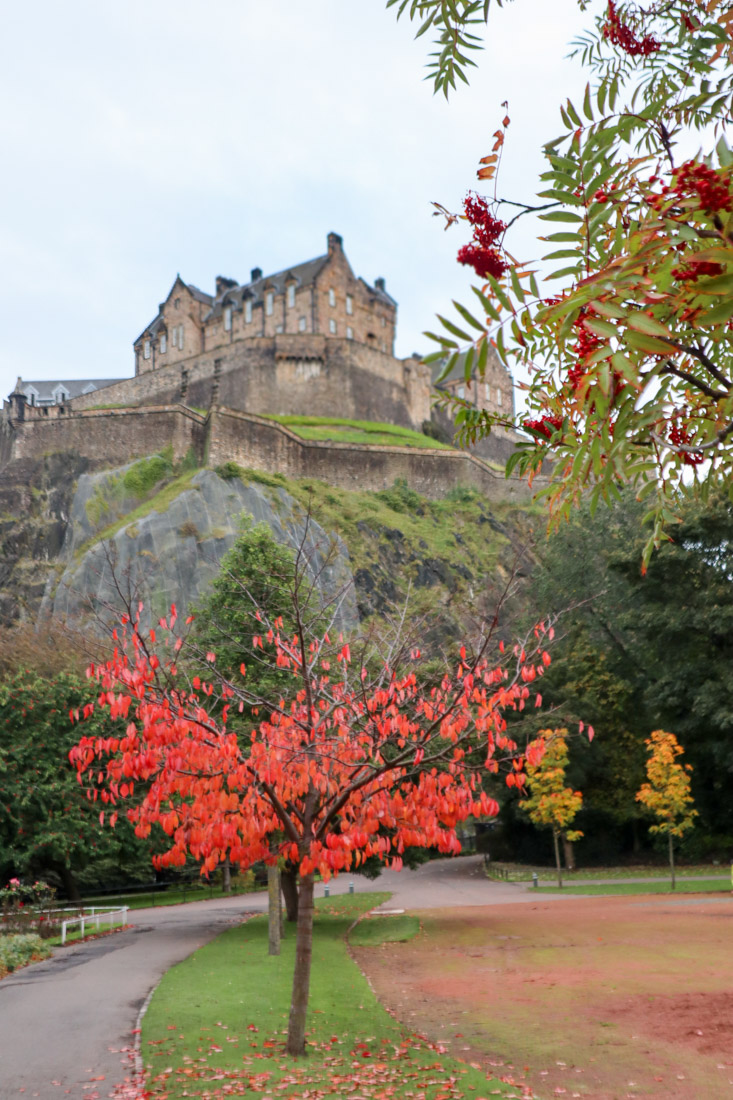
In autumn, you won’t find a flurry of copper tones like you see in the likes of Perthshire but there are a few frames worth getting your camera out for!
Down by the Ross Fountain, there is a standalone red-leaved tree which is striking.
East Princes Street Gardens
Due to its proximity to attractions and popular streets such as Cockburn Road which leads to The Royal Mile, East Princes Street Gardens is the busiest of the two.
It is also the smallest in size.
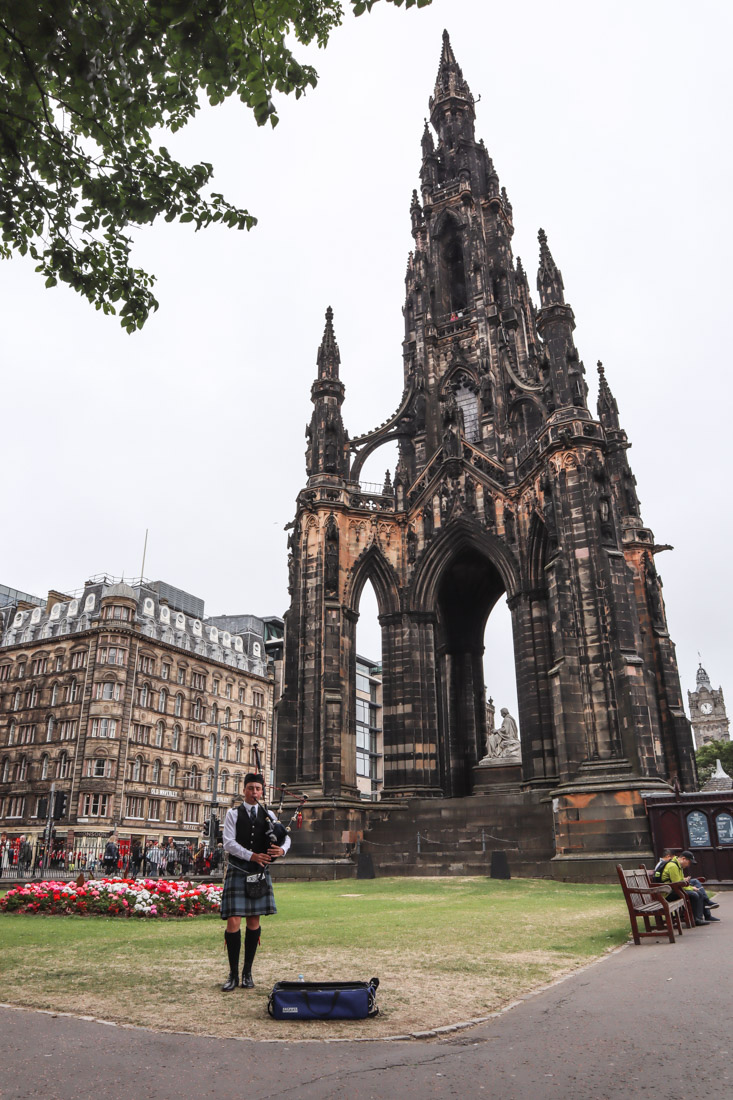
West Princes Street Gardens
West Princes Street Gardens has several attractions and monuments dotted around the park such as St Margarets Well and The Ross Fountain.
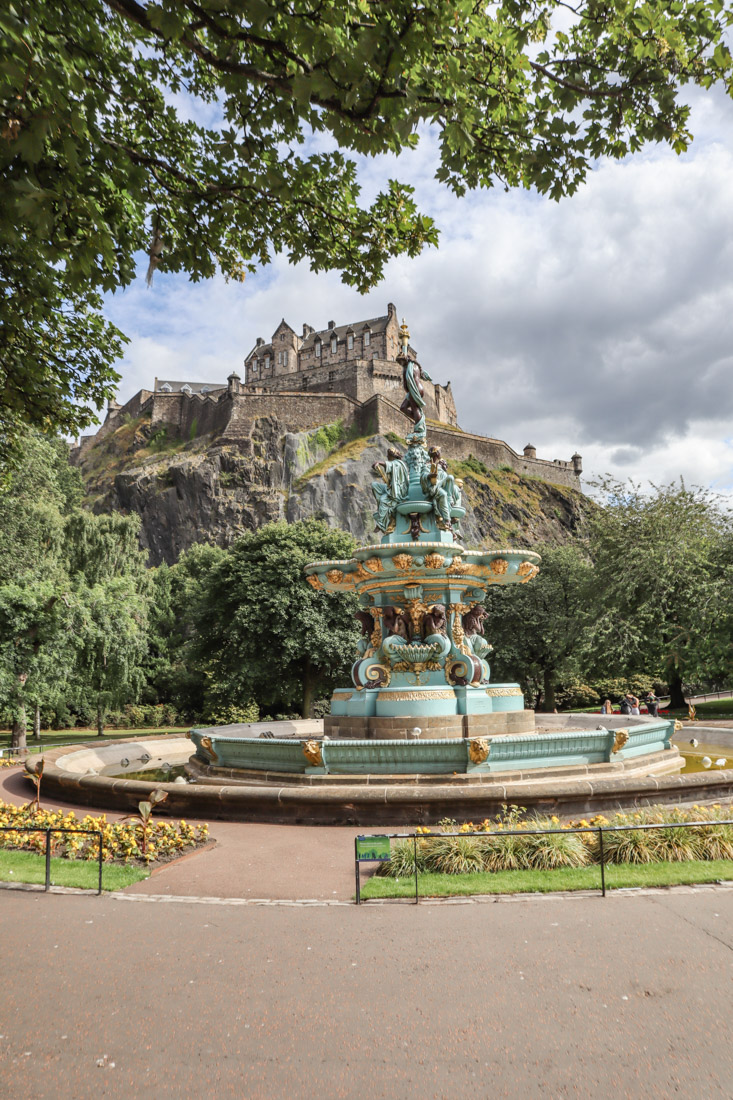
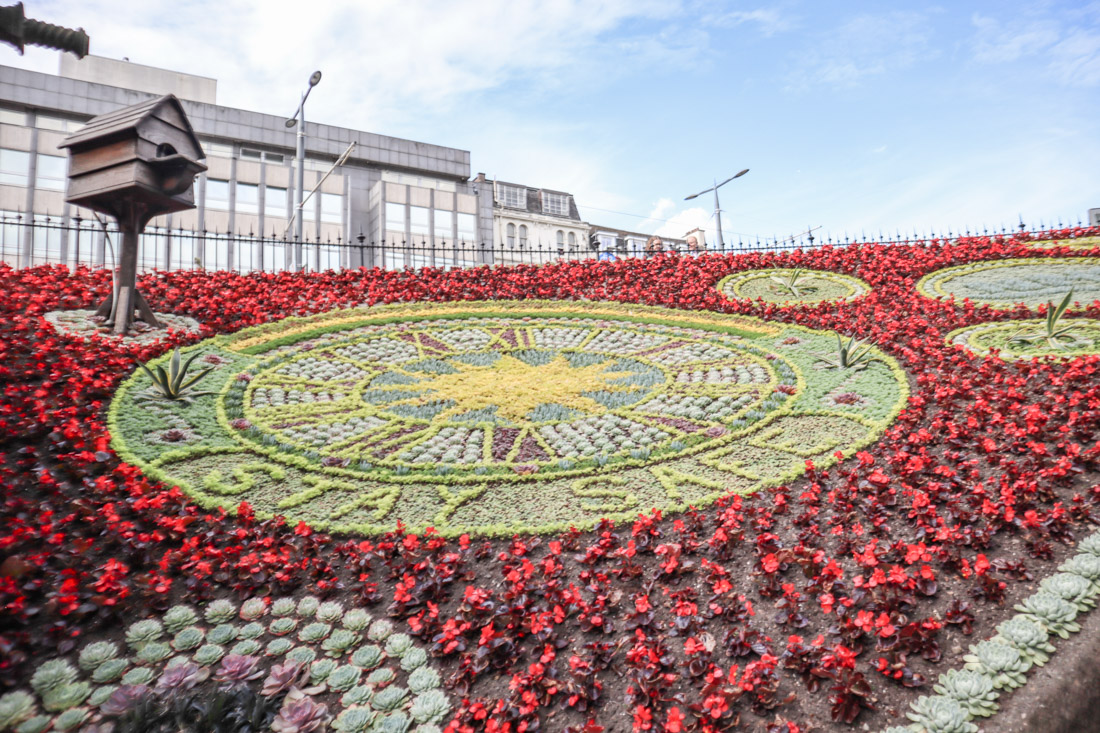
One of the most unique things about Princes Street Gardens is that it houses the world’s oldest floral clock which dates back to 1903.
Each year the Flower Clock is planted in honour of an individual or group to celebrate their contribution to the city.
30,000 plants are used to create the Flower Clock and it has moving hands which tell the time.
You can find the clock at the north-east corner of West Princes Street Gardens.
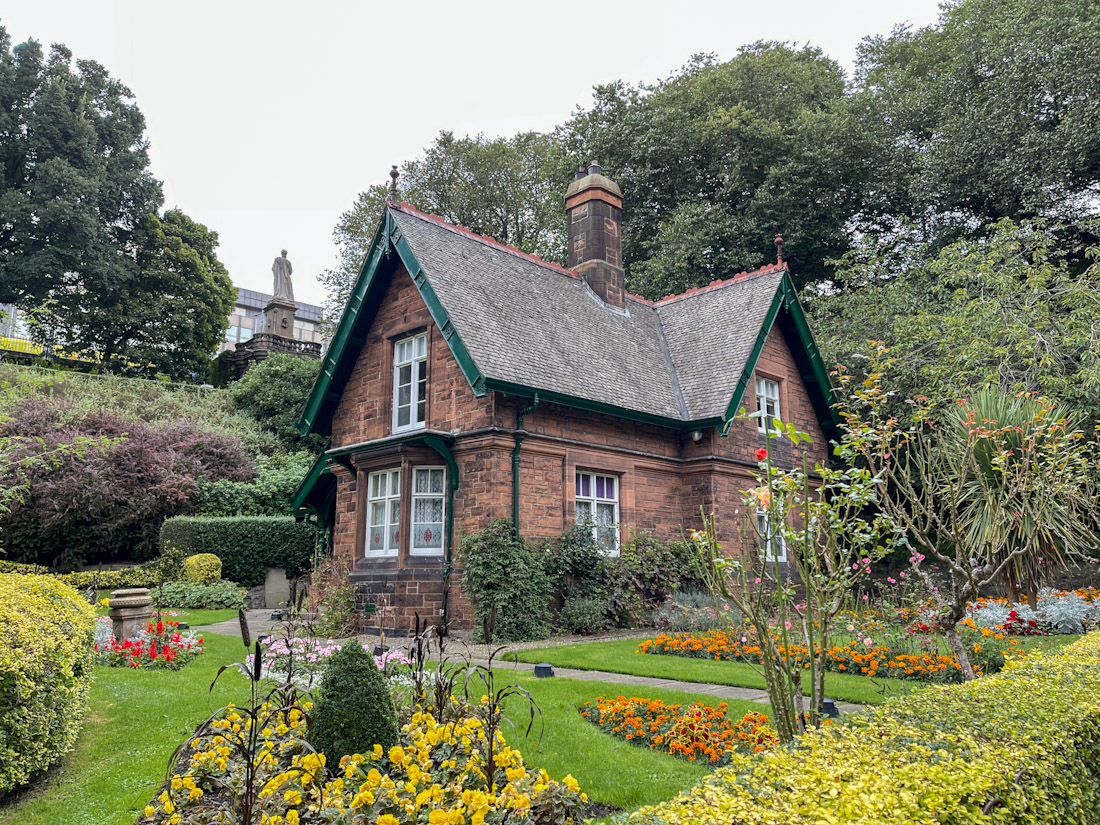
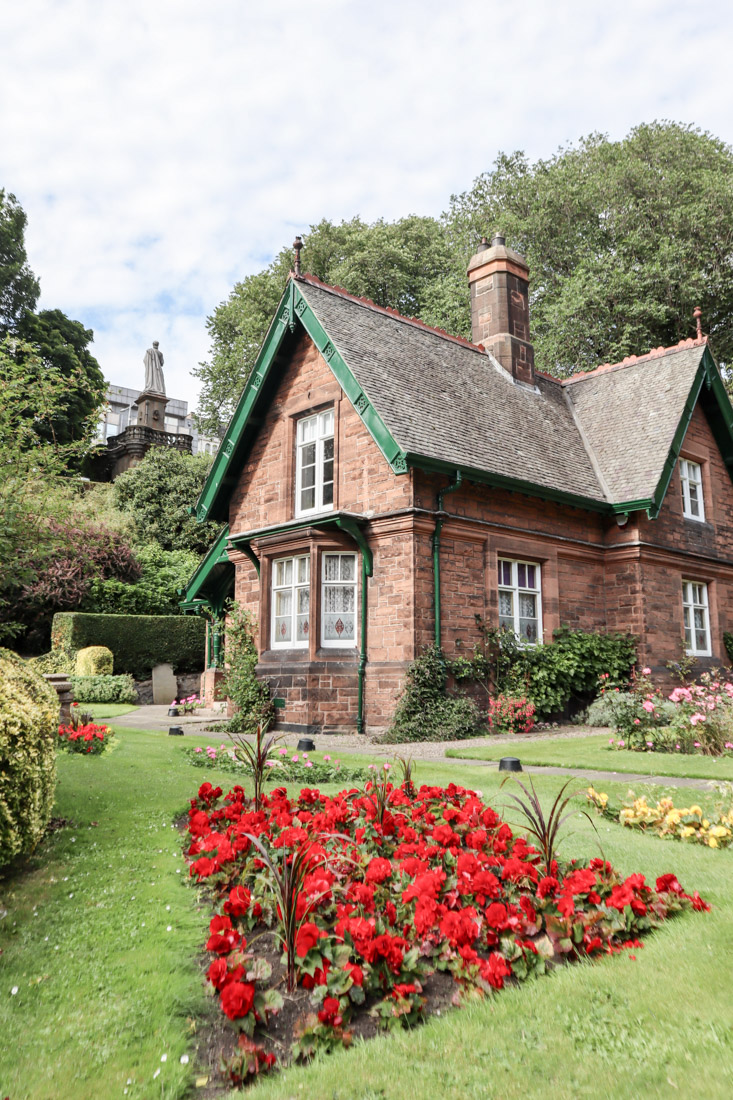
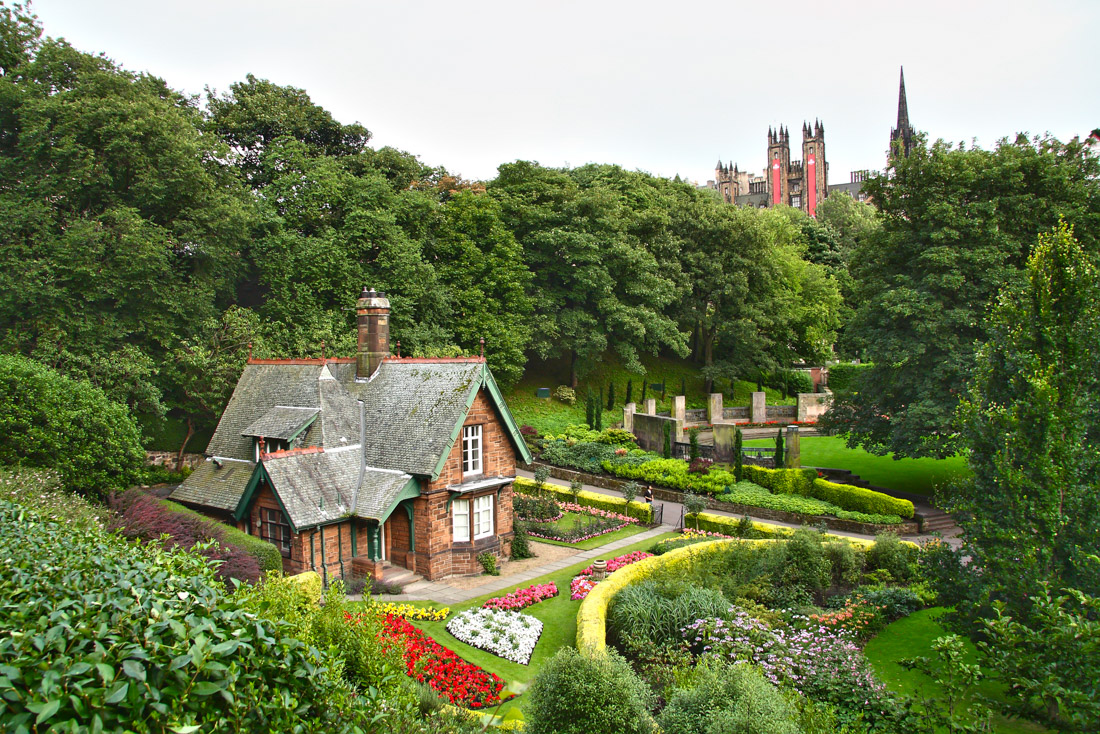
You will also find the cute Gardener’s Cottage aka Great Aunt Lizzie’s house from CBeebies TV in the West Gardens.
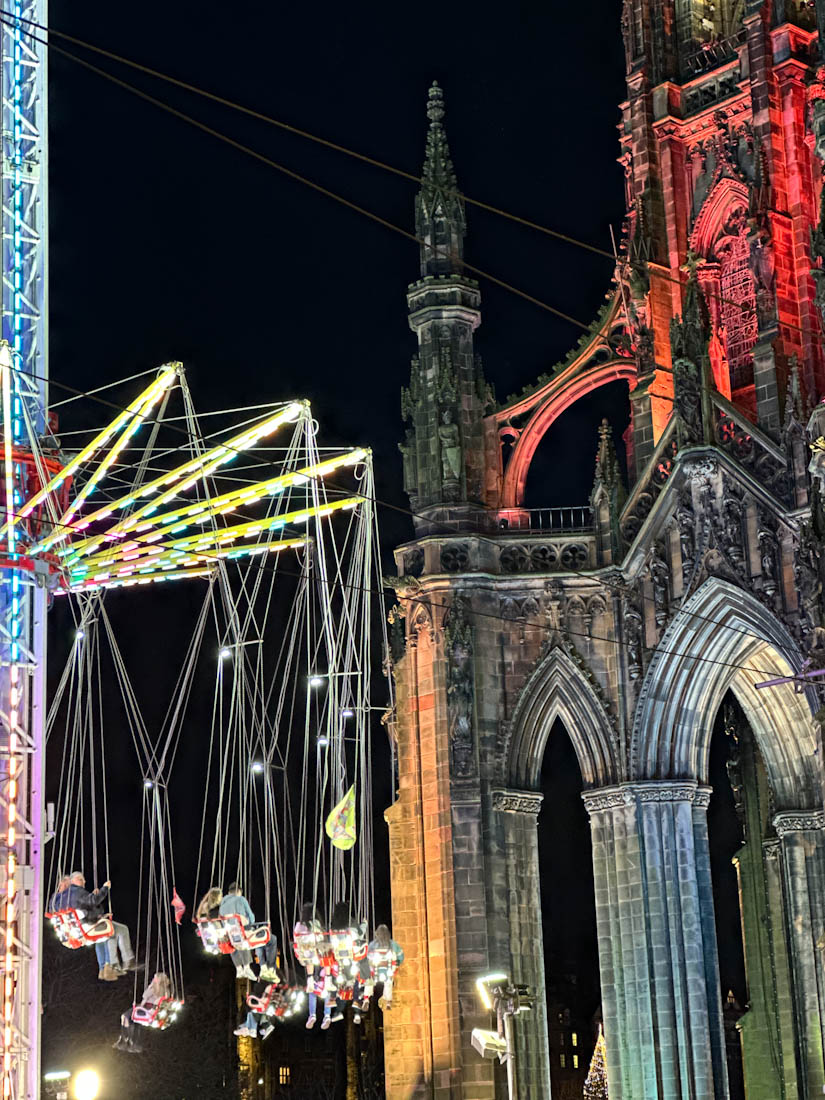
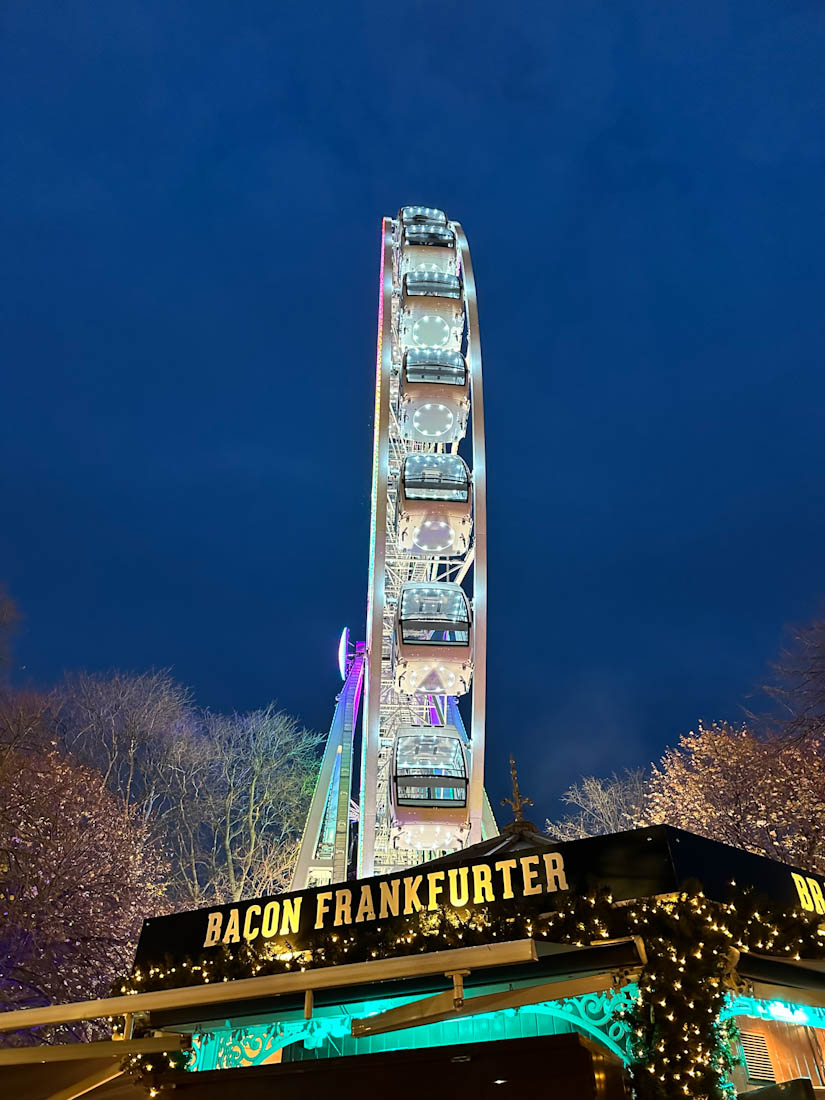
This landmark also plays home to the Edinburgh Christmas Market and the world-famous Hogmanay Street Party.
Read next: Edinburgh at Christmas.
Princes Street Garden Rules
- Dogs must be on leashes at all times.
- Ball games are prohibited.
2. Royal Botanic Garden Edinburgh
The Royal Botanic Garden Edinburgh also known as the Botanical Gardens has four parks, covering 70 acres, to explore in the New Town of the city.
There are around 100,000 plants in the Botanics and some date back to 350 years ago.
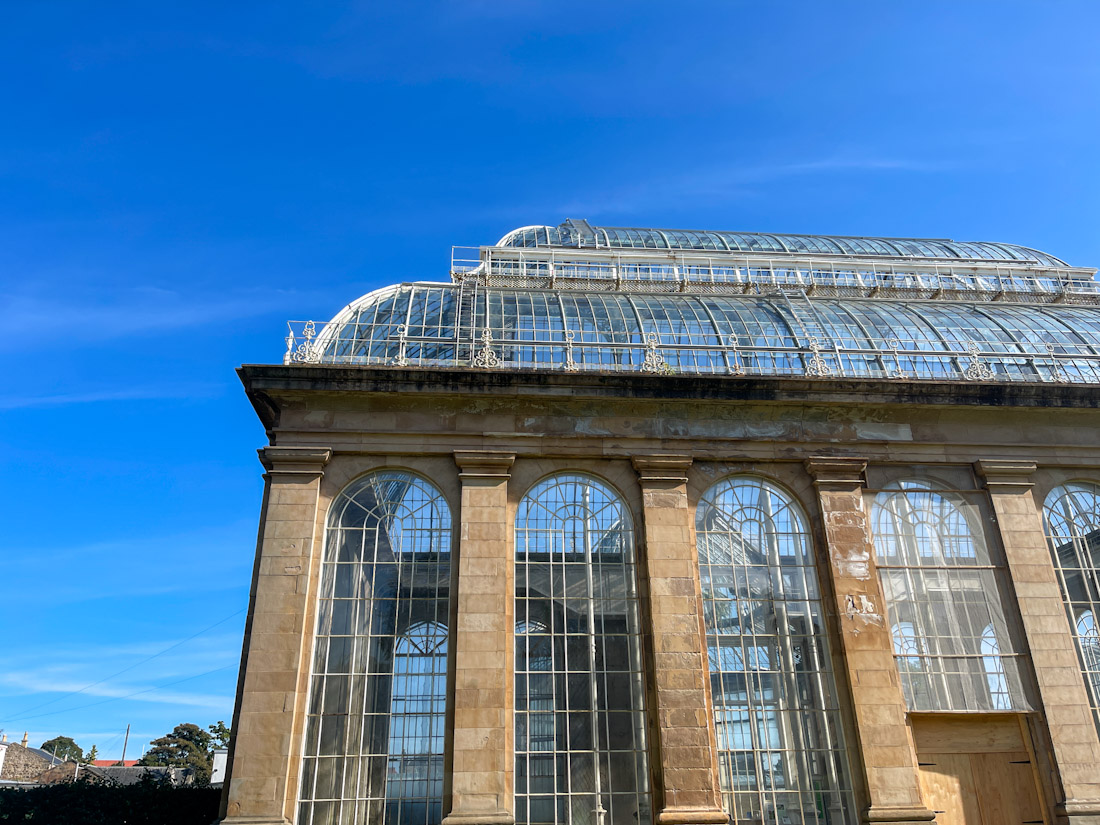
Edinburgh Botanics is known for its iconic Victorian Temperate Palmhouse but there are actually 10 glasshouses in total which house over 3,000 exotic plants.
There is a section for native Scottish plants in the Heath Garden.
Where the Botanics is located is a little piece of history!
To celebrate Mary Queen of Scot’s marriage in 1558, the famous Mons Meg fired a gunstone and it landed in what is now the Royal Botanic Garden.
You can visit Mons Meg at Edinburgh Castle today.
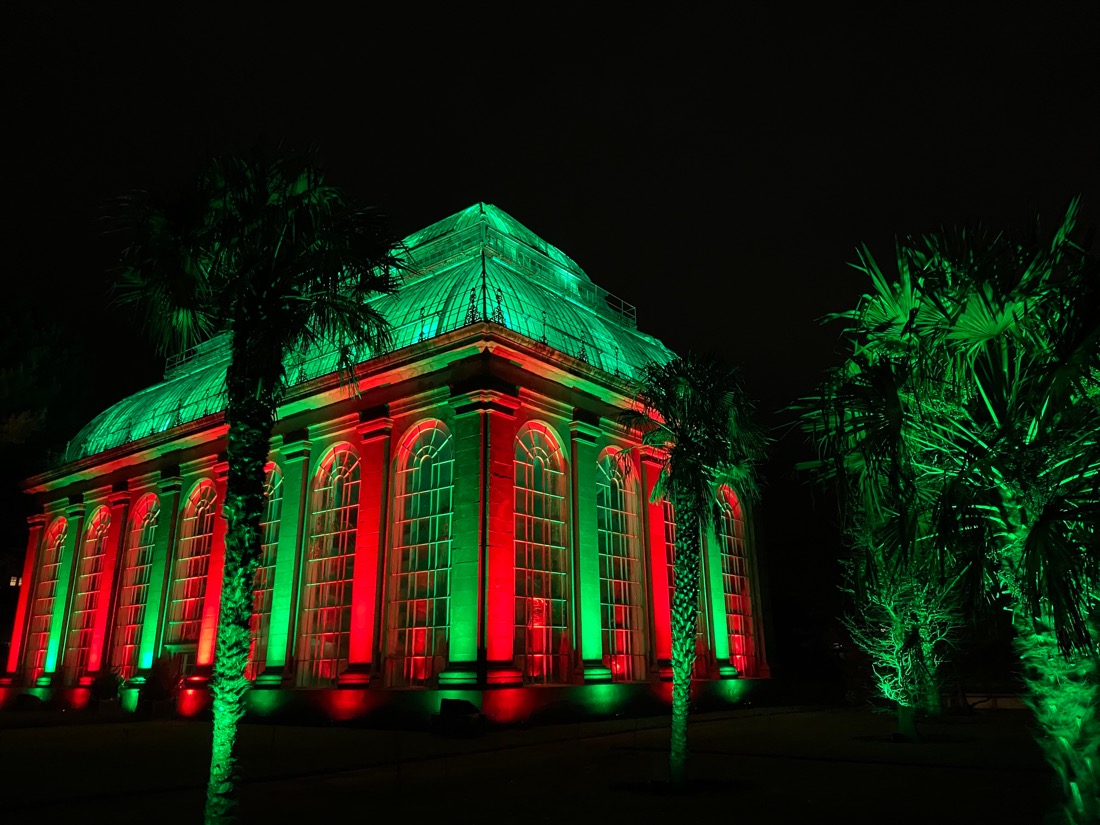
Come winter, instead of hibernating from the cruel Scottish weather, visitors arrive in crowds to see the annual Botanic Gardens Lights.
Over one million twinkling lights create a trail and immersive installations are put on display.
Across the road from the Botanics is Inverleith Park so you can get a double dose of urban greenery when you visit.


Botanic Gardens Parking
There are limited blue badge parking spaces for disabled drivers.
On the weekends, free parking is available on streets close to the Botanics.
Read next: Parks in Edinburgh.
3. The Meadows Community Gardens
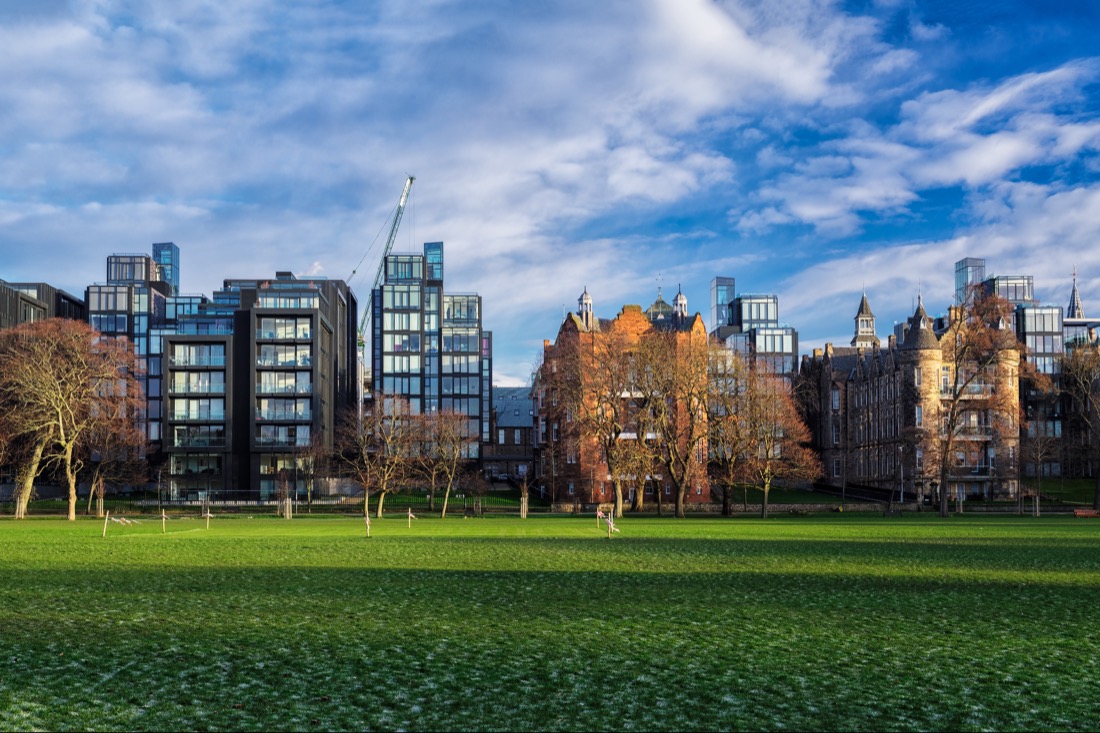
The Meadows is a 63-acre public park in the south of Edinburgh.
Once home to Borough-Loch, this urban park is popular with students, families, runners and cyclists all year round.
It is home to the viral hot chocolate, just look for the long lines at the Uplands Roast food truck.
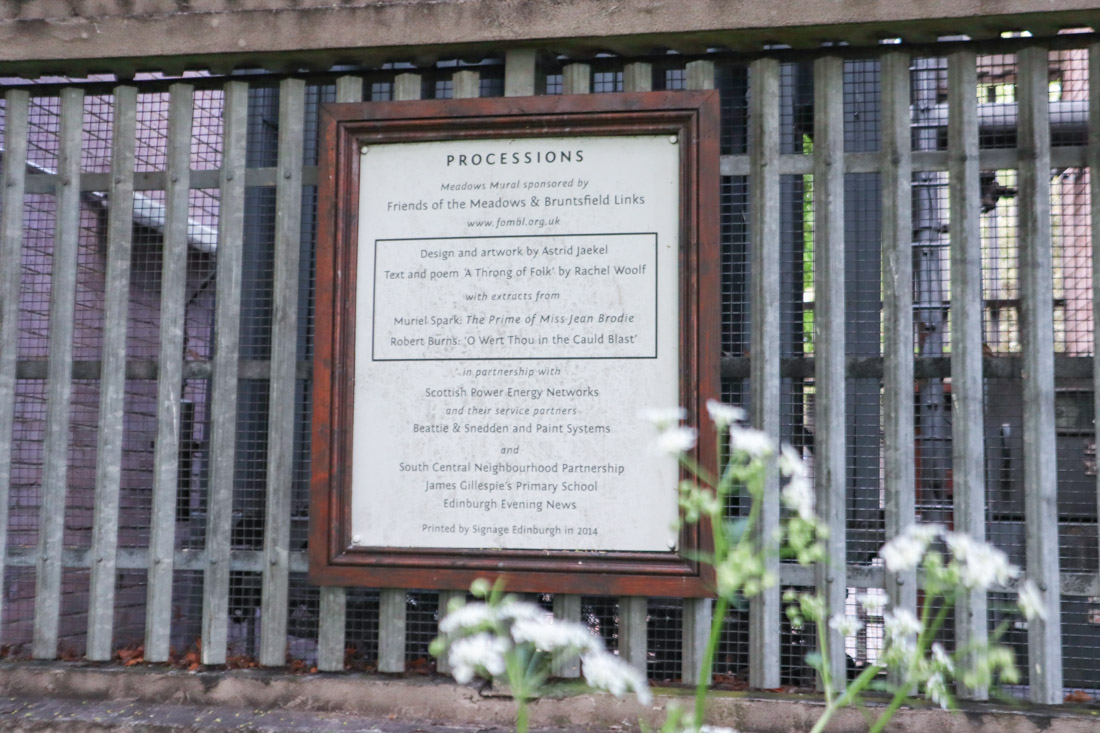
There is an interesting set of murals on the Scottish Power wall, which is behind the park, called ‘Processions’ by artist Astrid Jaekel and poet Rachel Woolf.
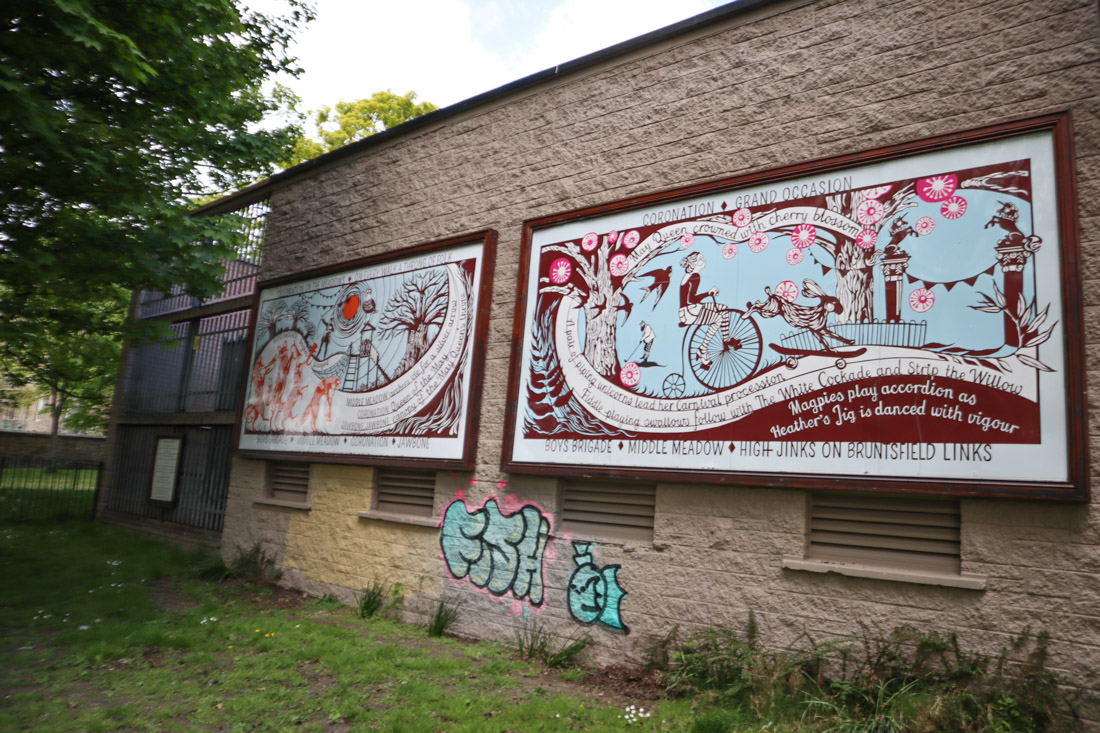
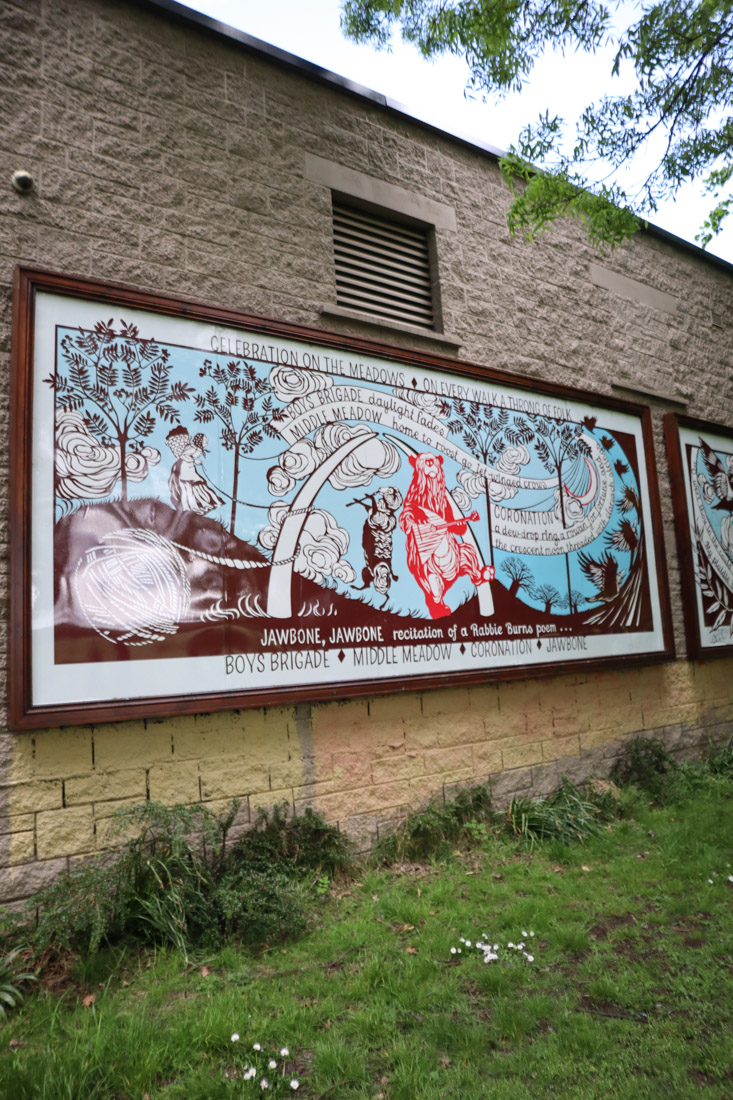
Inside the park, you’ll find The Meadows Community Garden, home to an orchard, wildflower patch, mini meadow, and an open-air classroom.
The Meadows Community Garden welcomes visitors at all times and sets up regular community sessions on Saturdays from 11 am to 1 pm.
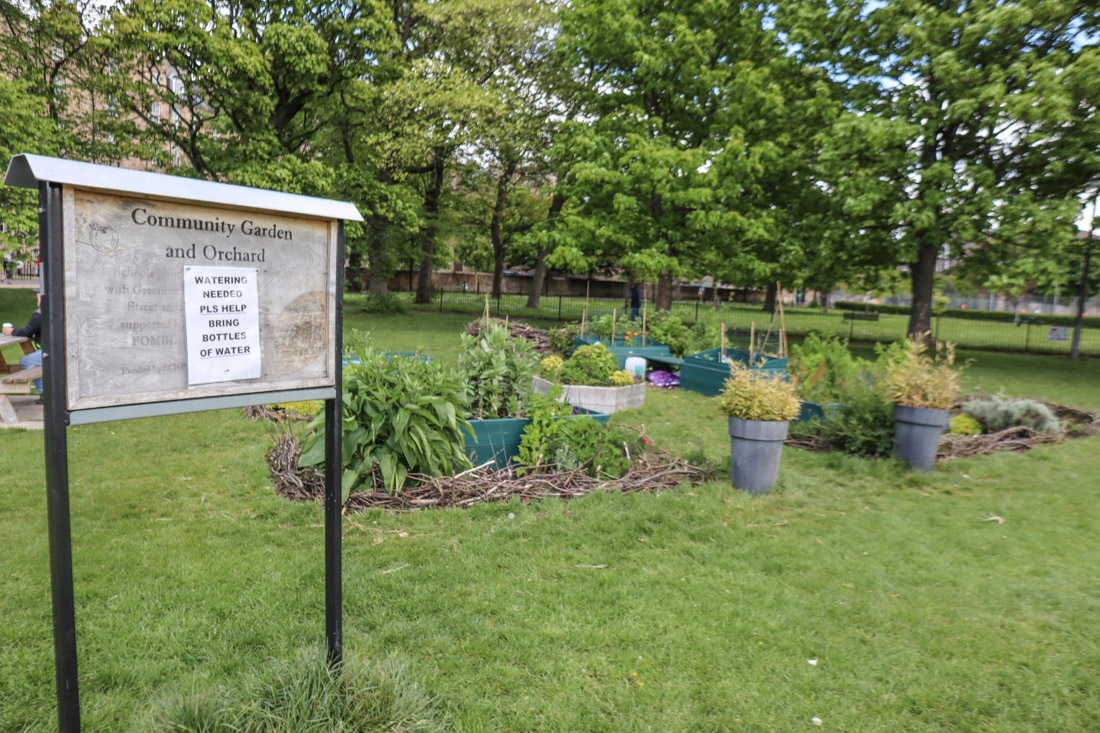
During this time, you can drop in to see what the team does and to give a hand.
The volunteers are passionate about biodiversity and promoting bird and insect life.
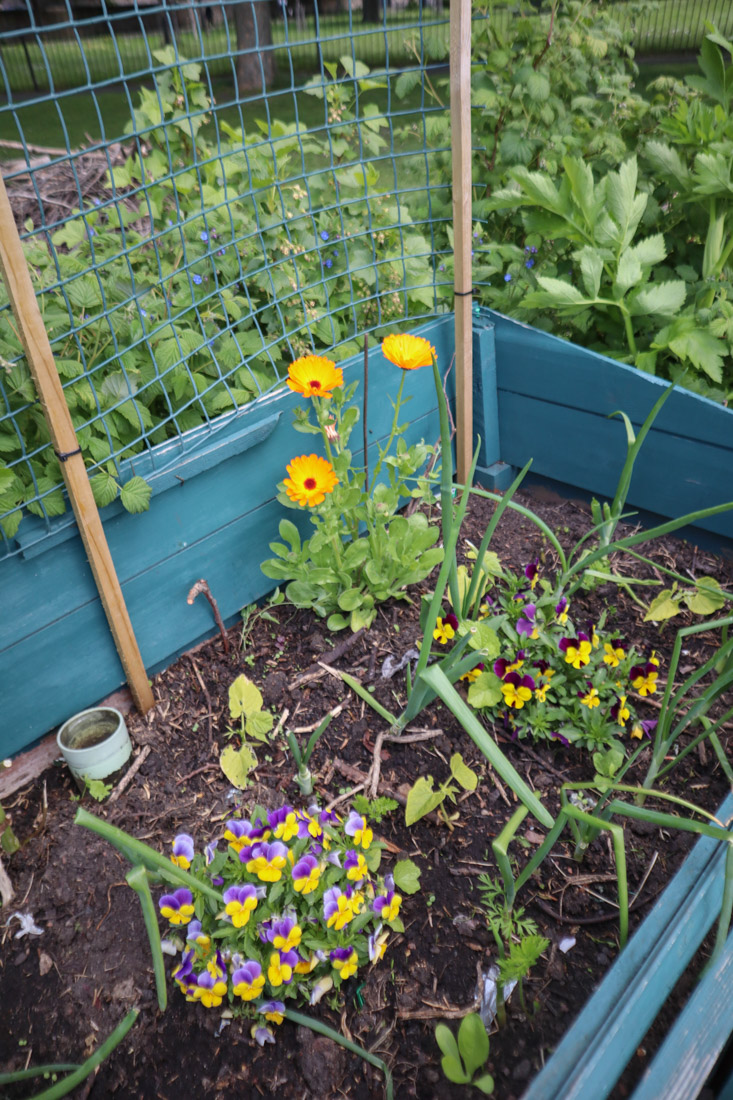
The raised beds in the Meadows are wheelchair and pram accessible and the community picnic bench is very popular.
The Meadows Community Garden campaign, Don’t Burn the Meadows, calls for a ban on disposable BBQs in The Meadows.
You can find out more about The Meadows Community Garden team, Greening Our Street, on Facebook.
If you want to support The Meadows Community Garden you can text “Greening” to 70490 to donate £3.
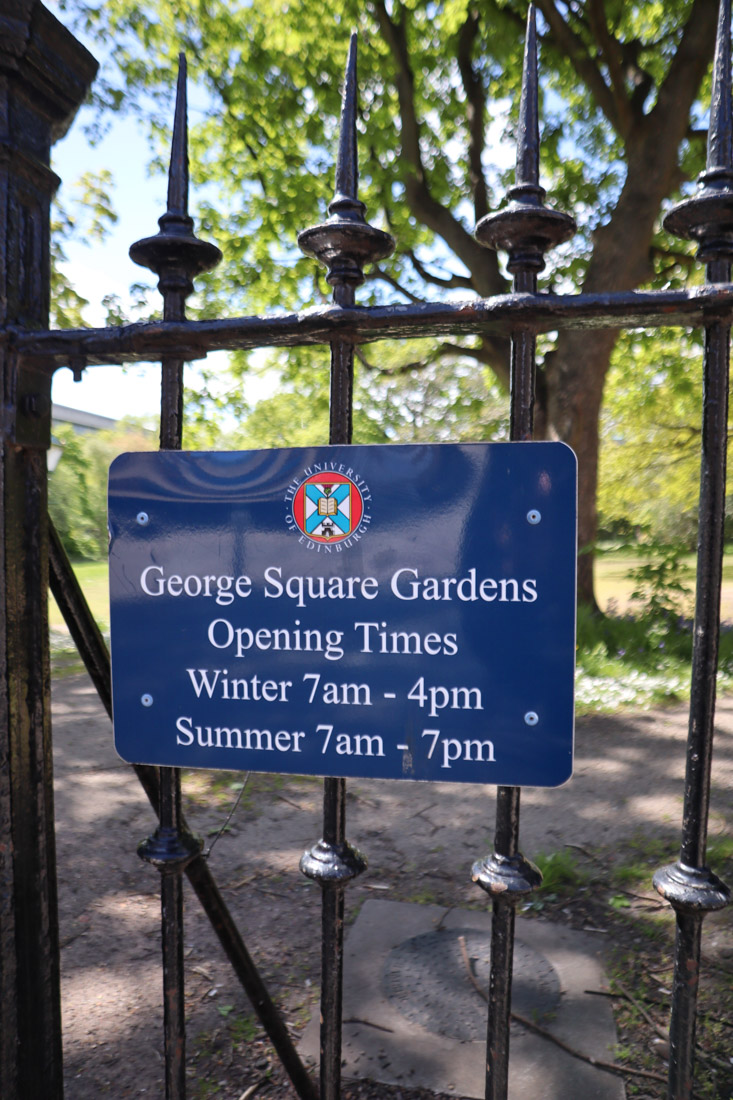
4. George Square Gardens
Unless you are a student at the University of Edinburgh, you probably only visit George Square Gardens during the Edinburgh Festival Fringe.
For three weeks in August, the Assembly company festival shows take over cramming it with bars, food trucks, outside seating and live acts.
This is one of my favourite hangouts during the Fringe as there is also a fun vibe and a variety of vendors.
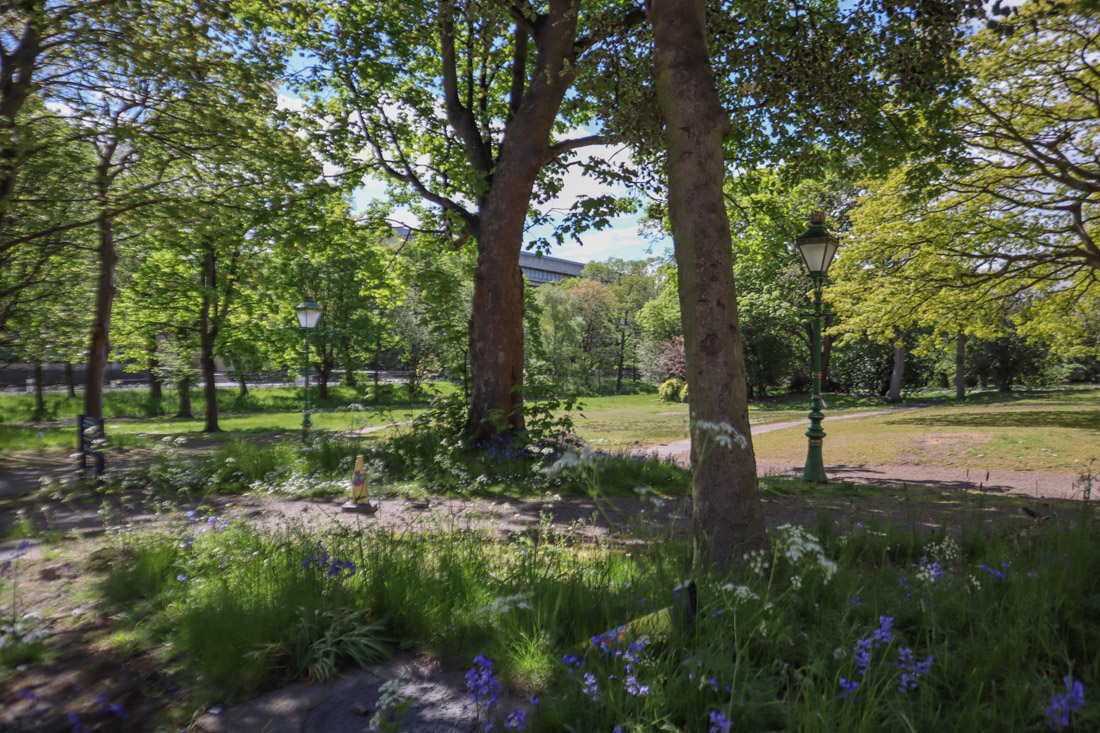
Outside of August, this is a quiet tree-packed garden surrounded by university buildings.
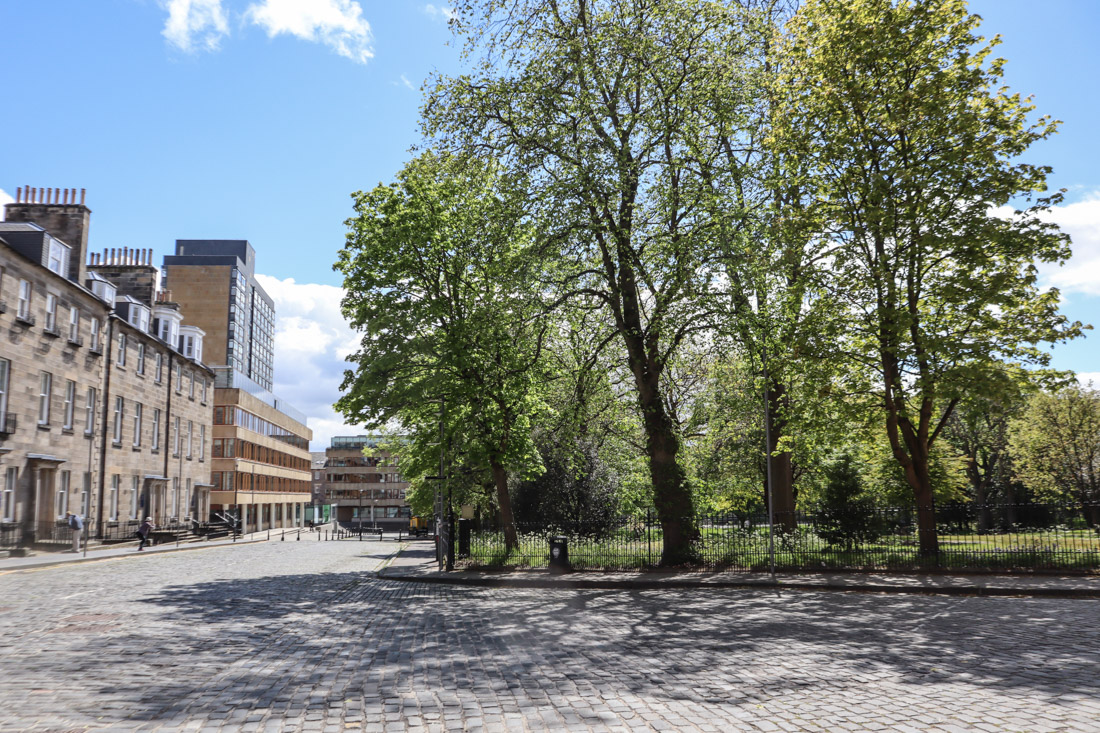
Tucked away in the northwest corner of George Square Gardens (opposite the Hugh Robson Building) you will find the Edinburgh Labyrinth.
This circular space is designed to encourage users to slow down the pace of life while they walk around it.
5. St Andrew Square
St Andrew Square is a green space at the east end of George Street.
Most locals use St Andrew Square as a walkway to get to and from George Street, Rose Street or Princes Street.
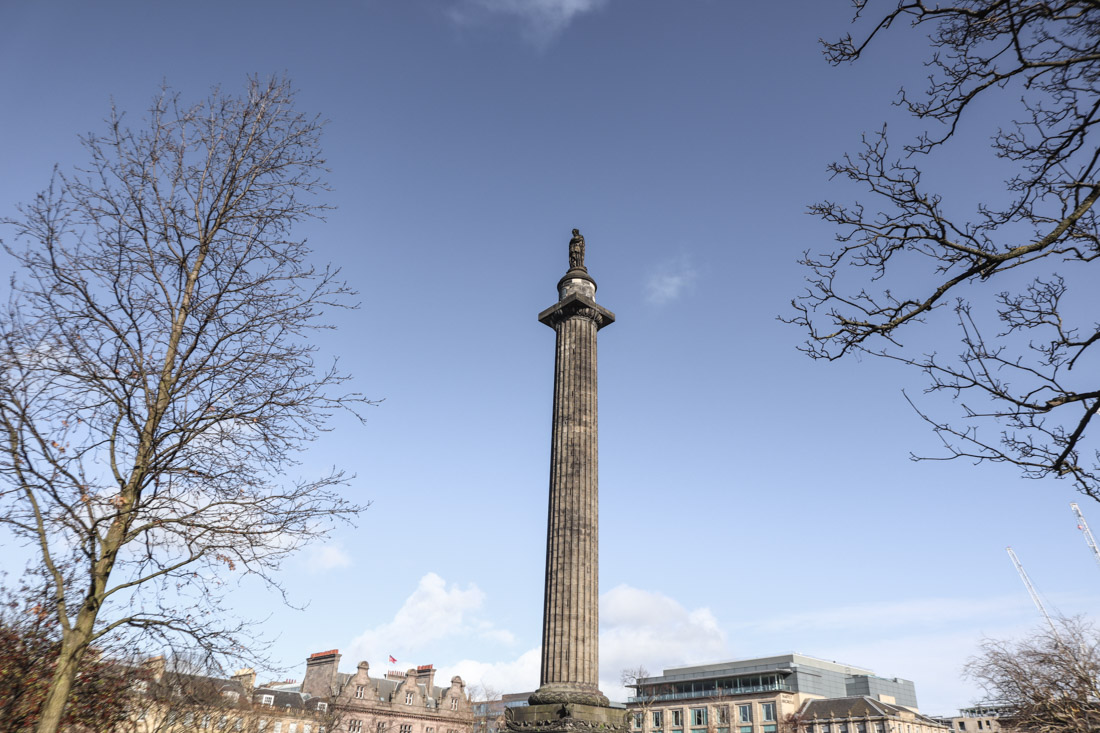
As a focal point, the Melville Monument stands 140 feet high and at the top is the politician Henry Dundas.
Dundas was the Secretary of State for War who was impeached.
He is also responsible for the delay of the abolition of the slave trade.
His influence saw the slave trade in Scotland continuing for another 15 years.
A controversial figure in Edinburgh’s history.
A variety of activities are put on at St Andrew Square such as outdoor movie screenings in the summer.
There is a Costa cleverly disguised in rustic colours in the square and plenty of walls to pull up a perch while you peoplewatch.
Don’t fancy sitting outside?
You can enjoy views of St Andrew Square from the Harvey Nichols bar on the fourth floor.
Very close to St Andrew Square is a tram stop which goes to Edinburgh Airport and Edinburgh Bus Station.

6. Nicolson Square Garden
Nicholson Square Garden is a small on-street green space nestled among the manically busy Nicholson Street in the south of the city.
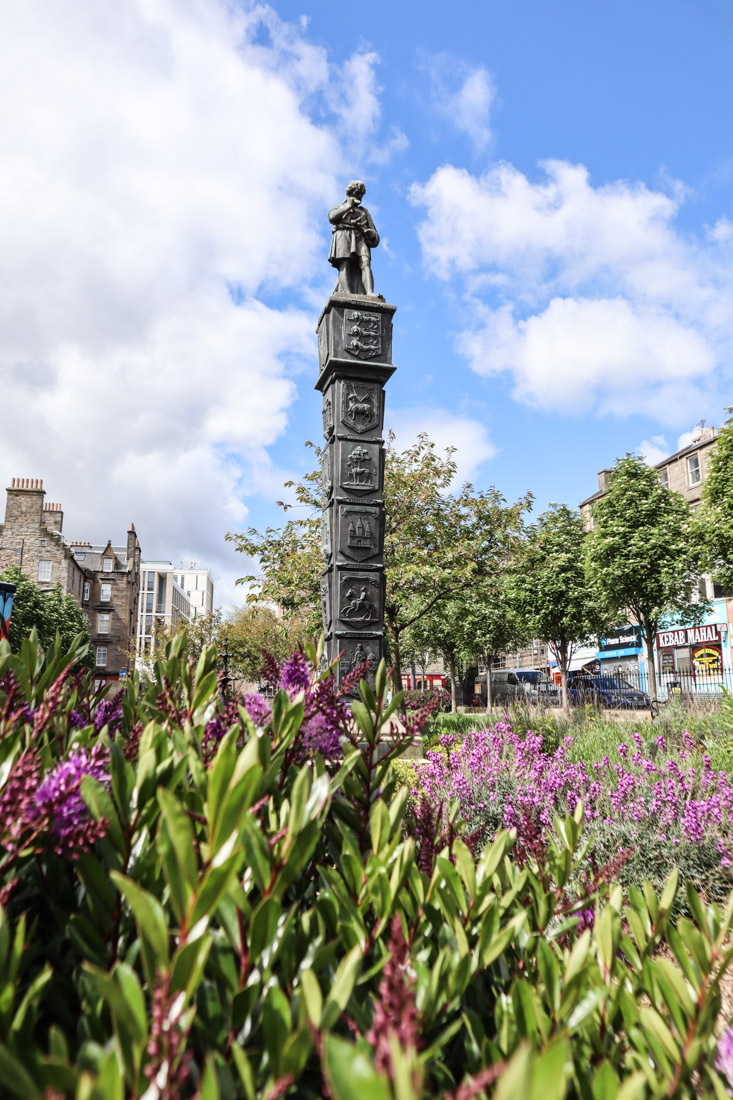
In the middle of the park is a monument called the Brass Founders’ Pillar which was made in 1886 by Sir James Gowans.
Secret Gardens
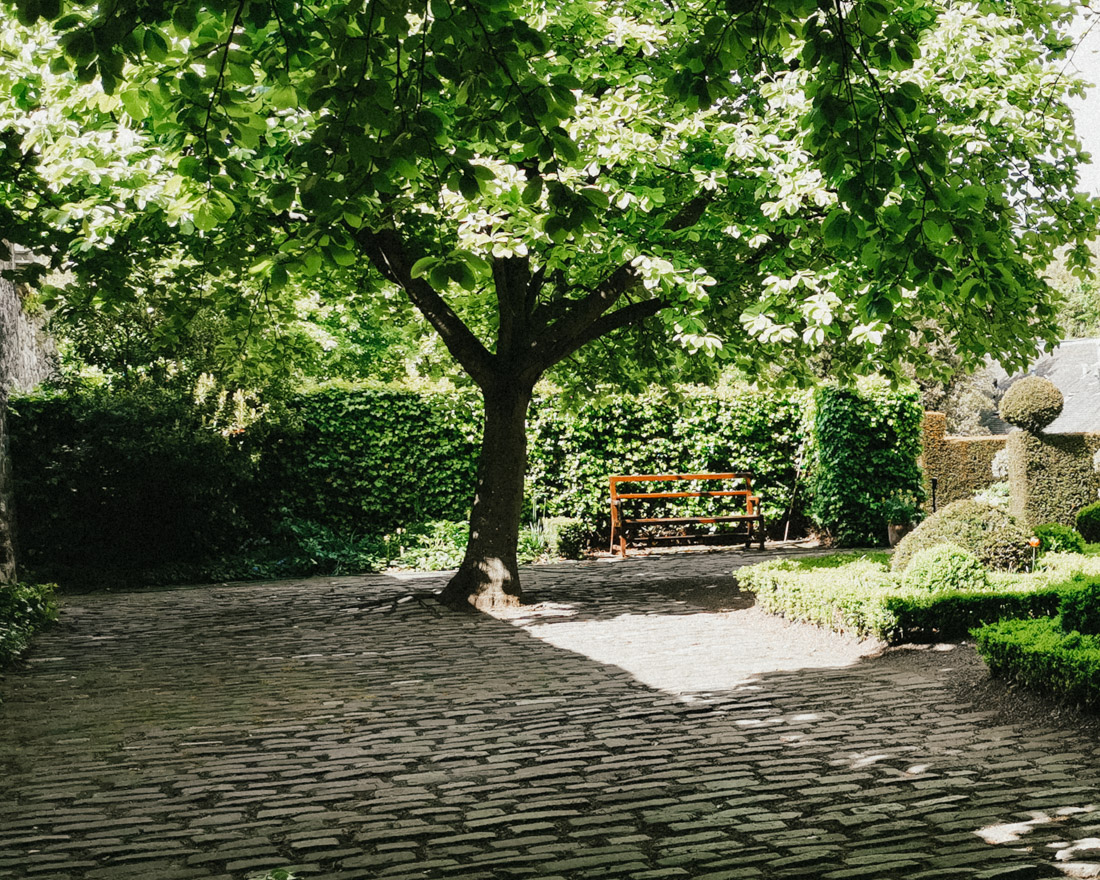
7. Dunbar’s Close Garden
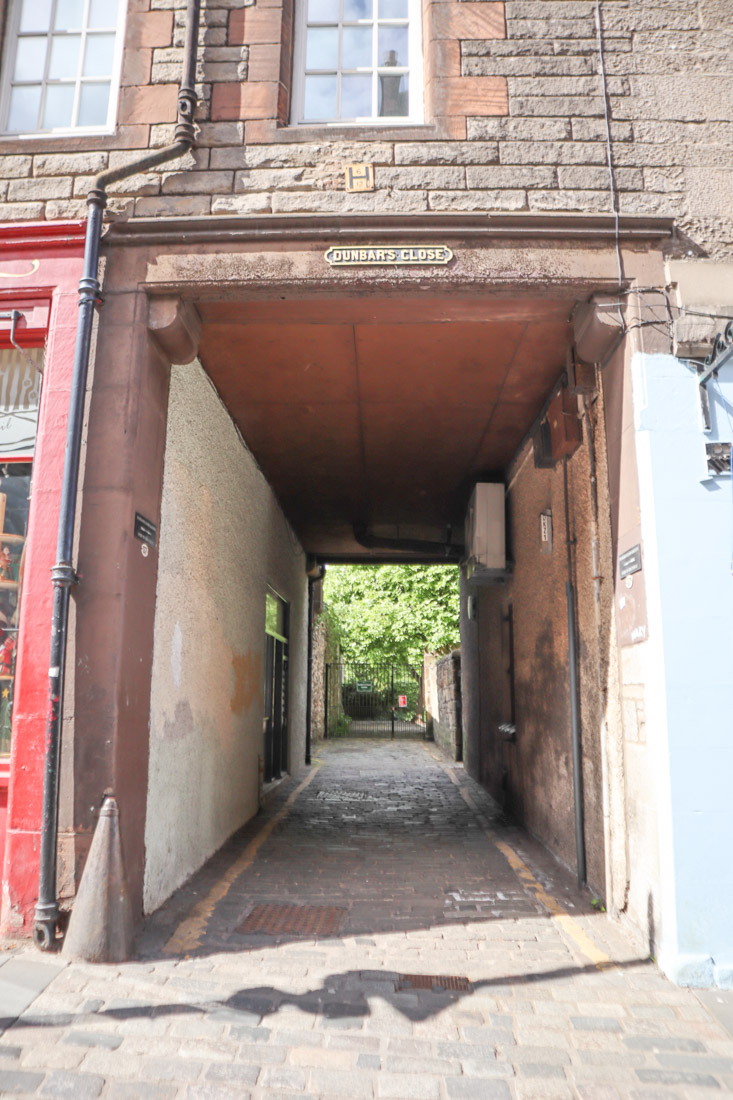
Hundreds of people walk past Dunbar’s Close Garden every day.
Hidden away down a close at the Canongate end off the Royal Mile, this is a quiet spot packed with green shrubbery.
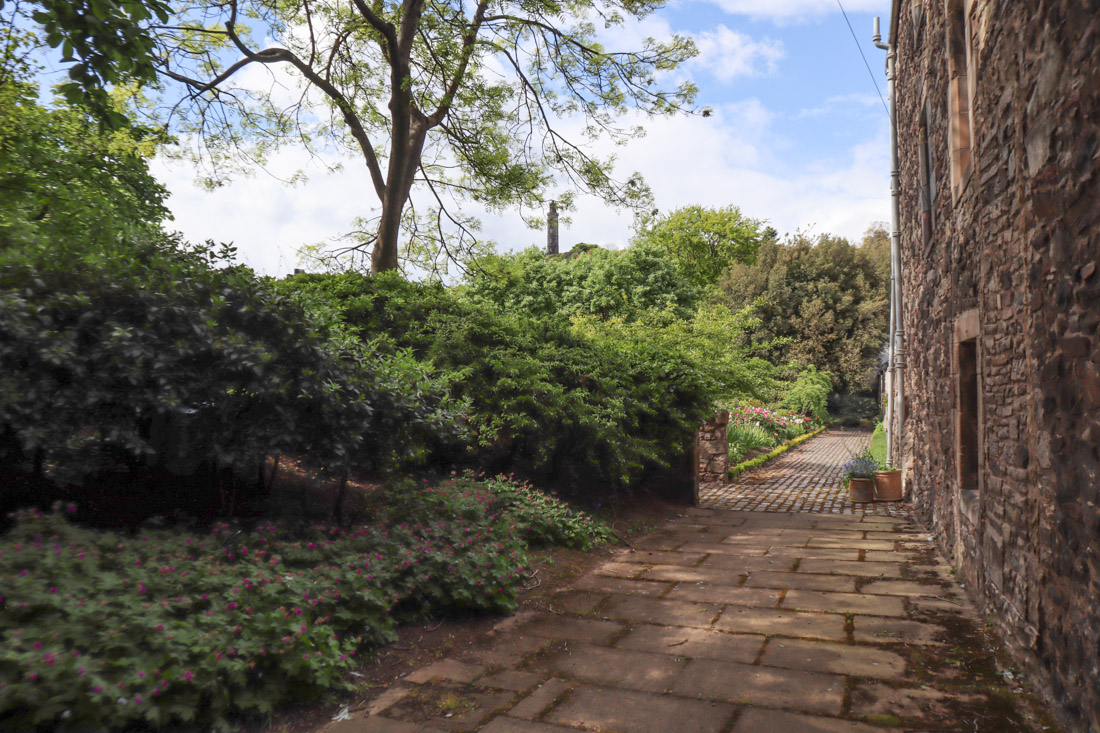
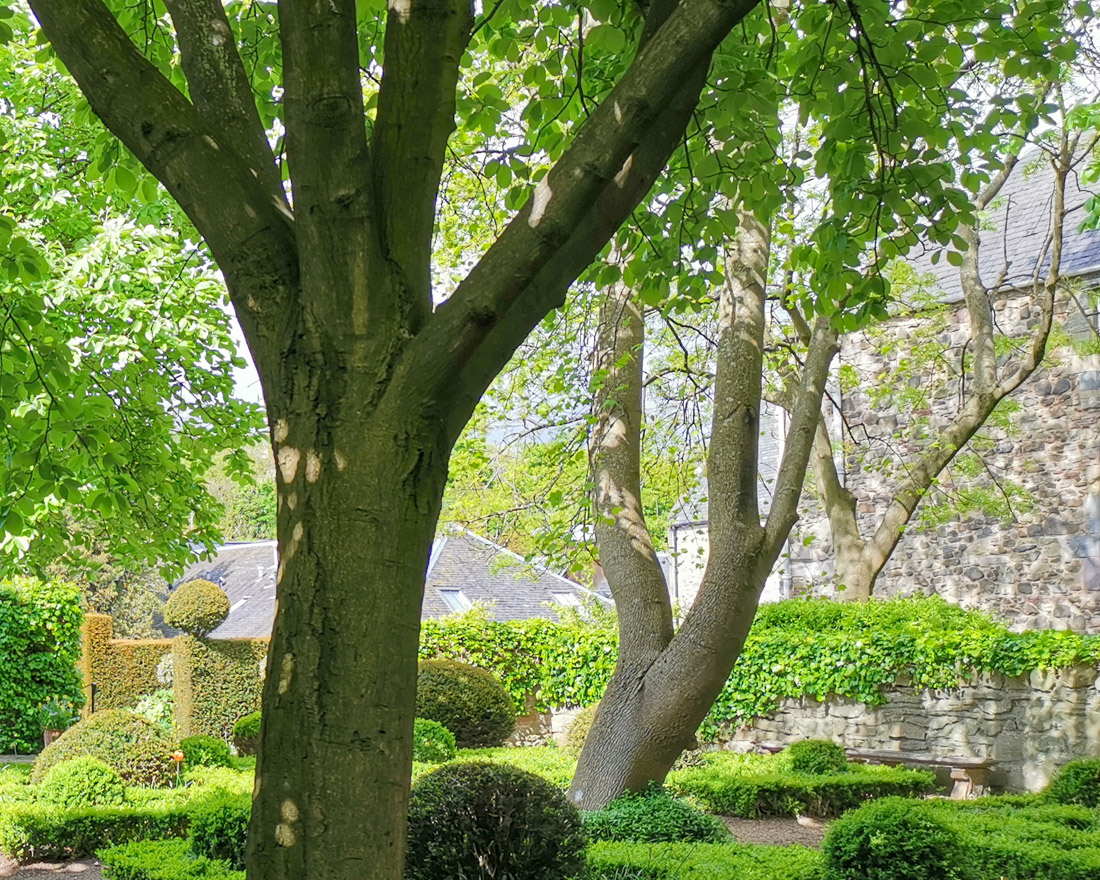
In the distance, you can see some of Edinburgh’s historical landmarks.
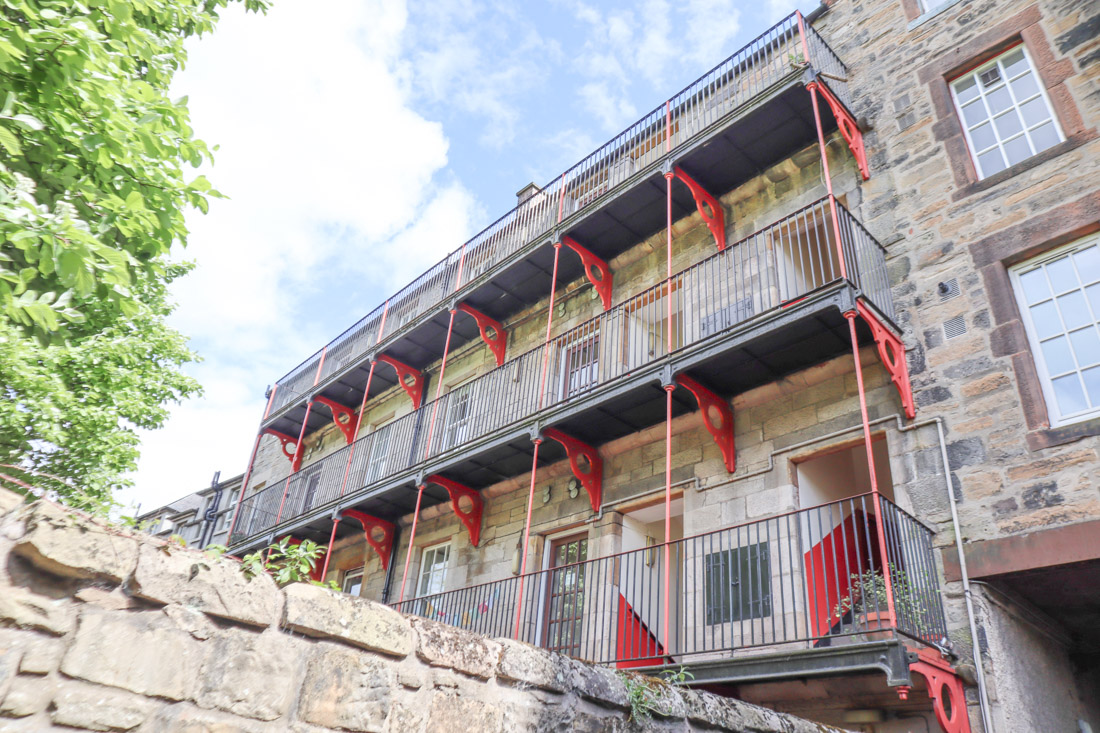
Look out for the flats (apartments).
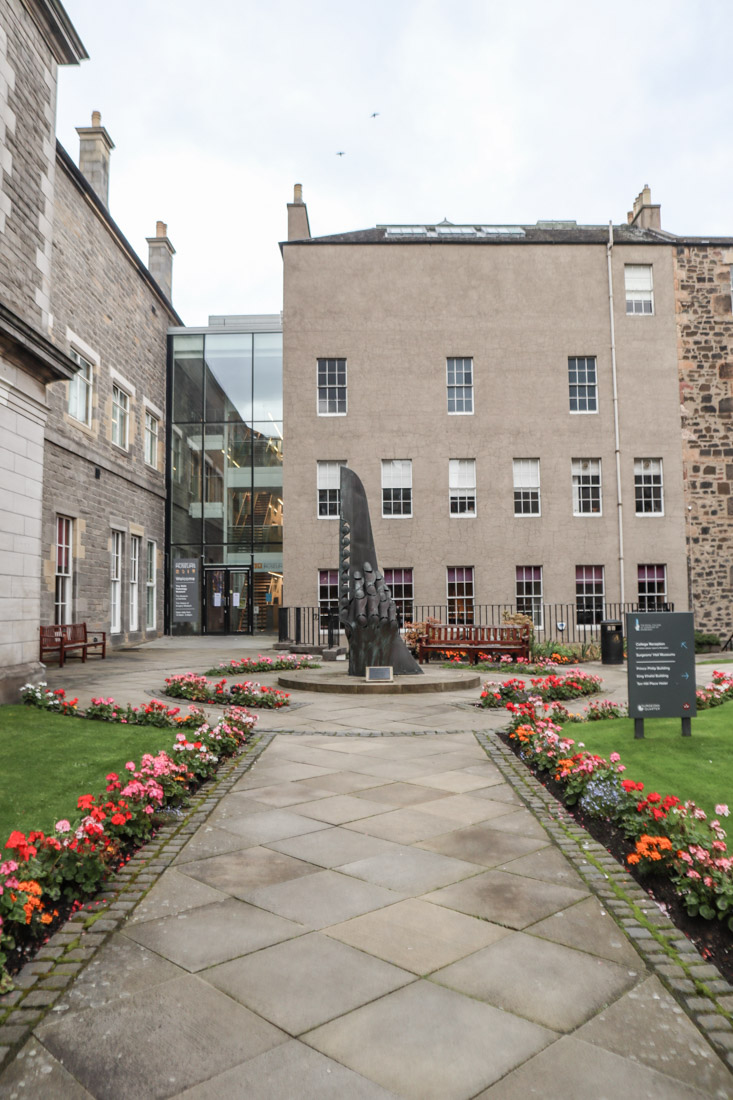
8. Surgeons’ Hall
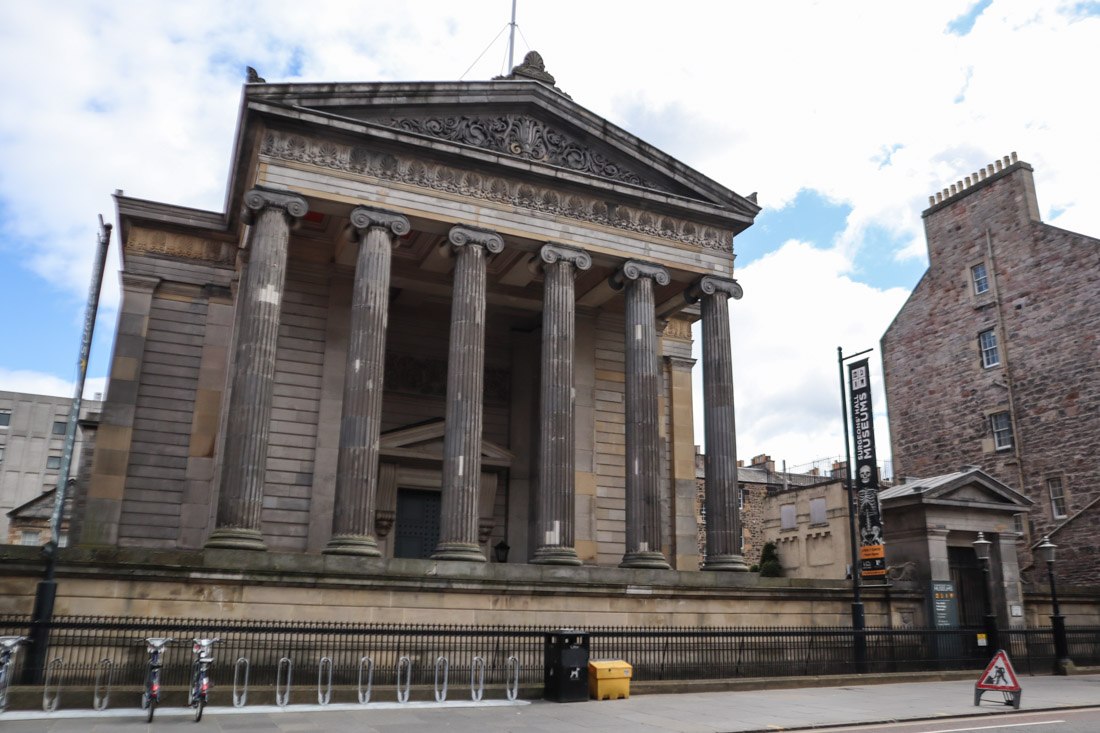
Walking along South Bridge you can’t miss the museum and venue, Surgeons’ Hall.
Designed by the Scottish architect, William Henry Playfair in the 1820s, this striking building with towering pillars has several rooms for hire including a hall and library.
Us peasants can enjoy for free and pay to gain entry into the museum which depicts the story of medical history in Scotland.
Find out more about the museum and accompanying walking tour in our dark tourism.
9. Starbank Park
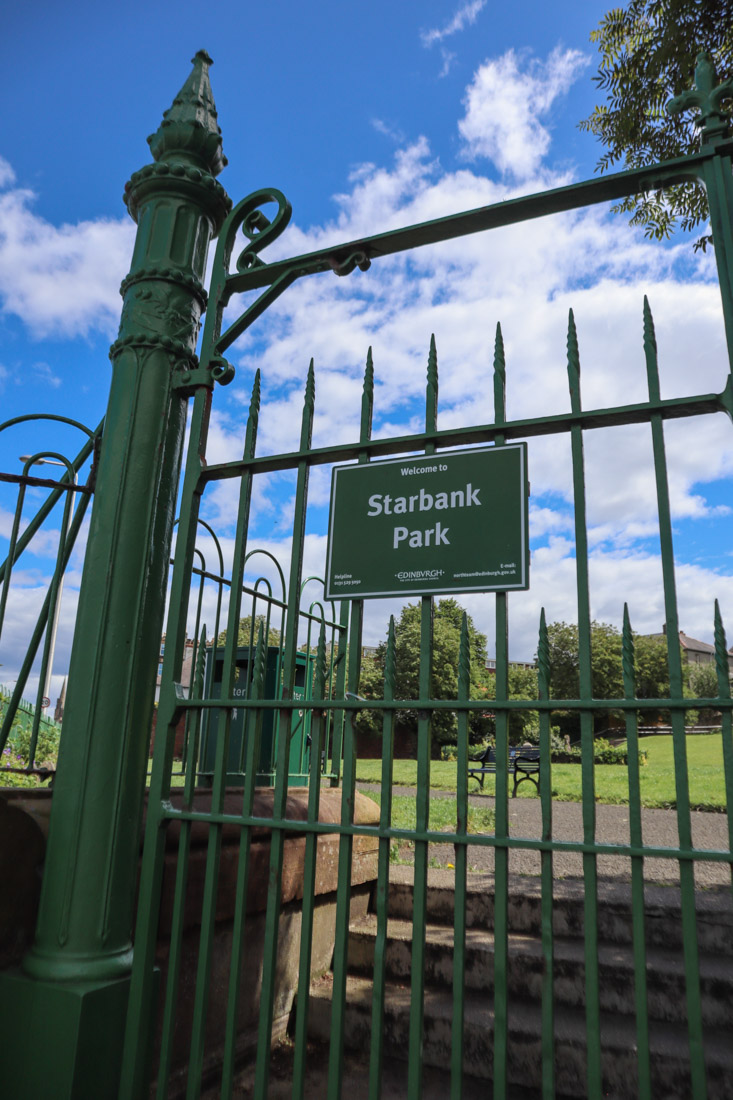
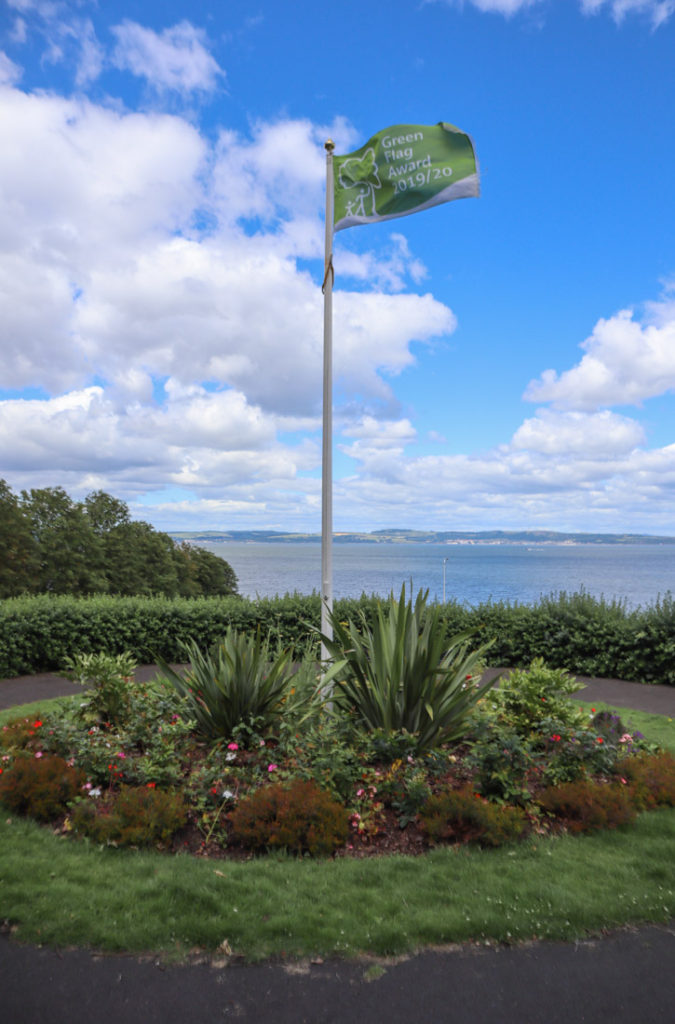
Starbank Park in Newhaven, close to Leith, is a well-loved park with views over the Firth of Forth waters.
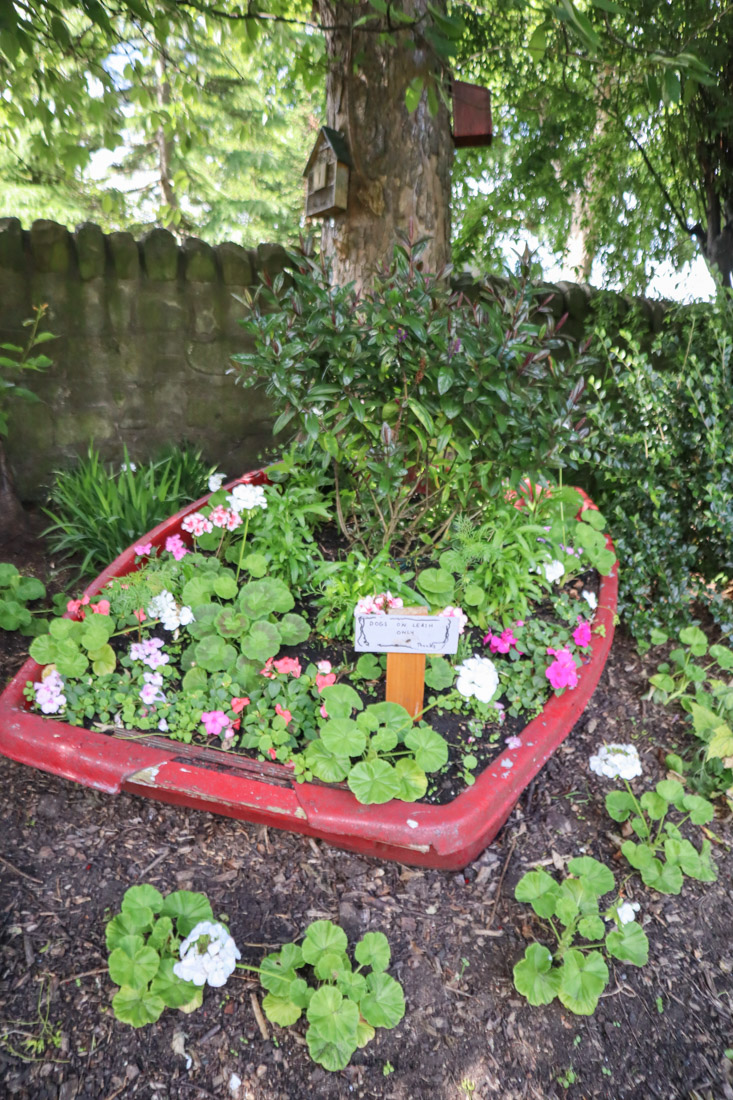
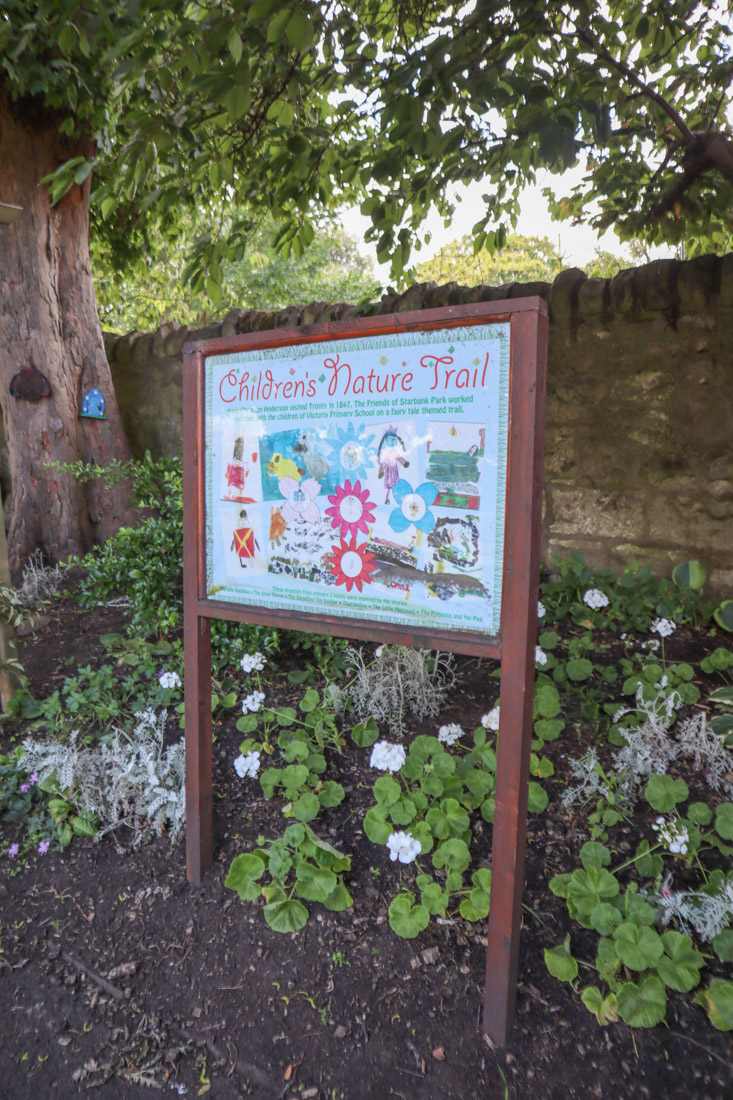
Starbank deserves a notable mention for its bee and butterfly-friendly planting with thanks to the volunteers at the Friends of Starbank Park.
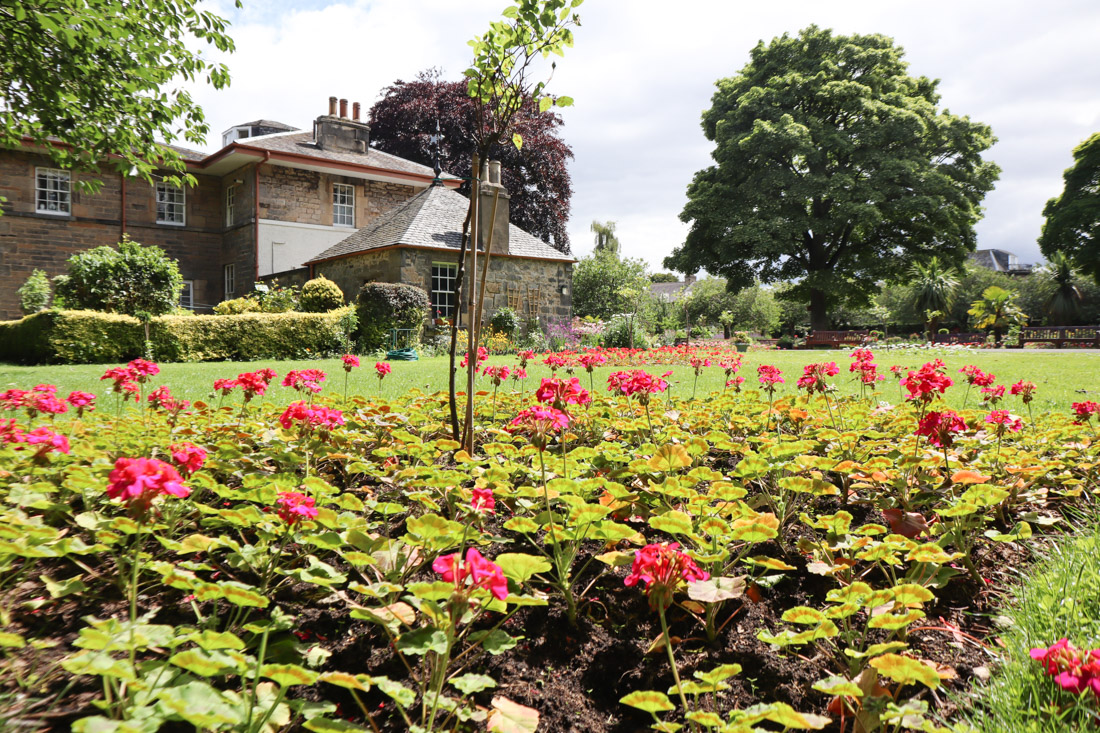
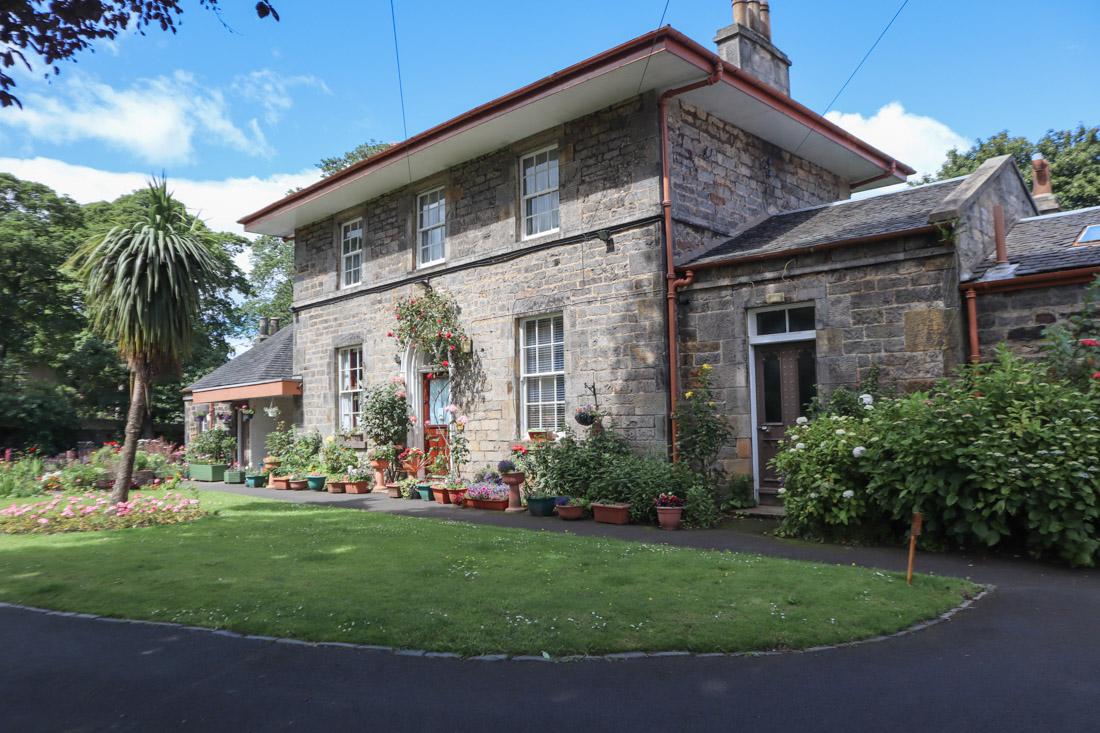
The park has been a public space since the late nineteenth century when the old Leith Town Council bought the classical, two-storied Starbank House and its grounds, including a cultivated rose garden.
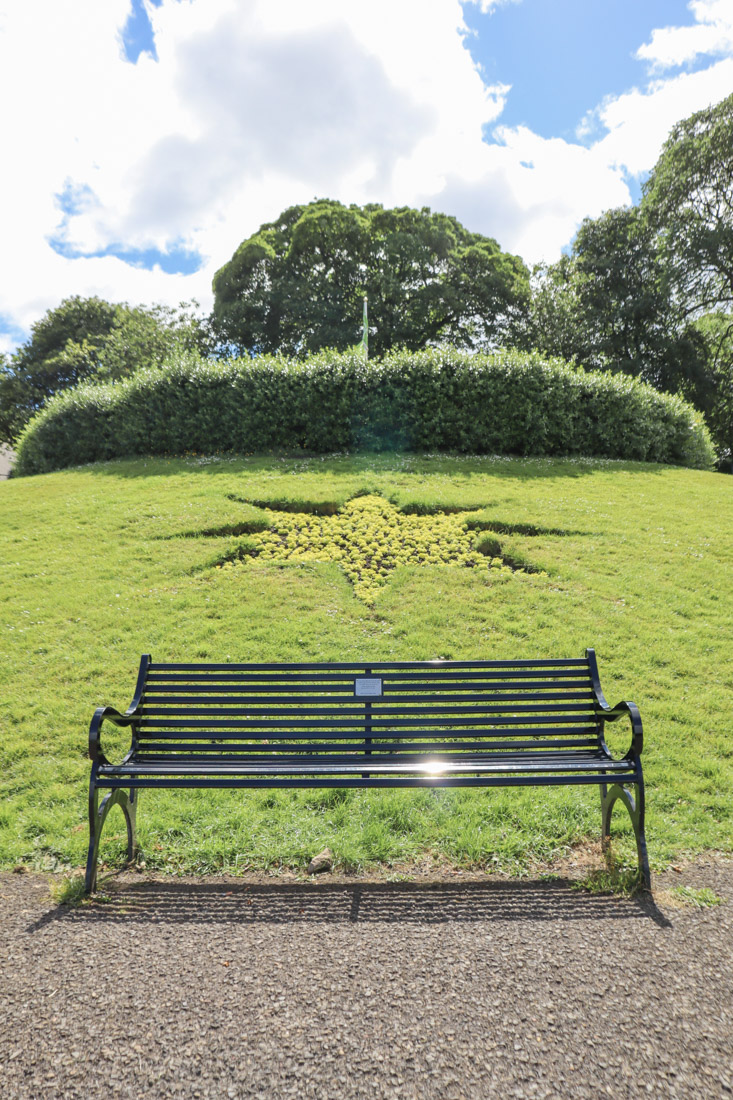
Starbank Park is brought to life with its annual flower bed set into a raised bank and shaped like an eight-pointed star.
This star is shaped like a seafaring compass and reflects the long history of navigation by sailors who would leave and return to the Firth of Forth.
Friends of Starbank Park put on events throughout the year such as Easter egg hunts and Halloween parties.
Keep up to date with the team behind this award-winning garden on their Facebook page.
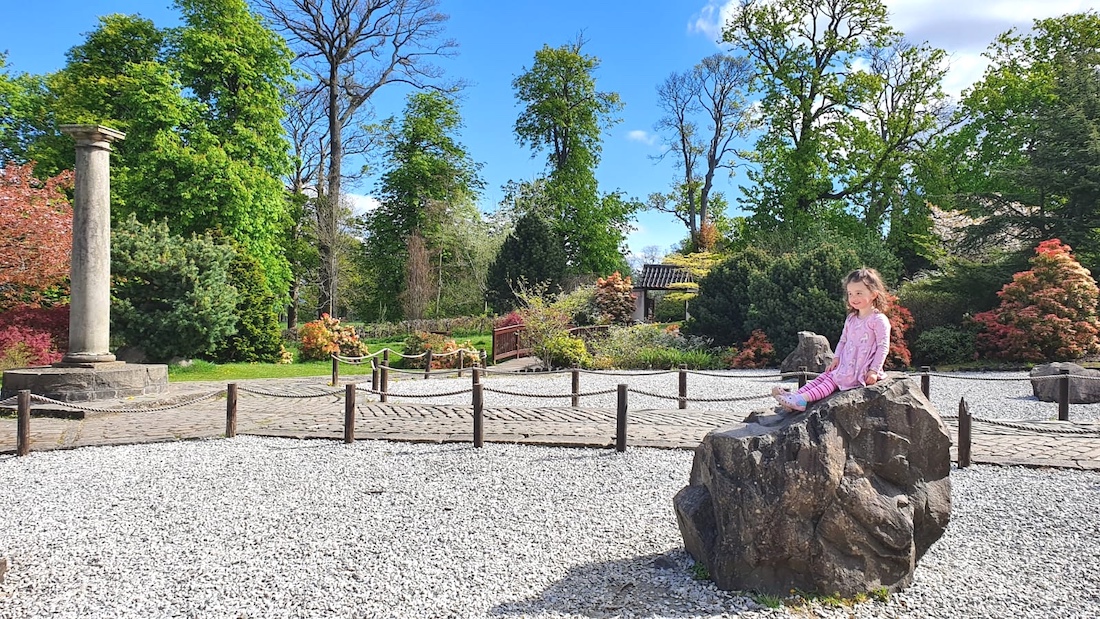
10. Japanese Garden
Locals and visitors alike always show a pleasantly surprised look when we tell them that Edinburgh has its own Japanese Garden.
The garden can be found at Lauriston Castle and accessed for free.
If you want to take a guided tour of Lauriston Castle and the grounds there are timed events for a small fee.
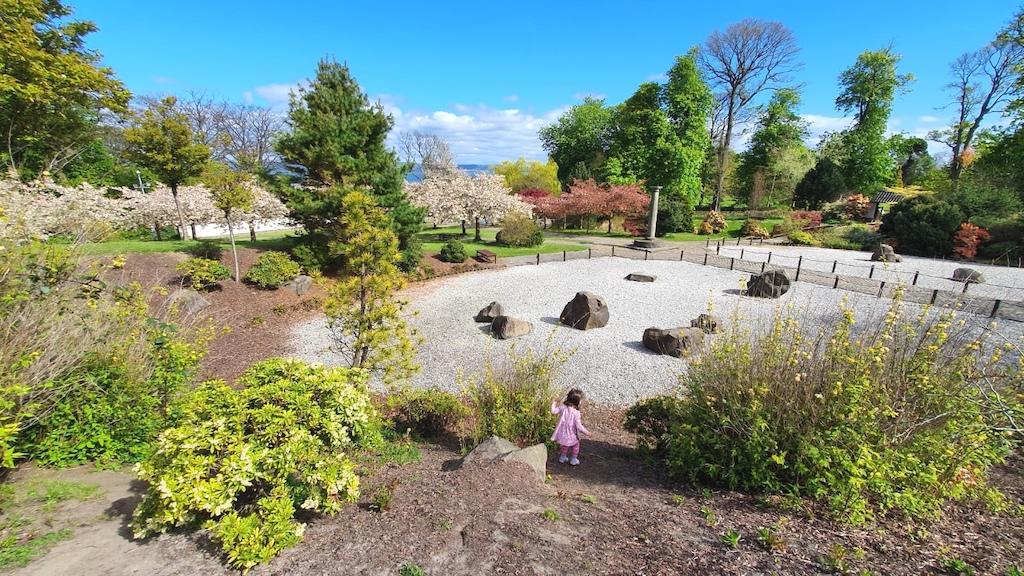
Parking is available and Lauriston Castle can be reached by public bus.
There is a coffee shop on site but it is not always open.
Here is a picture of my cousin Ella.
Here’s our guide to family-friendly activities.
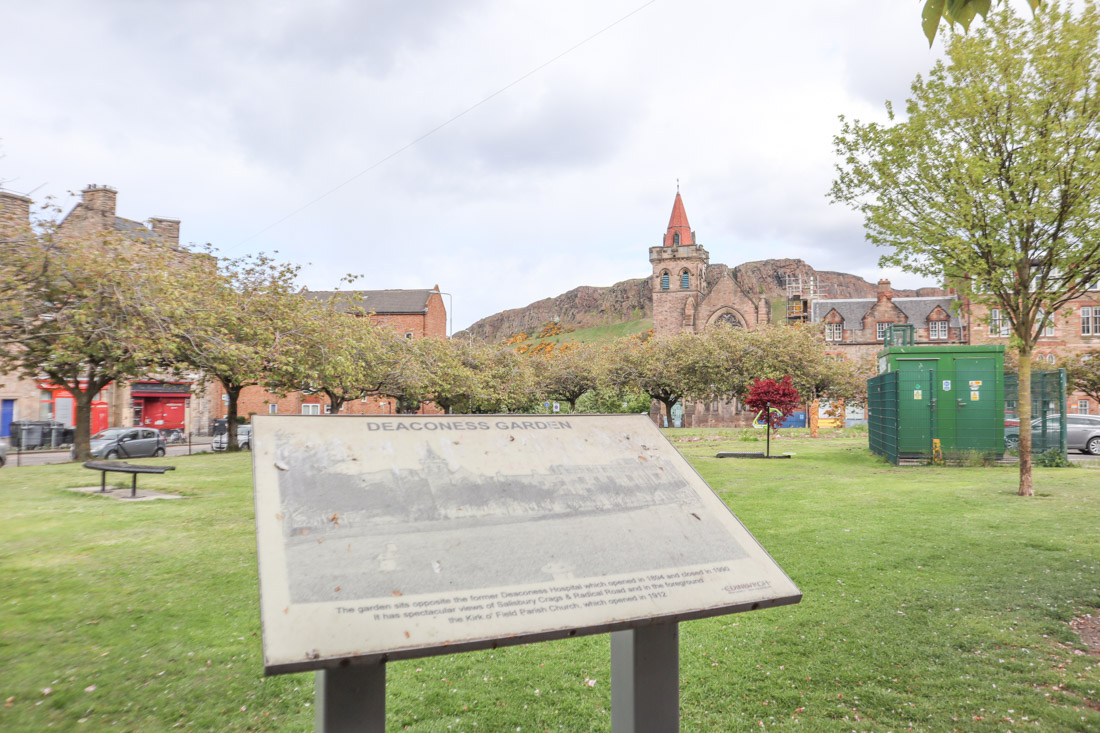
11. Deaconess Garden
Deaconess Garden is in the south of the city.
You might see it pop up in your newsfeeds around springtime as there is a lovely cherry blossom which creates a unique landscape shot of Arthur’s Seat.
The frame includes the former Deaconess Hospital from 1894.
12. Saughton Park
Saughton Park is located in the southwest of the city and is associated with Friends of Saughton Park.
According to the Friends of Saughton Park website, Sauch means willow and Haugh means level or low-lying land next to a river.
Within the park, you will find the historic Rose and Winter Gardens which date back to the 12th and 13th century when the Saughton mansion estate was built.
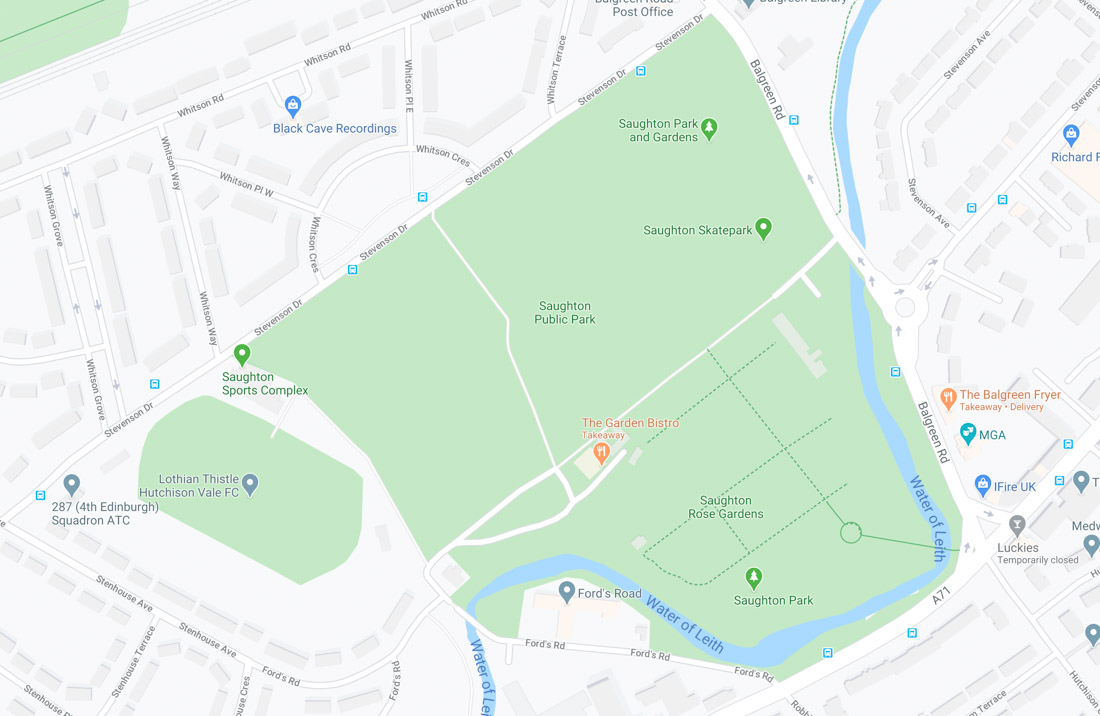
Fruit and vegetables are grown in The Physic Garden and cared for by the volunteers at the Friends of Saughton Park.
There are several raised beds in The Physic Garden and many of the plants have been donated.
One of the aims of the Friends of Saughton Park is to grow plants such as snowdrops and foxgloves for medicinal use.
The Community Orchards have a mix of wild and trained orchards with fruit trees such as apples, pears and peaches.
Ball games are prohibited in the walled garden.
You can read about the park in detail at our parks guide
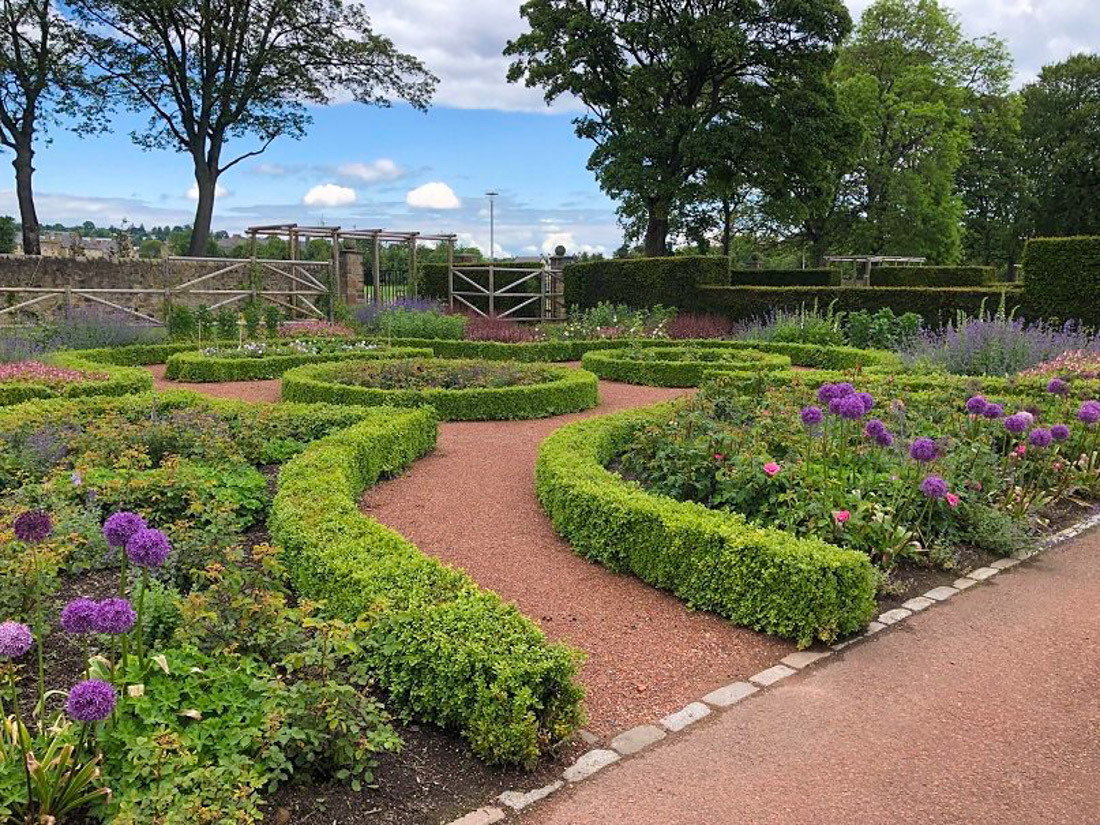
Bonus: Jupiter Artland
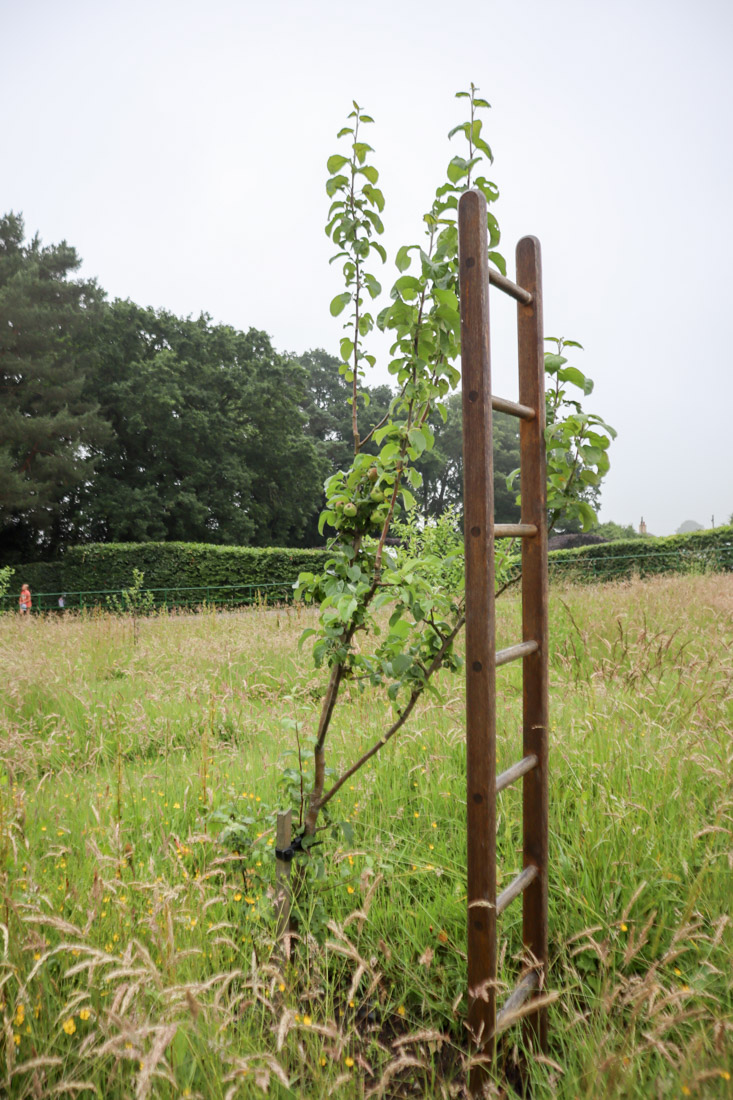
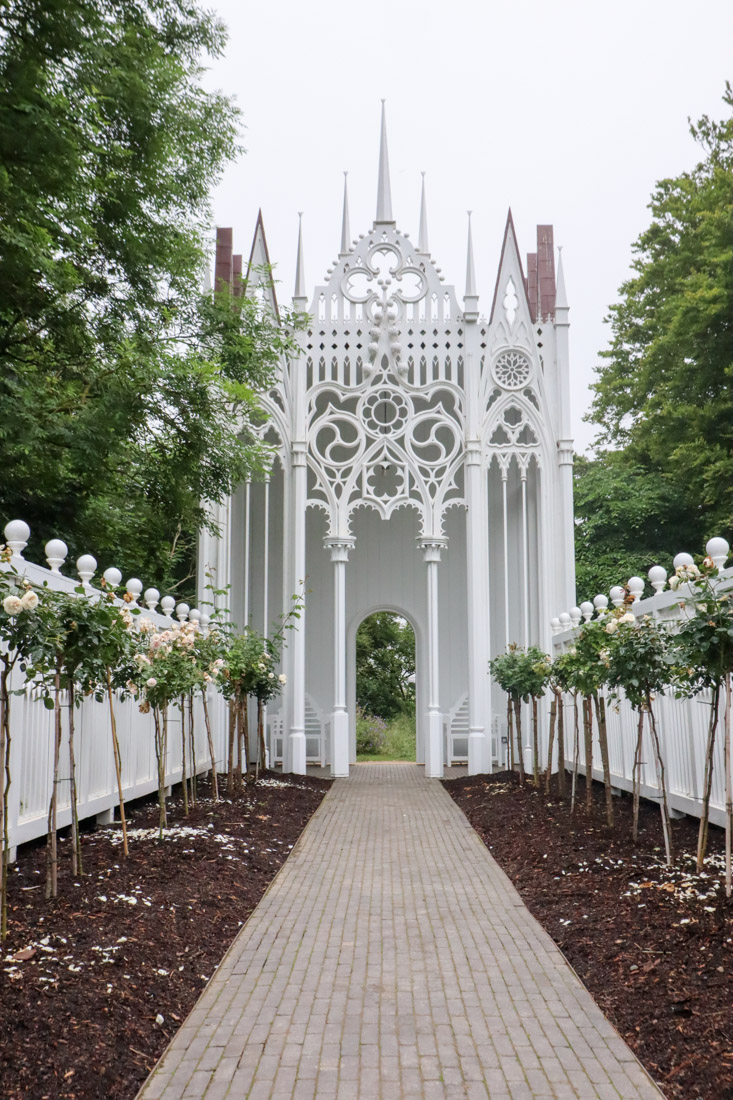
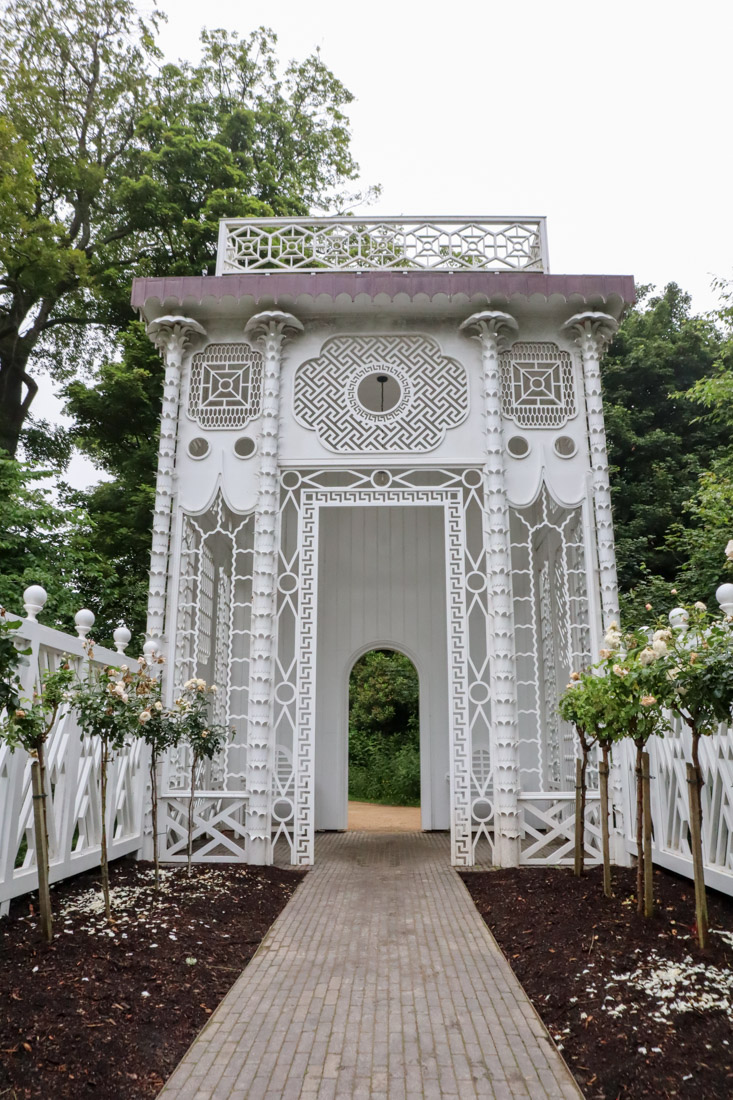
Jupiter Artland Foundation is one of Scotland’s most significant arts organisations, with five gallery spaces and an expansive outdoor sculpture collection, featuring landscaped and site-specific commissioned artworks from some of the world’s most significant artists.
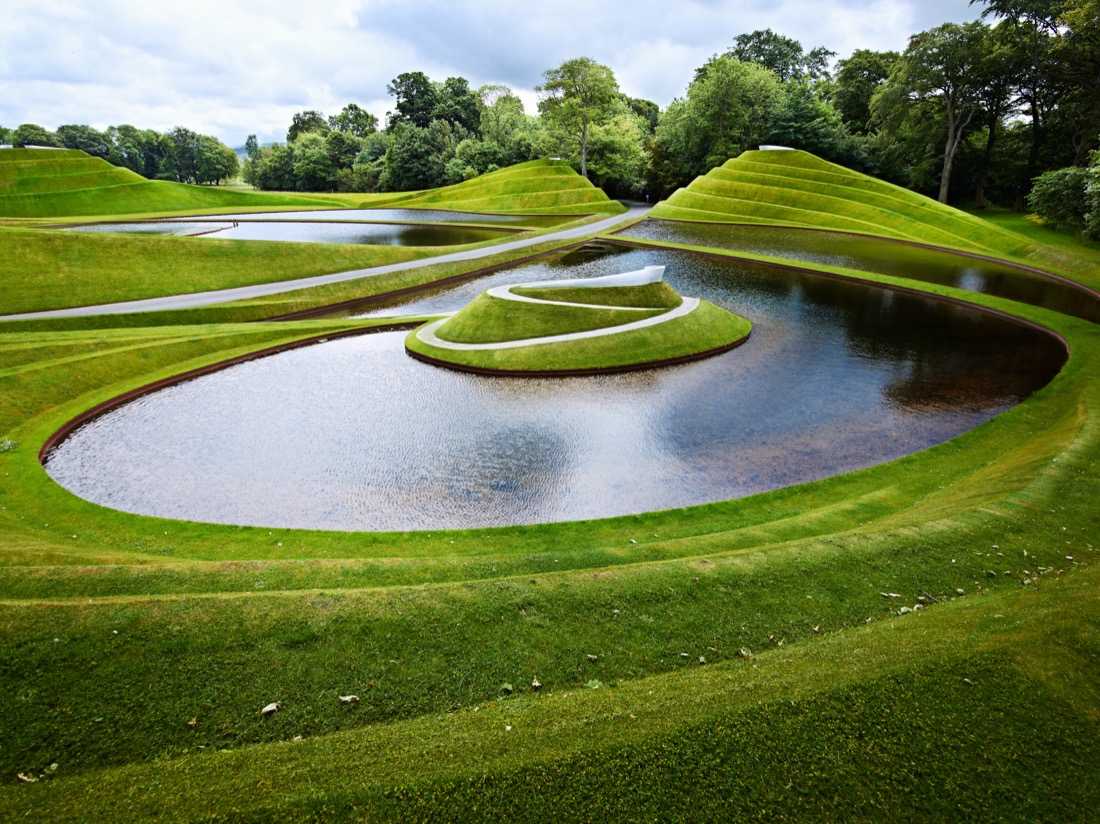
Located outside, Jupiter Artland is a registered charity, founded by the philanthropist art collectors Robert and Nicky Wilson, now with 36 permanent site-specific works across 100 acres of woodland and meadows.
Committed to nurturing the work of outstanding contemporary artists and continuing to commission new works to grow the ever-evolving landscape, Jupiter Artland opened to the public in May 2009, and in 2016 was nominated for the Art Fund’s prize for the Museum of the Year.
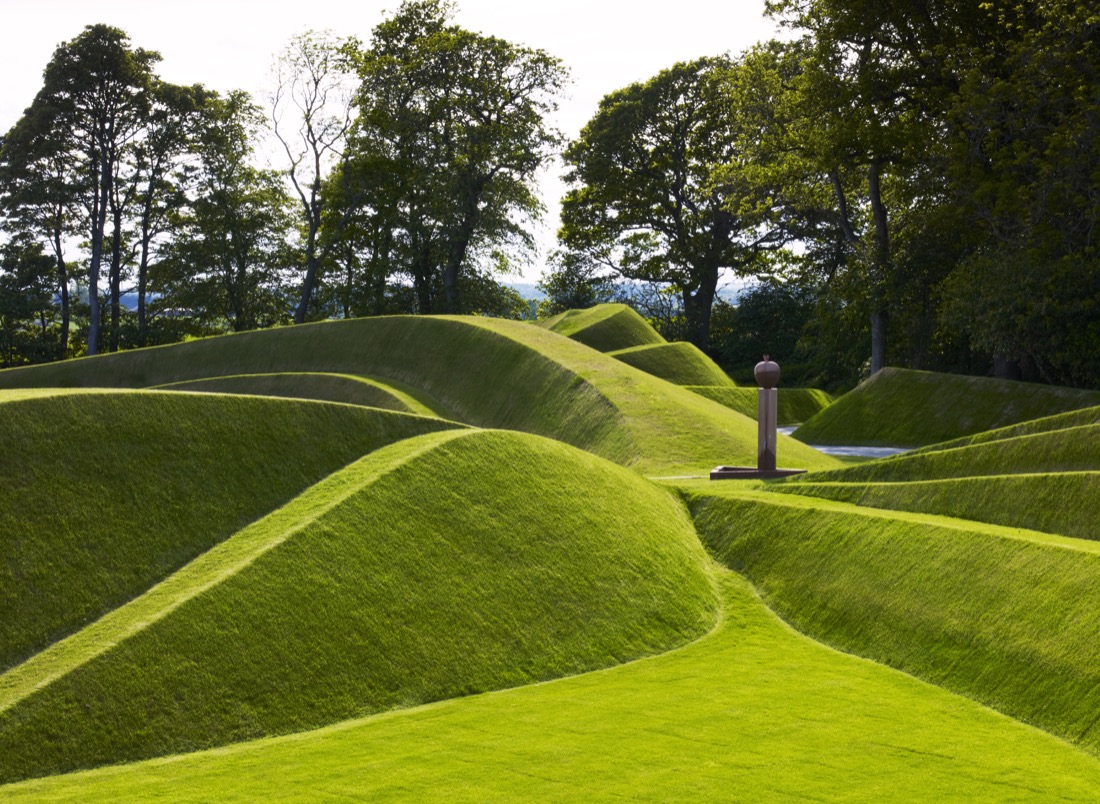
Exhibitions and installations by artists such as Charles Jencks, Anish Kapoor, Christian Boltanski, Joana Vasconcelos, Nathan Coley, Ian Hamilton Finlay, Laura Ford, Anya Gallaccio, Andy Goldsworthy, Jim Lambie, Cornelia Parker and Marc Quinn are located around the gardens.
Each artist selected their own plot.
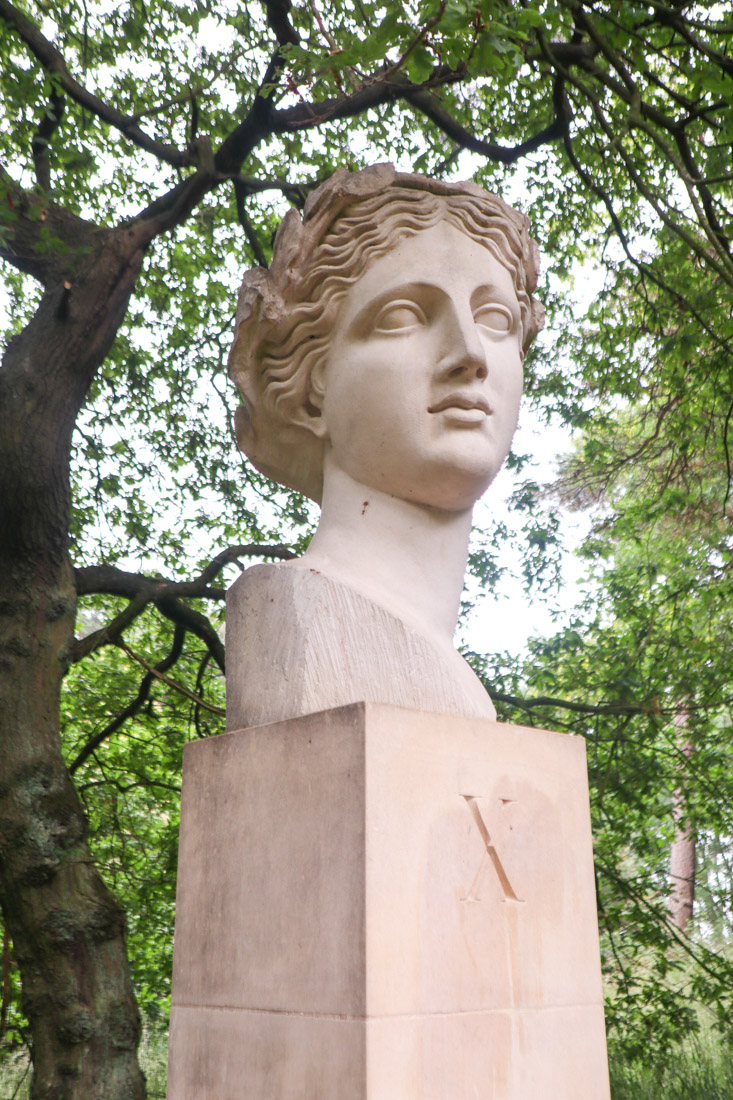
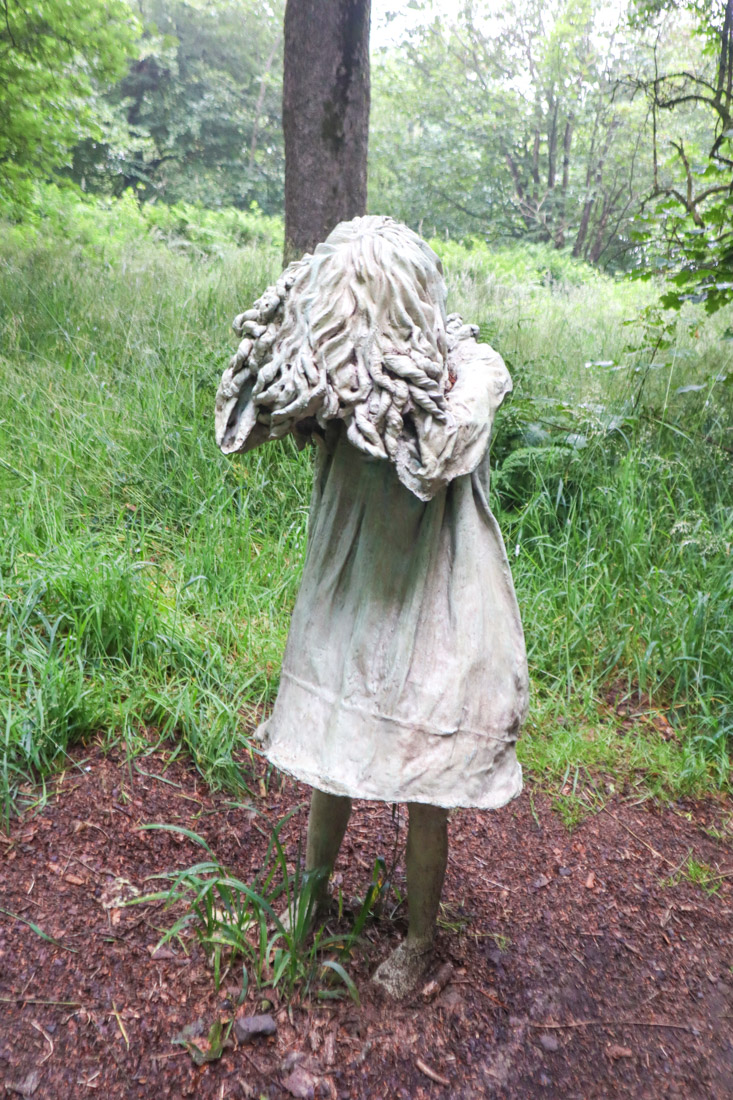
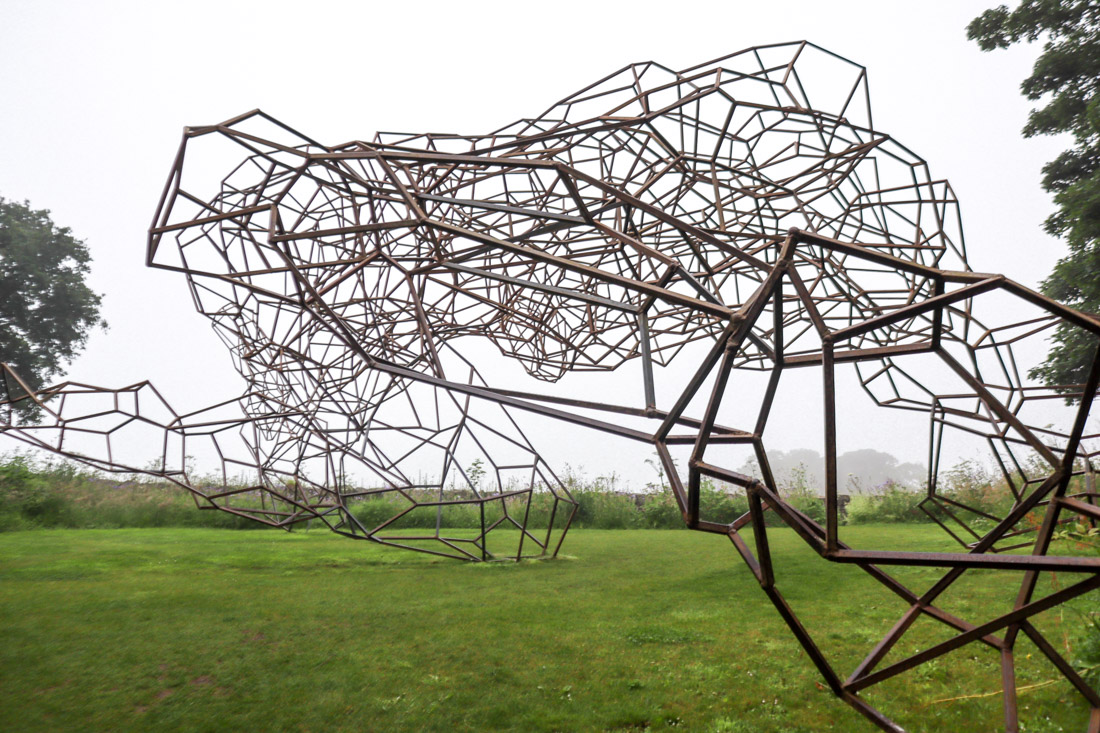
The sculptor Antony Gormley’s work is also on display.
You may know his 6 TIMES project, the life-sized human cast iron sculptures dotted around the Waters of Leith.
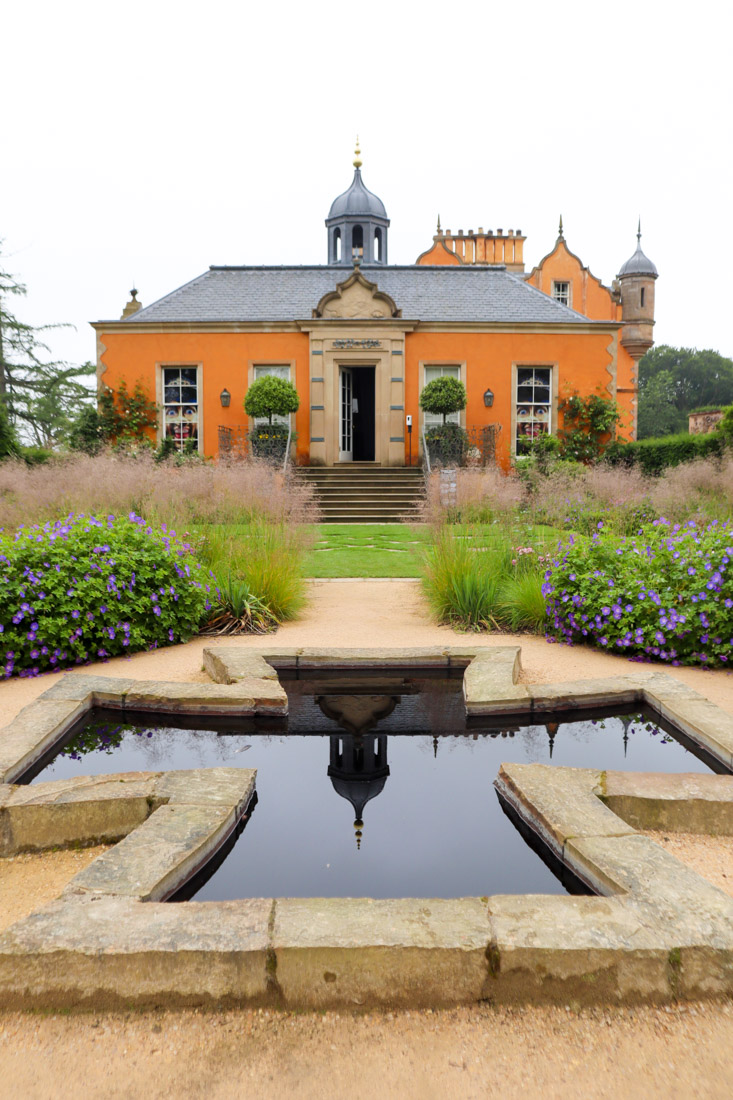
The exhibitions are set within the grounds of Bonnington House, a 17th-century Jacobean Manor House and visitors are encouraged to freely explore the Artland and discover the artworks at their own pace.
The walk takes around one hour to complete at a slow pace.
Some exhibitions that include video may add time to your visit.
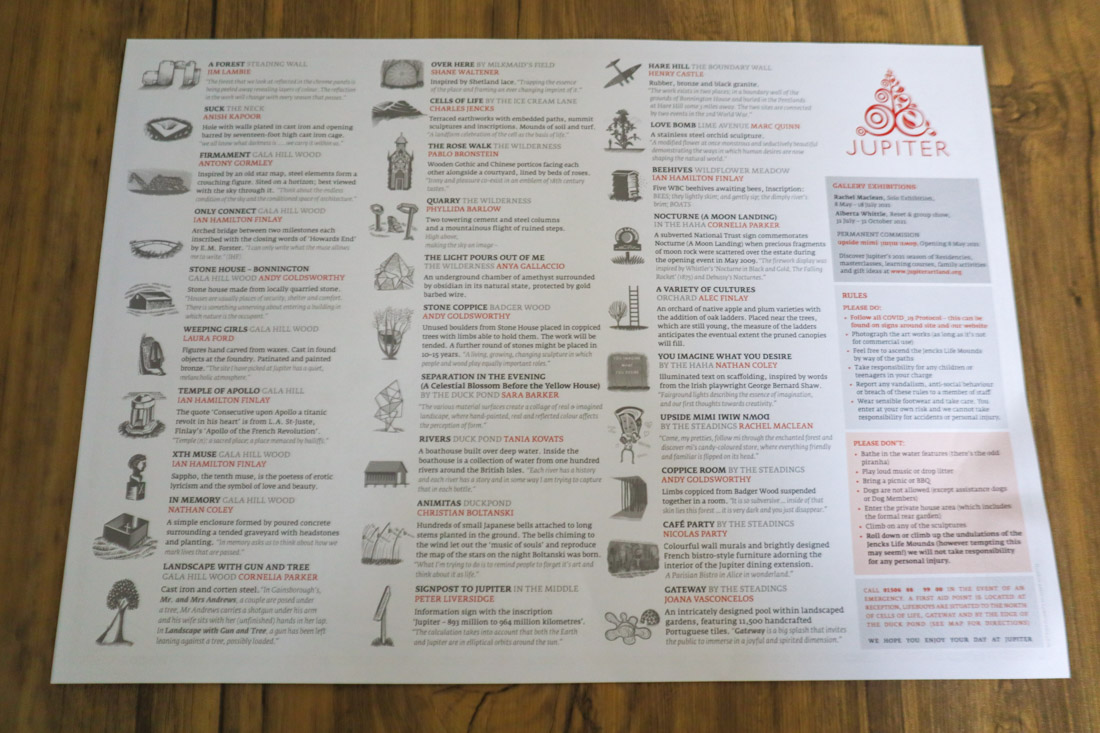
On arrival, visitors receive an art walk map to help locate each exhibition.
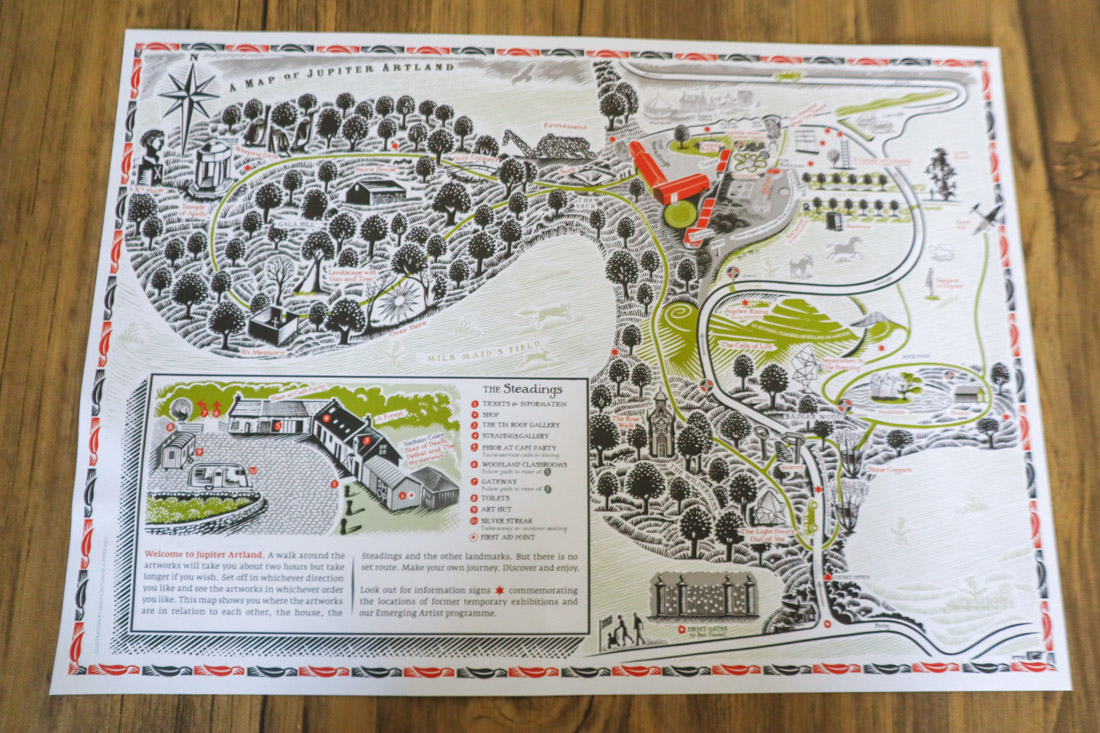
The map also provides details about the art including the title, artist and summary of work.
The small diagrams are really handy.
As well as permanent exhibitions, there is also temporary artwork.
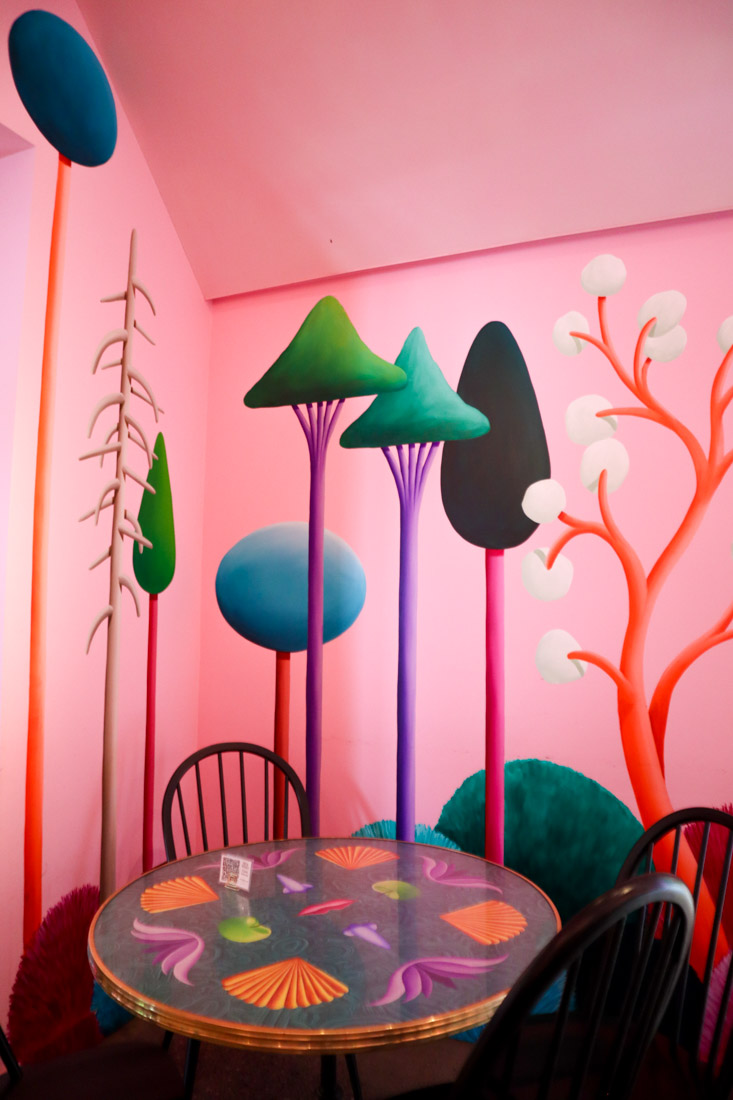
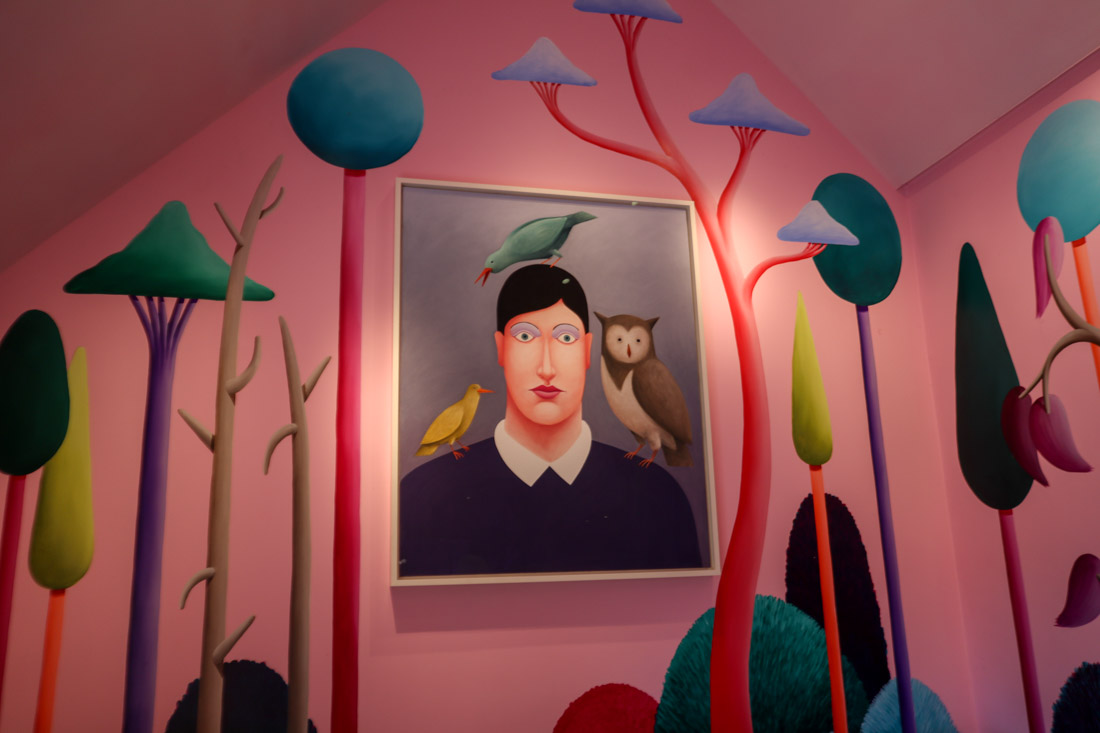
A visit to Cafe Party is highly recommended.
This playfully pink cafe is designed by Nicholas Party.
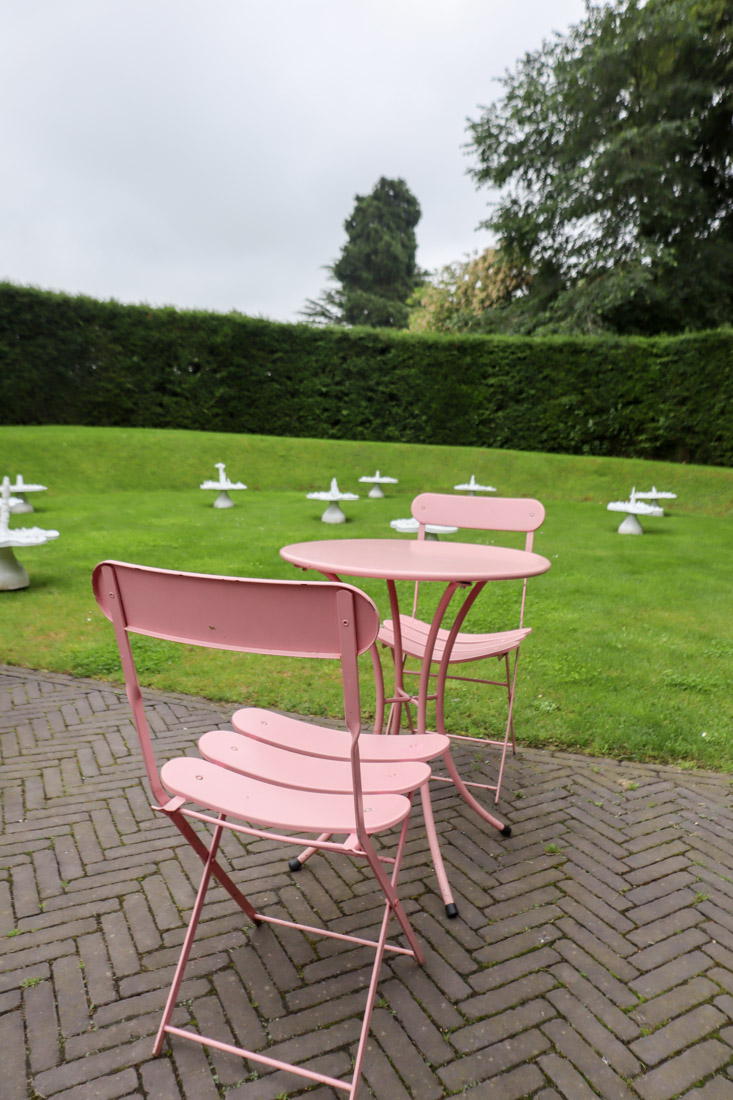
The soup and cakes are tasty.
There is also a food truck and benches if you prefer to sit outside.
Jupiter Artland’s learning programme includes free visits for nurseries, schools, universities and community education organisations.
Jupiter Artland’s child-led ethos to learning sparks curiosity and builds resilience, creativity and critical thinking skills in the minds of young learners.

Since the programme began in 2009 over 20,000 learners have been welcomed to the collection as part of free or subsidised visits.
Jupiter Artland’s mission is for every school child in Scotland to visit or experience Jupiter Artland either through a visit with hands-on activity or through Jupiter Artland’s pioneering digital projects.
Each year the festival, Jupiter Rising brings together art, music and performance in the landscape.
Jupiter Artland is accessible for wheelchair use. More information can be found here.
More Gardens
Beyond the 12 favourites above, Edinburgh has several other green spaces worth seeking out.
13. Dr Neil’s Garden
Dr Neil’s Garden (5 Old Church Lane, Duddingston, EH15 3PX) lies on the lower slopes of Arthur’s Seat beside Duddingston Loch and the 12th-century Duddingston Kirk. Created in the 1960s by two local GPs, Drs Andrew and Nancy Neil, the garden specialises in conifers, heathers, alpines, primulas and rhododendrons. Open daily 10am to dusk, free entry. A small Garden Room café operates Thu–Sun.
14. Malleny Garden
A National Trust for Scotland property in Balerno (EH14 7AF), Malleny Garden is one of Edinburgh’s finest 17th-century formal gardens. The walled features clipped yew hedges, a herbaceous border, a productive kitchen. Open daily 10am–5pm (March–October) and 10am–4pm (November–February). Lothian Bus 44 from the city centre.
15. Redhall Walled Garden
This six-acre therapeutic garden at 97 Lanark Road (EH14 2LZ) offers purposeful horticultural activity for people recovering from mental ill health. The public is welcome Monday–Friday 9am–4pm year-round. Features include a walled kitchen, community allotment plots, a wildlife pond and an orchard. Run by SAMH (Scottish Association for Mental Health).
16. Inverleith Park
One of Edinburgh’s largest public parks at 54 acres, Inverleith Park (Arboretum Road, EH3 5NZ) sits adjacent to the Royal Botanic Garden. Features include a boating pond with model boat club, a historic Sundial Garden (dated 1890), sports pitches, a petanque square, allotments and a children’s play area. The park has held a Green Flag award since 2010 and offers grand views of Edinburgh Castle — a popular spot for Festival fireworks.
17. Bruntsfield Links
Adjoining The Meadows, Bruntsfield Links (Melville Drive, EH9 1DY) is a 35-acre public park with one of Scotland’s oldest golfing histories. The free 36-hole short-hole course has been played here since 1890 (and centuries earlier on a shorter course). Bring your own clubs or hire from the nearby Golf Tavern. The park also has a play area, designated BBQ zones, and tree-lined paths with elm, sycamore, oak and cherry.
18. Holyrood Physic Garden
Located beside the Palace of Holyroodhouse at the foot of the Royal Mile, the Physic Garden was recreated in 2020 to honour Scotland’s first physic garden, established here in 1670 (the forerunner to the Royal Botanic Garden). Three sections represent different eras: a flowering meadow of medicinal plants evoking 15th-century monastic, geometric crocus and tulip plantings reflecting 17th-century design, and raised beds of herbs once studied for healing properties. Free, open daily, non-ticketed.
Rules
- Put all litter in the bins provided.
- BBQs can be used in designated areas only.
- Ball games cannot be played in Princes Street Gardens or Saughton Walled Gardens.
- Fishing is not permitted unless authorised by a permit.
- Metal detection is not prohibited without a permit.
- Camping is not allowed within one mile of a public road.
Frequently Asked Questions
Are gardens free to visit?
Most of Edinburgh’s public parks are free, including Princes Street Gardens, The Meadows, Inverleith Park and Bruntsfield Links. Jupiter Artland charges an entry fee (around £14 adults). Malleny Garden is free for NTS members; non-members pay around £7. The Royal Botanic Garden is free, though donations are welcome.
What is the best time to visit?
Late spring (May–June) brings rhododendrons, azaleas and tulips at their peak. Summer (July–August) is ideal for rose and the RBGE’s glasshouses. Autumn offers spectacular foliage at Malleny Garden and Inverleith Park. Winter visits are still rewarding at RBGE’s glasshouses and Jupiter Artland (open Thu–Sun November–March).
Are gardens dog-friendly?
Most public parks welcome dogs on leads, including Princes Street Gardens, The Meadows, Inverleith Park and Bruntsfield Links. Dr Neil’s Garden does not allow dogs (except assistance dogs). The Royal Botanic Garden permits dogs in most outdoor areas but not in the glasshouses. Always check individual policies before visiting.
Is there parking at the Royal Botanic Garden?
The RBGE has limited free parking on-site at Inverleith Row (EH3 5LR). Street parking is available on Arboretum Road and nearby roads.
What are secret gardens?
Several hidden green spaces: Dunbar’s Close Garden (off the Royal Mile), Dr Neil’s Garden (beside Duddingston Loch), Surgeons’ Hall Garden (a quiet courtyard on South Bridge), and the Holyrood Physic Garden (at the foot of the Royal Mile). These offer tranquil escapes from the city bustle.
Did you find this useful?
Pin to your planning board to bookmark
Final Words
There are plenty of green space options in Scotland’s capital and many of them offer sea views and additional cultural activities such as sport or art.
There’s another on my bucket list, Dr Neil’s Garden by Duddingston Kirk, have you been?